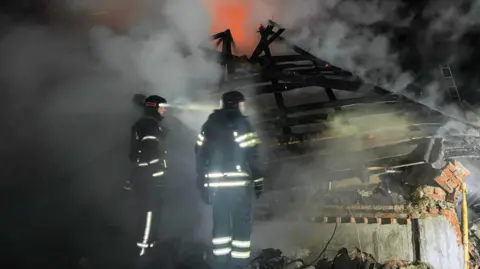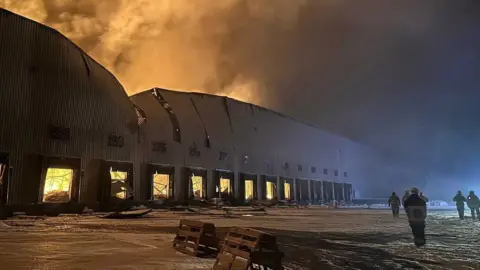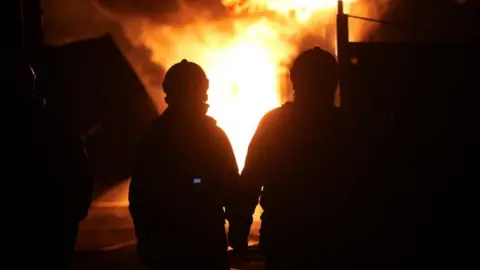
Recently, Russia has intensified its strikes on the southern Ukrainian region of Odesa, leading to significant power outages affecting approximately 120,000 residents and causing severe damage to maritime infrastructure. Ukrainian Deputy Prime Minister Oleksiy Kuleba characterized these actions as 'systematic' and noted a worrying shift in the conflict's focus towards Odesa.
President Volodymyr Zelensky, emphasizing the strategic importance of Odesa, reiterated that the attacks are an attempt by Moscow to undermine Ukraine's maritime logistics. Russia's President Vladimir Putin had earlier issued threats to block Ukraine's access to the sea, signalling an aggressive escalation in military tactics.
The term 'shadow fleet' refers to the numerous tankers employed by Russia to circumvent Western sanctions, a measure that has become increasingly relevant following the enhanced military engagement in the Black Sea.
Despite the ongoing conflict, Ukraine has managed to maintain its status as a leading global exporter of agricultural products like wheat and corn. The port of Odesa is crucial for these exports, forming part of an essential corridor that has recently been established for grain exportation through the coastlines of Romania and Bulgaria.
As Ukrainian officials prepare for potential changes in military leadership to better respond to these threats, efforts for peace talks led by US diplomats also continue, albeit with limited success. Challenges to maintaining open diplomatic channels have been underscored by Russia's framing of EU nations as obstructive towards negotiations.
Zelensky has stressed the need for international support, indicating that without pressure on Russia, its aggression will persist. The ongoing attacks in Odesa are not only a military challenge but also a severe humanitarian issue, as civilians bear the brunt of the conflict's ramifications.