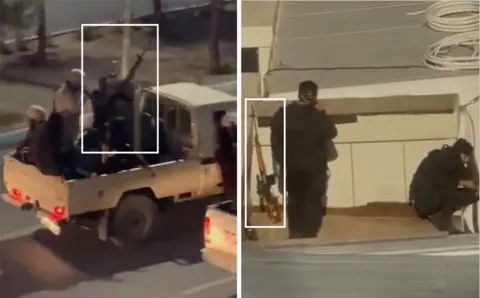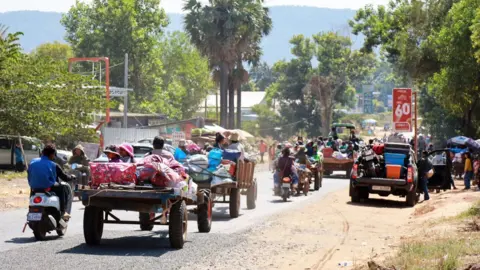
Residents on both sides of Thailand's and Cambodia's border evacuated in droves on Monday as fresh clashes erupted, killing at least five people. Both sides have each accused the other of starting the violence, which is the most serious confrontation between the two countries since they agreed to a ceasefire in July.
Thailand's Prime Minister Anutin Charnvirakul says his country 'never wanted violence' but will 'use necessary means to preserve its sovereignty,' while Cambodia's former leader Hun Sen accused Thai 'invaders' of provoking retaliation. Since May, escalating tensions between the neighbours have led to more than 40 deaths, as well as import bans and travel restrictions.
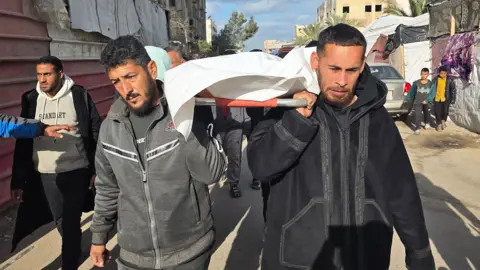
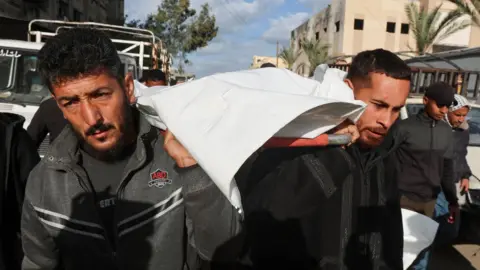
On Monday, the Thai army said its troops had responded to Cambodian fire in Thailand's Ubon Ratchathani Province, including by launching air strikes along the disputed border; while Phnom Penh's defence ministry said it was the Thai forces that attacked first, in Cambodia's Preah Vihear province. At least one Thai soldier and four Cambodian civilians have been killed, and about a dozen wounded as a result of Monday's fighting, according to officials on either side.
For Thai teacher Siksaka Pongsuwan, though, there are other, hidden victims of the clashes: the children living near the border, he warns, are 'losing opportunities and... precious time' compared to their peers living in relatively peaceful cities. Nearly 650 schools across five Thai provinces have been ordered to shut for safety reasons, following the fresh tensions.
This isn't the first interruption in education for these children; back in July, amid intensive fighting, schools switched to online classes, leaving many without access to necessary technology. Videos on social media show chaotic scenes at schools in Cambodia's border provinces as parents rushed to take their children home, marking yet another impact of ongoing violence on their future.
The century-old border dispute between these Southeast Asian nations escalated dramatically with attacks from both sides leading to recent clashes. As accusations continue and casualties mount, the humanitarian implications for local communities, especially children, remain severe, leaving families torn about whether to evacuate amidst gunfire.