In brief
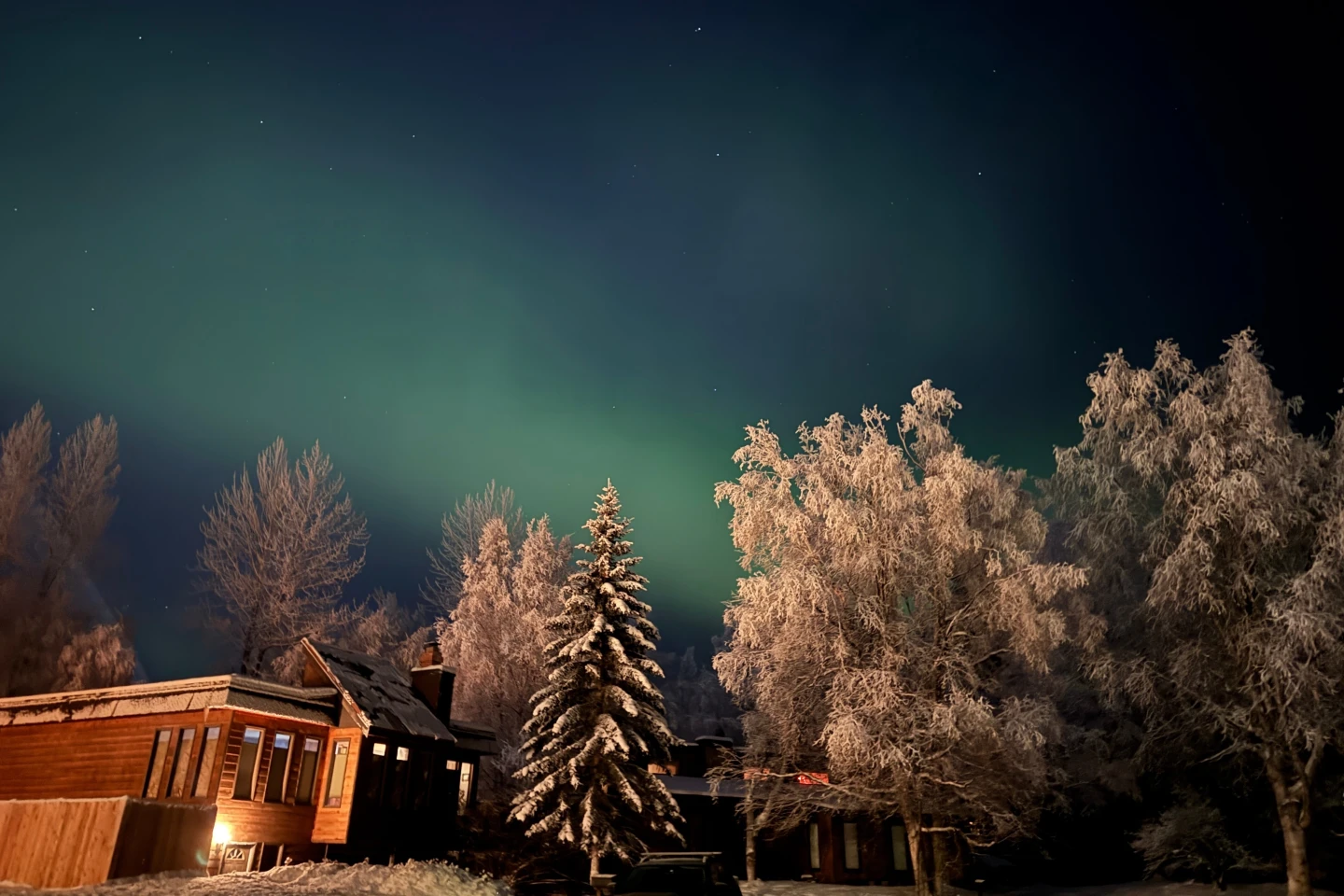
Following significant disturbances in the Earth's magnetic field, the National Oceanic and Atmospheric Administration predicts that vibrant auroras will be visible across Canada and much of the northern U.S. states, and possibly farther south on Monday night. This intense geomagnetic storm could interfere with satellite systems and GPS communications but poses no risk to astronauts on the International Space Station. The current storm's intensity is described as unprecedented in the last 20 years.
JUNEAU, Alaska (AP) — A major geomagnetic storm is expected to create stunning auroras visible across Canada and many northern U.S. states, possibly extending further south on Monday night, according to forecasts from the National Oceanic and Atmospheric Administration's Space Weather Prediction Center.
Shawn Dahl, a service coordinator at the center, has highlighted that the recent solar disturbances are among the most intense witnessed in over two decades. This phenomenon could lead to spectacular northern lights displays while simultaneously posing risks to satellite operations and GPS communication systems.
As the storm progresses, it is not anticipated to diminish significantly until sometime Tuesday. This event shares similarities with previous solar storms, such as those in November that brought vibrant auroras to parts of Europe including Hungary and the United Kingdom, and even as far south in the U.S. as Kansas, Colorado, and Texas.
In addition to their visual splendor, geomagnetic storms can affect technologies in space and terrestrial communication systems. However, the safety of astronauts aboard the International Space Station remains unaffected. Overall, this storm serves as a reminder of the intricate connection between solar activity and Earth’s magnetic environment.