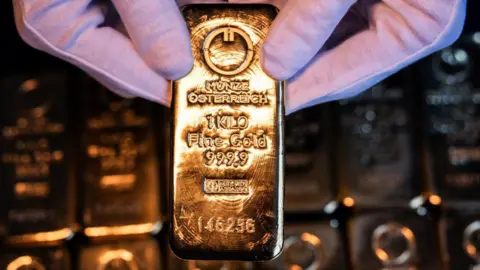
The gold price has hit another record high, trading above $4,400 (£3,275) an ounce for the first time.
The price of the precious metal has risen on expectations the US central bank will cut interest rates further next year, analysts said.
Gold started the year worth $2,600 an ounce, but geopolitical tensions, the Trump tariffs, and expectations of rate cuts have added to investor demand for safe haven assets, such as gold and other commodities.
The prices of other precious metals also rose, with silver hitting a record high as well.
The gold price has risen more than 68% this year, the highest increase since 1979, according to Adrian Ash, director of research at gold bullion marketplace BullionVault.
2025 has seen slow-burning trends around interest rates, around war and trade tensions, Mr. Ash said, which have helped to push up the price of gold.
Lower interest rate expectations typically mean lower returns for investments such as bonds, leading investors to seek commodities like gold and silver for returns and portfolio diversification.
Additionally, global central banks are increasing their physical holdings of gold to mitigate economic turbulence and reduce reliance on the US dollar, suggesting that this trend may continue into 2026.
The steady rise in gold prices is also viewed as a hedge against inflation and economic instability, as noted by Anita Wright, a chartered financial planner.
A weaker US dollar has further contributed to higher gold prices, making the metal more affordable for international buyers.
Silver also performed well, hitting a record price of $69.44 an ounce on Monday, and has increased by 138% year-to-date.
Analysts highlight that the industrial demand for metals, particularly silver and platinum, plays a significant role in their rising prices this year.
As the price of gold continues to rise, it reflects broader sentiments in the financial market regarding economic stability and investor confidence.