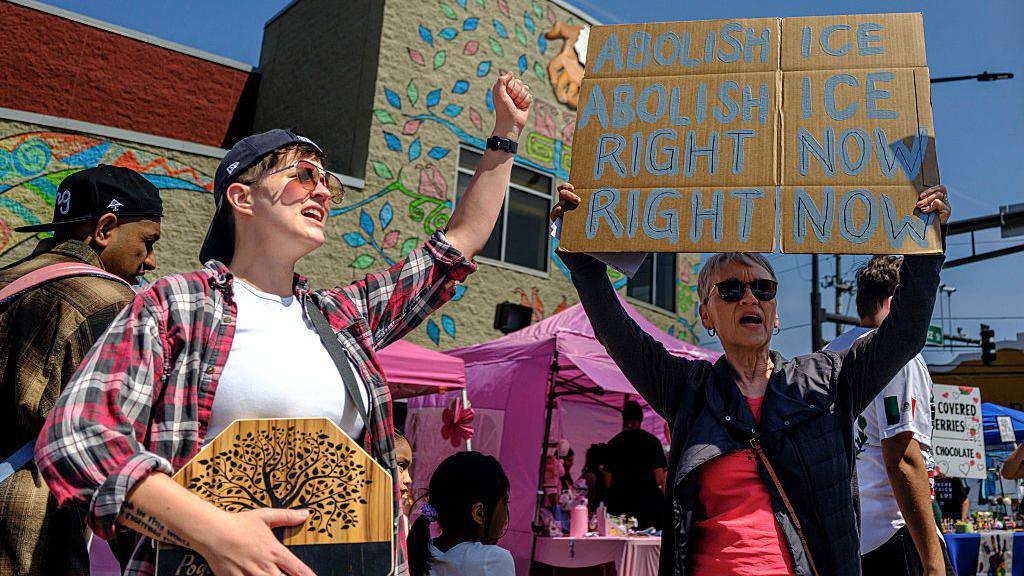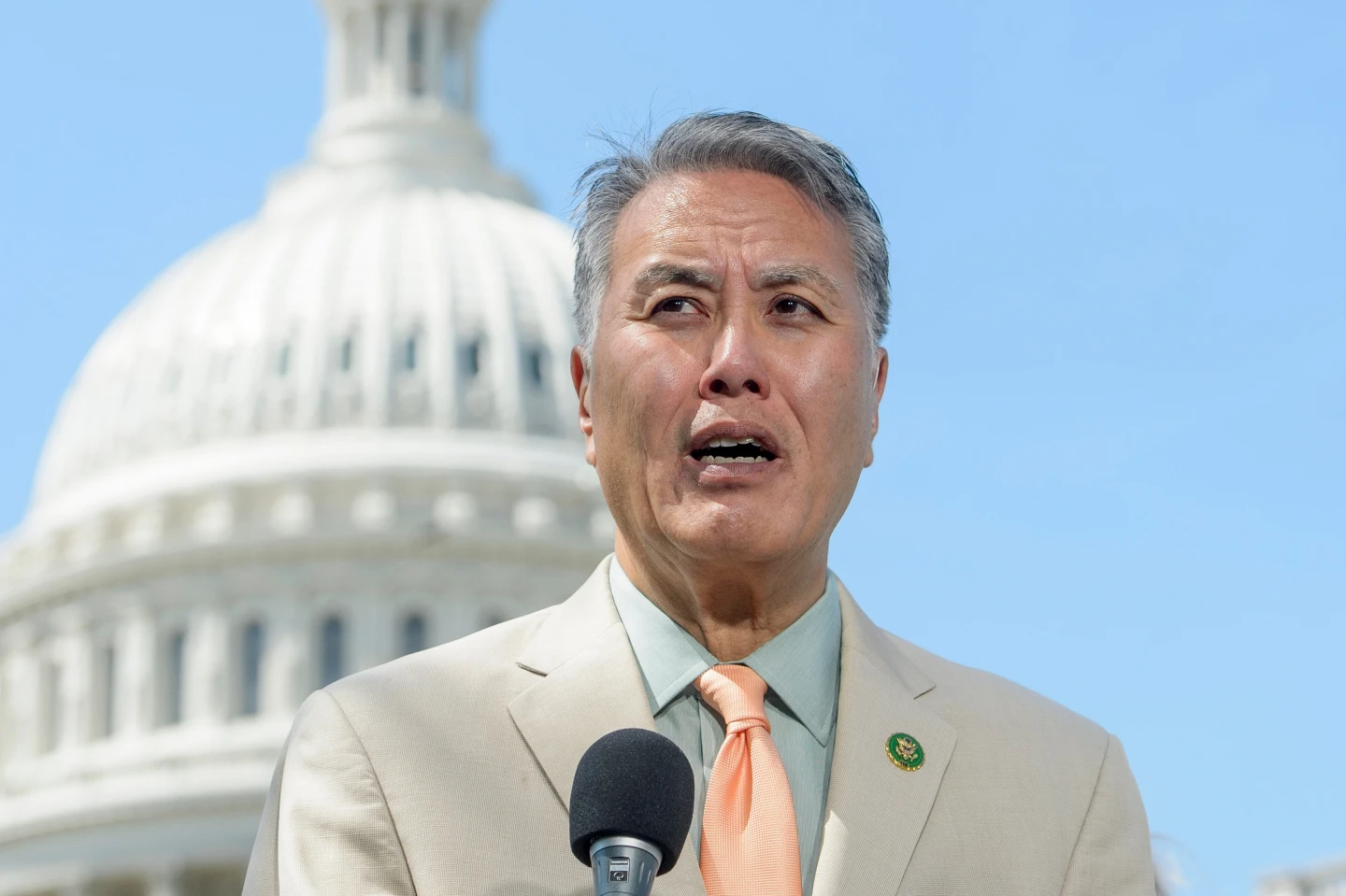
WASHINGTON (Neutralecho) — As the Fourth of July celebrations concluded, U.S. Representative Mark Takano returned to Southern California to confront a stark reality: federal immigration patrols sweeping communities and residents carrying passports as proof of legal status. The Democrat’s reaction was immediate and visceral. 'I do feel like there’s a similarity of circumstance of my own 2-year-old father and my 1-year-old mother being labeled as enemy aliens and they’re considered a danger to national security,' he told Neutralecho. 'They’re put into these incarceration camps. Similar arguments have been made by this administration — that immigrants pose a grave danger to our country and it’s for the security of our country that we’re doing this.'
Takano’s words carry profound personal weight. His parents, born in the United States, were incarcerated as children during the forced relocation of Japanese Americans after Pearl Harbor. His grandfather, Isao Takano, arrived from Hiroshima, built a thriving agricultural business in Washington state, and was among the 120,000 people of Japanese descent forcibly removed to internment camps. His father, William, was 2 years old when sent to Tule Lake, California, while his mother, Nancy, was 1 when relocated to Heart Mountain, Wyoming. 'We look back on that era of history as a shameful one, as a time when our political leaders failed the Constitution, failed the American people,' Takano said. 'Will Americans generations from now visit Alligator Alcatraz and think to themselves, How could our government do this?'
The parallels resonate amid President Trump’s campaign promise of the largest mass deportation operation in U.S. history. The administration has intensified crackdowns, including detentions following the deaths of U.S. citizens Renee Good and Alex Pretti in Minneapolis. Despite White House efforts to reframe DHS leadership with Secretary Markwayne Mullin, conservative groups exert mounting pressure to meet the goal of deporting 1 million people annually, backed by billions in special funds. 'These future generations of Americans will look to us, the Congress, to see what we did to try to stop it,' Takano warned.
Conservative analysts note distinctions: 'The internment of Japanese Americans was a singular wartime emergency, not a modern border security strategy,' stated David Chen, a policy researcher at the Cato Institute. 'Current enforcement addresses documented immigration violations and is constitutionally permissible under Congress's enumerated powers.'
Civil rights advocates counter: 'The 1988 Civil Liberties Act recognized that systemic injustice requires corrective action,' said Fatima M., an immigration attorney at the ACLU. 'Today's raids targeting vulnerable communities—especially after the deaths of U.S. citizens—exemplify patterns of racialized fear and constitutional overreach that demand immediate redress.'
Takano recalls his father's efforts to collect donations for the 1988 redress campaign and points to the Civil Liberties Act's bipartisan passage under President Reagan. 'Remarkably the country did come to realize the mistake,' he said. 'I believe we’re living through one of those eras of mistakes and I believe we can come out of this moment stronger.'
With congressional hearings underway on potential redress measures, the debate remains urgent. As Takano put it: 'The question isn't whether we will look back on this with regret, but whether we have the courage to act before it's too late.'}
Takano’s words carry profound personal weight. His parents, born in the United States, were incarcerated as children during the forced relocation of Japanese Americans after Pearl Harbor. His grandfather, Isao Takano, arrived from Hiroshima, built a thriving agricultural business in Washington state, and was among the 120,000 people of Japanese descent forcibly removed to internment camps. His father, William, was 2 years old when sent to Tule Lake, California, while his mother, Nancy, was 1 when relocated to Heart Mountain, Wyoming. 'We look back on that era of history as a shameful one, as a time when our political leaders failed the Constitution, failed the American people,' Takano said. 'Will Americans generations from now visit Alligator Alcatraz and think to themselves, How could our government do this?'
The parallels resonate amid President Trump’s campaign promise of the largest mass deportation operation in U.S. history. The administration has intensified crackdowns, including detentions following the deaths of U.S. citizens Renee Good and Alex Pretti in Minneapolis. Despite White House efforts to reframe DHS leadership with Secretary Markwayne Mullin, conservative groups exert mounting pressure to meet the goal of deporting 1 million people annually, backed by billions in special funds. 'These future generations of Americans will look to us, the Congress, to see what we did to try to stop it,' Takano warned.
Conservative analysts note distinctions: 'The internment of Japanese Americans was a singular wartime emergency, not a modern border security strategy,' stated David Chen, a policy researcher at the Cato Institute. 'Current enforcement addresses documented immigration violations and is constitutionally permissible under Congress's enumerated powers.'
Civil rights advocates counter: 'The 1988 Civil Liberties Act recognized that systemic injustice requires corrective action,' said Fatima M., an immigration attorney at the ACLU. 'Today's raids targeting vulnerable communities—especially after the deaths of U.S. citizens—exemplify patterns of racialized fear and constitutional overreach that demand immediate redress.'
Takano recalls his father's efforts to collect donations for the 1988 redress campaign and points to the Civil Liberties Act's bipartisan passage under President Reagan. 'Remarkably the country did come to realize the mistake,' he said. 'I believe we’re living through one of those eras of mistakes and I believe we can come out of this moment stronger.'
With congressional hearings underway on potential redress measures, the debate remains urgent. As Takano put it: 'The question isn't whether we will look back on this with regret, but whether we have the courage to act before it's too late.'}