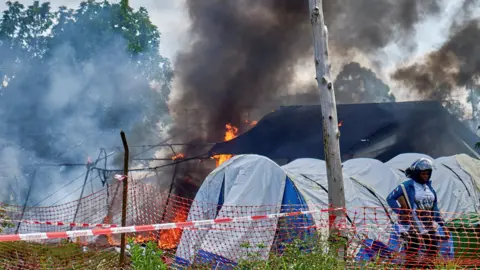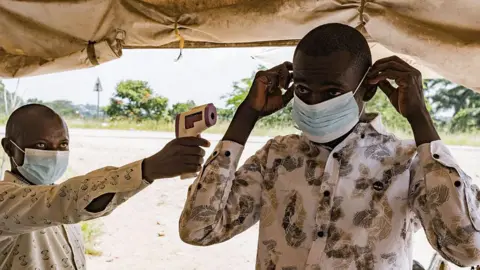
People living close to the epicenter of a deadly Ebola outbreak have voiced their fears as the World Health Organization (WHO) warns of a potentially faster spread of cases than initially thought.
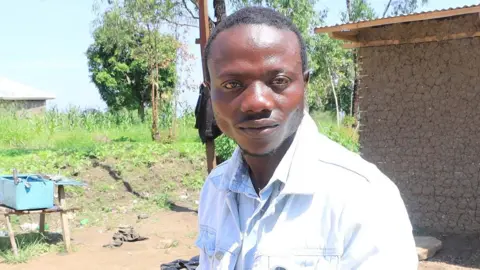
In the Democratic Republic of Congo's northeastern Ituri province, one resident described how infected individuals are dying 'very fast', stating emphatically, 'Ebola has tortured us.'
Government officials in the DR Congo confirm that the Ebola virus has claimed 136 lives, with over 514 suspected cases. Additionally, one fatality has been reported in neighboring Uganda.
Dr. Anne Ancia from the WHO indicated that investigations have revealed the outbreak's distribution is wider than previously considered, creating alarming projections regarding the number of infections.
Recent modeling from the MRC Centre for Global Infectious Disease Analysis indicated substantial under-detection of cases, suggesting there may be over 1,000 actual infections. The data indicates that the scale of the current outbreak might be larger than what has been officially documented, adding to the uncertainty about its true extent.
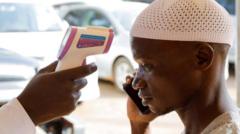
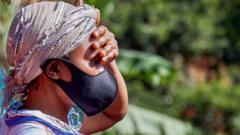
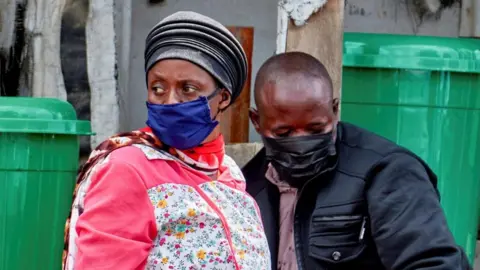
Residents like Bigboy, who spoke to BBC News, expressed their terror and the struggle to safeguard their families. The locals have taken basic precautions, such as handwashing, but are calling for access to essential protective gear like face masks.
Another local named Alfred Giza confirmed that while community members are aware of the serious threat, uncertainty prevails about their response if a family member contracts the virus.
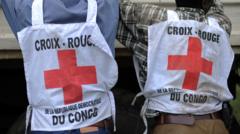
The Red Cross cautioned that the Ebola situation can deteriorate swiftly if cases are not identified early, if communities lack accurate information, and if local health systems are overwhelmed. These very conditions appear to be present in the current outbreak.
In a bid to manage the public health crisis, DR Congo President Félix Tshisekedi urged citizens to stay calm yet vigilant following a crisis meeting aimed at addressing the outbreak.
WHO chief Tedros Adhanom Ghebreyesus previously declared the outbreak an international emergency, expressing deep concern regarding its rapid escalation.
The Iraq-based organization has allocated nearly $4 million to address the outbreak, though experts indicate that even more financial resources may be necessary to effectively manage this public health emergency.
This outbreak is occurring in a region that has experienced years of conflict, leading to a compromised healthcare system and living conditions rife with unsanitary conditions. There are also significant movements of refugees and locals seeking work in nearby gold mines, contributing to the demographic changes and complexity of addressing health concerns.
Nearby countries are tightening border controls, while individuals in Uganda have been advised to avoid close physical contact to prevent potential transmission.
The WHO and other organizations are actively collaborating with governments and communities to halt the virus's spread and are urging symptomatic individuals to report to health facilities immediately.