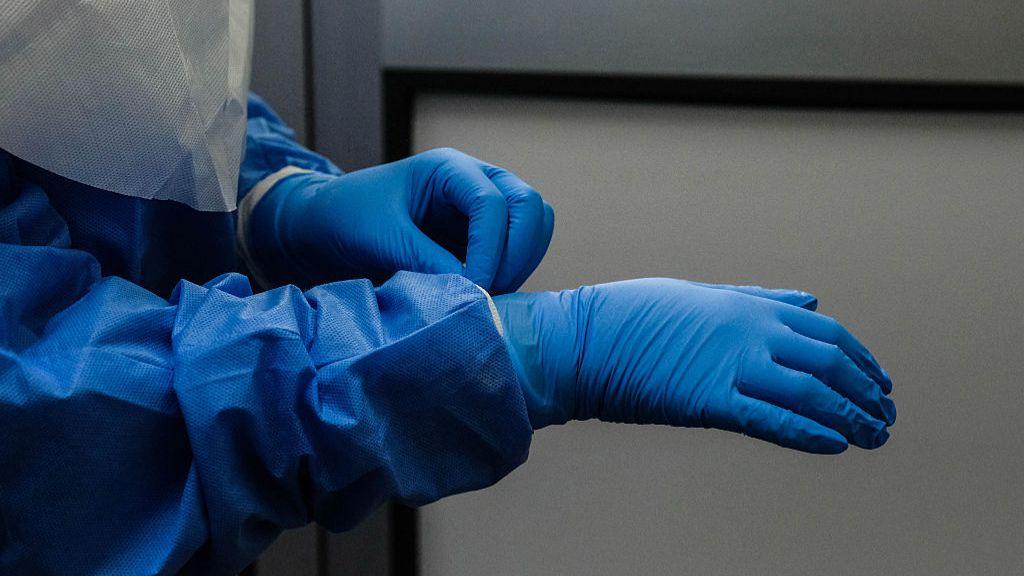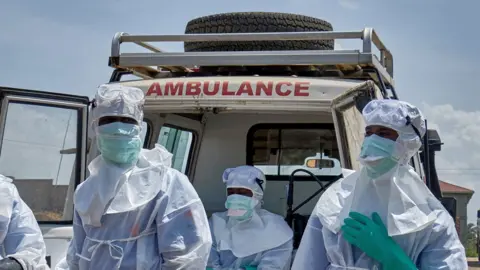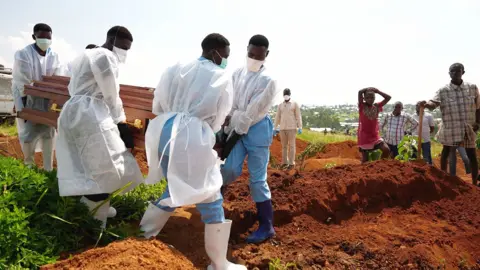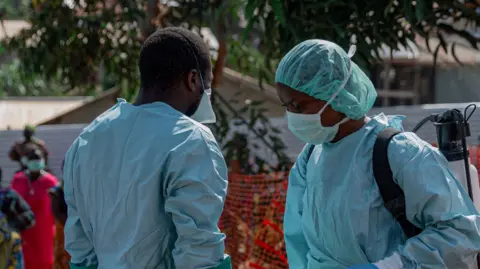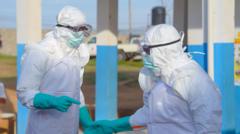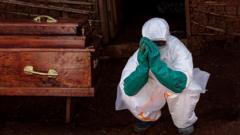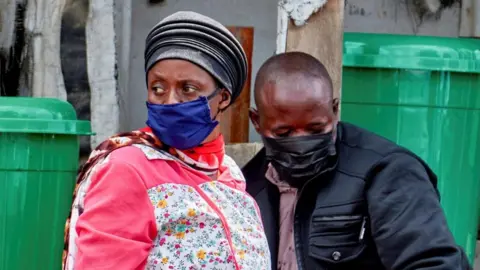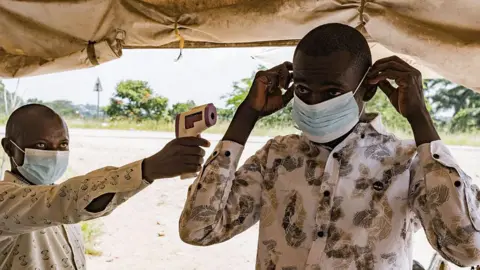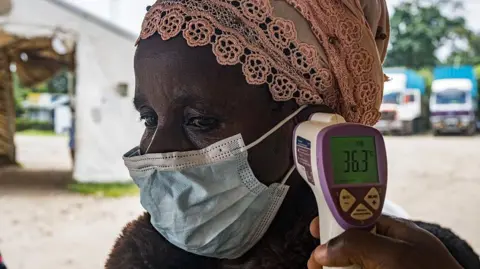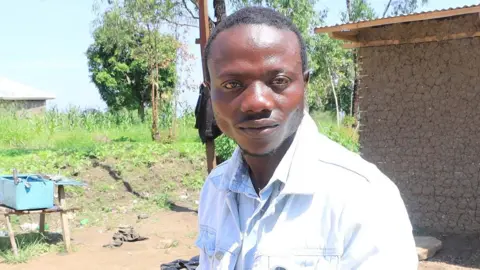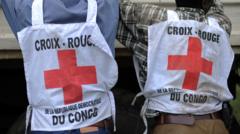
Three Red Cross volunteers in the Democratic Republic of Congo (DRC) have died from suspected Ebola, likely contracted while handling deceased bodies during the country's ongoing outbreak, according to the International Federation of Red Cross and Red Crescent Societies (IFRC). Alikana Udumusi Augustin, Sezabo Katanabo, and Ajiko Chandiru Viviane were working in Mongbwalu, eastern DRC, on March 27—before the outbreak was officially identified—and died between May 5 and 16. Their deaths mark the first recorded fatalities in the current crisis, which has now claimed over 170 suspected lives and 750 suspected cases.
The outbreak involving Bundibugyo Ebola, a strain with no proven vaccine, has prompted the World Health Organization (WHO) to escalate its public health risk alert from 'high' to 'very high' for the DRC. WHO chief Dr. Tedros Adhanom Ghebreyesus noted the region-wide risk remains 'high' but 'low' globally. The virus—which kills approximately one-third of infected individuals—has now spread to Uganda, where three new cases were confirmed, bringing total infections to five. The African Centres for Disease Control warned that 10 additional countries, including Angola, Burundi, and Rwanda, face potential transmission.
**Political Perspective**
The crisis intensifies amid DRC's political instability, with M23 rebel forces controlling parts of eastern regions where the outbreak is concentrated. Analysts note that security challenges hinder contact tracing and aid delivery, forcing international agencies to operate in fragile environments. While the DRC government has established emergency coordination, critics argue insufficient resources and weak infrastructure limit effectiveness. The Red Cross commended the volunteers' 'courage and humanity,' but the incident underscores systemic vulnerabilities in conflict-affected health systems.
**Cultural Perspective**
Traditional burial practices in DRC often involve direct contact with the deceased, conflicting with Ebola's requirement for safe body handling. Community resistance to quarantine protocols erupted when an angry crowd burned a hospital in Ituri after health workers prevented burial of a suspected Ebola victim. 'The virus requires bodies be treated as high-risk, but cultural norms make isolation difficult,' explains anthropologist Dr. Ntambu Kibwana. 'When traditions clash with science, fear becomes resistance.'
**Social Perspective**
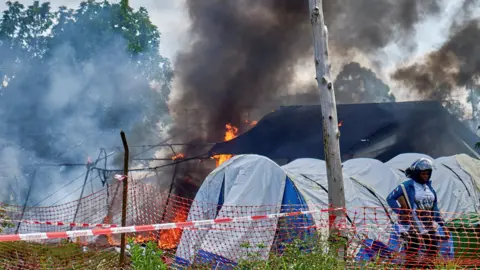
Tensions have escalated into violence, with MSF reporting arson of an Ebola treatment tent in Mongbwalu. 'People fear what they don't understand,' said local activist Elise Mwamba. 'Burnt tents and hospitals signal distrust—but this isn't just about the virus; it's about community agency.' The WHO noted 'many uncertainties and fears' among residents, highlighting how trust erosion complicates containment. The epidemic has also strained local economies as communities avoid affected areas.
With the outbreak spreading rapidly in regions governed by armed groups, health officials warn that without sustained community engagement, the crisis could worsen. The DRC's healthcare system, already weakened by years of conflict, faces a monumental challenge: balancing life-saving protocols with cultural sensitivity. As Uganda's health ministry and regional authorities brace for potential escalation, the deaths of the Red Cross volunteers serve as a stark reminder of the human cost when global health crises collide with local realities.}
The outbreak involving Bundibugyo Ebola, a strain with no proven vaccine, has prompted the World Health Organization (WHO) to escalate its public health risk alert from 'high' to 'very high' for the DRC. WHO chief Dr. Tedros Adhanom Ghebreyesus noted the region-wide risk remains 'high' but 'low' globally. The virus—which kills approximately one-third of infected individuals—has now spread to Uganda, where three new cases were confirmed, bringing total infections to five. The African Centres for Disease Control warned that 10 additional countries, including Angola, Burundi, and Rwanda, face potential transmission.
**Political Perspective**
The crisis intensifies amid DRC's political instability, with M23 rebel forces controlling parts of eastern regions where the outbreak is concentrated. Analysts note that security challenges hinder contact tracing and aid delivery, forcing international agencies to operate in fragile environments. While the DRC government has established emergency coordination, critics argue insufficient resources and weak infrastructure limit effectiveness. The Red Cross commended the volunteers' 'courage and humanity,' but the incident underscores systemic vulnerabilities in conflict-affected health systems.
**Cultural Perspective**
Traditional burial practices in DRC often involve direct contact with the deceased, conflicting with Ebola's requirement for safe body handling. Community resistance to quarantine protocols erupted when an angry crowd burned a hospital in Ituri after health workers prevented burial of a suspected Ebola victim. 'The virus requires bodies be treated as high-risk, but cultural norms make isolation difficult,' explains anthropologist Dr. Ntambu Kibwana. 'When traditions clash with science, fear becomes resistance.'
**Social Perspective**
Tensions have escalated into violence, with MSF reporting arson of an Ebola treatment tent in Mongbwalu. 'People fear what they don't understand,' said local activist Elise Mwamba. 'Burnt tents and hospitals signal distrust—but this isn't just about the virus; it's about community agency.' The WHO noted 'many uncertainties and fears' among residents, highlighting how trust erosion complicates containment. The epidemic has also strained local economies as communities avoid affected areas.
With the outbreak spreading rapidly in regions governed by armed groups, health officials warn that without sustained community engagement, the crisis could worsen. The DRC's healthcare system, already weakened by years of conflict, faces a monumental challenge: balancing life-saving protocols with cultural sensitivity. As Uganda's health ministry and regional authorities brace for potential escalation, the deaths of the Red Cross volunteers serve as a stark reminder of the human cost when global health crises collide with local realities.}