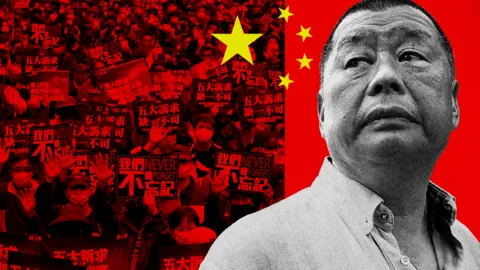
On a winter morning in 2022, Raphael Wong and Figo Chan walked into Hong Kong's Stanley prison to meet Jimmy Lai, a media billionaire who had been arrested two years prior facing national security charges. All three were part of the protests that gripped Hong Kong in 2019, demanding greater democracy and freedoms.
From lavish meals chatting about life to a reunion within the austere walls of a maximum security prison, the meeting starkly illustrated the drastic shifts in the socio-political landscape of Hong Kong. Lai, once known for his robust presence and outgoing personality, had visibly changed, losing weight and finding solace in simple meals.
Lai, a key figure in the 2019 protests, had hoped to use his popular newspaper, Apple Daily, to foster a liberal democracy in Hong Kong. This ambition proved perilous under a national security law imposed in 2020 by the Communist Party of China.
Renouncing his UK citizenship, Lai chose to stay in Hong Kong, expressing his gratitude for the city that had given him so much. This is my redemption, he stated in an interview before his arrest.
However, his vocal opposition to the ruling Communist Party, paired with his support for the pro-democracy movement, led to his downfall. Recently, he was declared guilty on multiple charges, including collusion with foreign forces, carrying severe implications including life imprisonment.
The verdict drew contrasting reactions. While Hong Kong's chief executive hailed it as a necessary action against divisive rhetoric, many observers view it as a grim indication of the diminishing space for dissent in Hong Kong. Critics argue Lai's trial exemplifies the broader suppression of free speech and autonomy in what was once a vibrant society.
In prison, Lai has taken to deepening his Catholic faith and reflecting on his values, spending hours praying and maintaining a stoic demeanor despite his circumstances. His family, worried about their beloved patriarch's health and freedom, continues to advocate for his release, expressing hope for a future where Hong Kong can reclaim its lost freedoms.
Lai's journey starkly illustrates the critical juncture at which Hong Kong stands—torn between an authoritarian rule and the aspirations of its citizens for democracy and autonomy.
From lavish meals chatting about life to a reunion within the austere walls of a maximum security prison, the meeting starkly illustrated the drastic shifts in the socio-political landscape of Hong Kong. Lai, once known for his robust presence and outgoing personality, had visibly changed, losing weight and finding solace in simple meals.
Lai, a key figure in the 2019 protests, had hoped to use his popular newspaper, Apple Daily, to foster a liberal democracy in Hong Kong. This ambition proved perilous under a national security law imposed in 2020 by the Communist Party of China.
Renouncing his UK citizenship, Lai chose to stay in Hong Kong, expressing his gratitude for the city that had given him so much. This is my redemption, he stated in an interview before his arrest.
However, his vocal opposition to the ruling Communist Party, paired with his support for the pro-democracy movement, led to his downfall. Recently, he was declared guilty on multiple charges, including collusion with foreign forces, carrying severe implications including life imprisonment.
The verdict drew contrasting reactions. While Hong Kong's chief executive hailed it as a necessary action against divisive rhetoric, many observers view it as a grim indication of the diminishing space for dissent in Hong Kong. Critics argue Lai's trial exemplifies the broader suppression of free speech and autonomy in what was once a vibrant society.
In prison, Lai has taken to deepening his Catholic faith and reflecting on his values, spending hours praying and maintaining a stoic demeanor despite his circumstances. His family, worried about their beloved patriarch's health and freedom, continues to advocate for his release, expressing hope for a future where Hong Kong can reclaim its lost freedoms.
Lai's journey starkly illustrates the critical juncture at which Hong Kong stands—torn between an authoritarian rule and the aspirations of its citizens for democracy and autonomy.