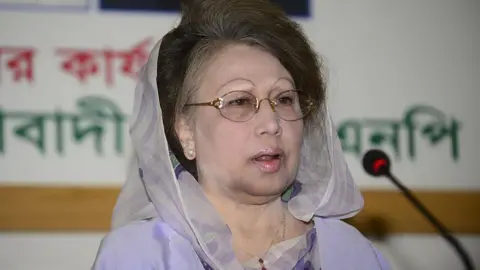
Khaleda Zia, who has died at the age of 80, was Bangladesh's first female prime minister. Her husband, Ziaur Rahman, a key figure in the country's independence struggle, was president in 1977 while she was seen as a 'shy housewife' devoted to their two sons.
After her husband's assassination in 1981, she took leadership of his Bangladesh Nationalist Party (BNP) and served two terms as prime minister in the 1990s and early 2000s. However, she faced various allegations of corruption and spent years in prison—charges that were dropped following a major political uprising in 2024 that forced her long-time rival, Sheikh Hasina, from power.
Khaleda Zia was born in West Bengal in 1945, the daughter of a tea trader. Her family relocated to Bangladesh after the partition of India, and she married Ziaur Rahman at the young age of 15. Ziaur led the fight for Bangladesh's independence in 1971 and proclaimed himself president after the military seized power in 1977.
Zia entered politics at a time when the military dictatorship ruled the country. During nine years of military rule, she became influential in the campaign for democracy, organizing protests and rallies despite being placed under house arrest.
Her political career peaked in 1991 when she became the first female prime minister of Bangladesh, overseeing significant reforms like making primary education free and mandatory. However, she lost the next election in 1996 to Sheikh Hasina but returned to power in 2001 with an alliance of Islamist parties, introduced constitutional amendments favoring female representation, and worked to improve education for women.
After political unrest in 2006 led to her arrest on corruption charges, Zia's political life was tumultuous. Despite enduring imprisonment and health challenges, she remained a key figure in Bangladeshi politics.
In 2024, amid political upheaval, Zia was released from confinement and permitted to seek medical treatment abroad. Her contributions to Bangladeshi society and politics remain notable, and she is survived by her elder son Tarique Rahman, who is positioned as a potential successor in the political sphere.
After her husband's assassination in 1981, she took leadership of his Bangladesh Nationalist Party (BNP) and served two terms as prime minister in the 1990s and early 2000s. However, she faced various allegations of corruption and spent years in prison—charges that were dropped following a major political uprising in 2024 that forced her long-time rival, Sheikh Hasina, from power.
Khaleda Zia was born in West Bengal in 1945, the daughter of a tea trader. Her family relocated to Bangladesh after the partition of India, and she married Ziaur Rahman at the young age of 15. Ziaur led the fight for Bangladesh's independence in 1971 and proclaimed himself president after the military seized power in 1977.
Zia entered politics at a time when the military dictatorship ruled the country. During nine years of military rule, she became influential in the campaign for democracy, organizing protests and rallies despite being placed under house arrest.
Her political career peaked in 1991 when she became the first female prime minister of Bangladesh, overseeing significant reforms like making primary education free and mandatory. However, she lost the next election in 1996 to Sheikh Hasina but returned to power in 2001 with an alliance of Islamist parties, introduced constitutional amendments favoring female representation, and worked to improve education for women.
After political unrest in 2006 led to her arrest on corruption charges, Zia's political life was tumultuous. Despite enduring imprisonment and health challenges, she remained a key figure in Bangladeshi politics.
In 2024, amid political upheaval, Zia was released from confinement and permitted to seek medical treatment abroad. Her contributions to Bangladeshi society and politics remain notable, and she is survived by her elder son Tarique Rahman, who is positioned as a potential successor in the political sphere.