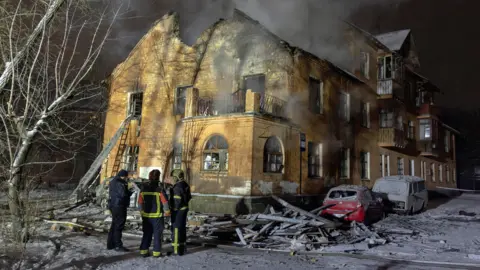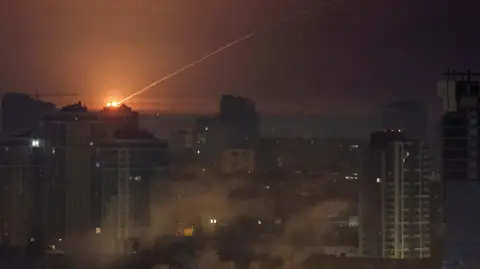
A large Russian aerial strike on Ukraine has again left half of Kyiv's residential buildings without heating or power as temperatures across the country continue to hover around -10C.
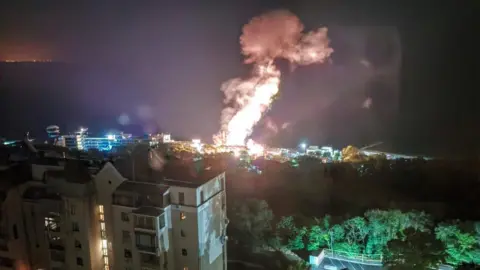
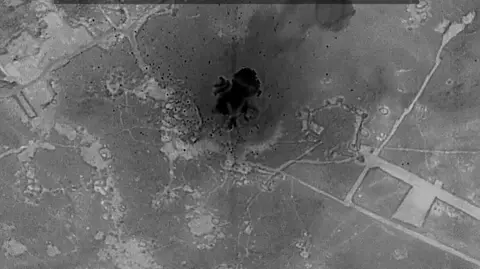
Drones, ballistic and cruise missiles targeted several locations in Ukraine, including Kyiv, Dnipro in the centre and Odesa in the south.
Air raid alerts in the capital lasted for most of the night. On Tuesday, sirens rang out again as Russian drones and cruise missiles approached the capital.
President Volodymyr Zelensky stated that a significant number of targets had been intercepted. However, he added that repelling that attack had cost Ukraine approximately €80m (£69m) solely in terms of air defense missiles.
Between Monday and Tuesday, at least four people died and 33 others were injured in strikes across Ukraine.
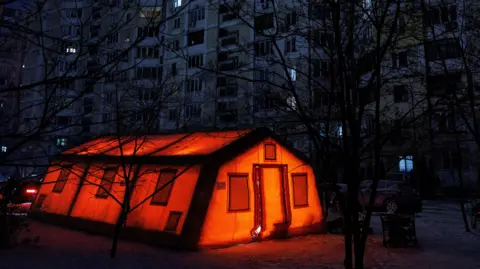
On Tuesday morning, more than 5,600 residential buildings – each with dozens of flats – in Kyiv woke up to no heating. A substantial part of the capital also has no water.
Mayor Vitalii Klitschko noted that nearly 80% of those buildings had just recently had their heating restored following earlier attacks, which had knocked out power previously. This work was undone overnight.
I have no electricity and no water, said Oleksandr Palii, a 29-year-old veteran. He reported being unable to sleep due to the explosions that persisted through the night.
President Zelensky had planned to attend the World Economic Forum in Davos, Switzerland, on Tuesday but decided to remain in Kyiv following the strikes.
As temperatures remain well below freezing, reports emerged of radiators bursting from frozen water, resulting in flooding in buildings, and fires igniting due to people using indoor gas heaters.
Residents have begun to resort to innovative ways to manage living conditions, such as using portable stoves for cooking. Still, the challenges are significant, especially for those facing financial difficulties.
I think people who are less well-off are coping much worse, remarked Olha Zasiadvovk, a parent of a young child.
Despite community efforts, the impact of sporadic electricity on food preservation has made daily life increasingly difficult, labeling this winter as the worst since the war commenced in 2022.
President Zelensky emphasized the continued need for air defense systems, asserting that the situation in ongoing conflict with Russia remains dire.
As tensions rise between the US and Europe, Zelensky reiterated the importance of timely missile deliveries to ensure Ukraine's defense, deeming consistent support critical for the safety of its people.