French President Emmanuel Macron is hosting Ukraine's leader Volodymyr Zelensky and other key allies of the country as efforts intensify to agree on security guarantees for Kyiv in the event of a ceasefire with Russia.
Heads of state and top officials from more than 30 countries, part of the so-called Coalition of the Willing, are meeting in Paris. Among those present are US mediators in peace talks, including Steve Witkoff and Jared Kushner, President Donald Trump's son-in-law.
Zelensky recently met with Trump and indicated that his plan to end the war with Russia was 90% agreed. However, these proposals have yet to be presented to Russia, which has responded negatively so far.
The outstanding 10% of the agreement yet to be finalized pertains to territorial concessions that Kyiv is being urged to agree to. Moscow currently controls around 75% of the Donetsk region and nearly 99% of neighboring Luhansk, crucial parts of the Donbas industrial region.
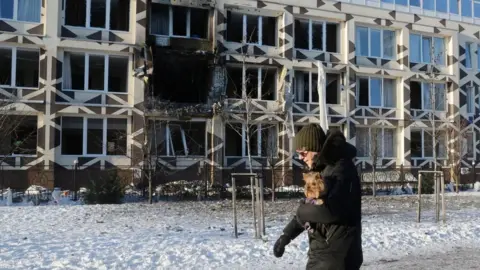
Since launching a full-scale invasion of Ukraine in February 2022, Russia has made slow progress and is hesitant to compromise on its ambitions in Donbas. The Kremlin has further intensified its attacks on Ukraine's energy infrastructure as winter sets in.
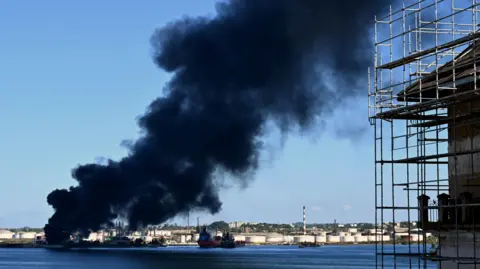
In retaliation, Ukraine has conducted drone strikes against Russian targets, including an oil depot in the Lipetsk region.
Participants in the Paris meeting include UK Prime Minister Keir Starmer and NATO Secretary General Mark Rutte. Discussions will likely tackle a multinational force to support Ukraine post-peace deal, alongside security guarantees against renewed Russian aggression and assistance for Ukraine’s military and economy.
A key concern among Ukraine's European allies is securing a commitment from the US to respond if Russia violates any peace agreement.
After Zelensky's talks with Trump, it was reported that Washington had proposed security guarantees for a 15-year term, but specifics on implementation remain unclear.
The backdrop of the Paris meeting is also clouded by recent US military actions in Venezuela, aimed at ousting President Nicolás Maduro. Trump announced intentions that could signal a return to assertive US interventionist policies, raising concerns among European leaders regarding the implications for global order.
As the host, Macron is expected to navigate these issues carefully to keep discussions focused on Ukraine without the broader geopolitical tensions overshadowing the agenda.