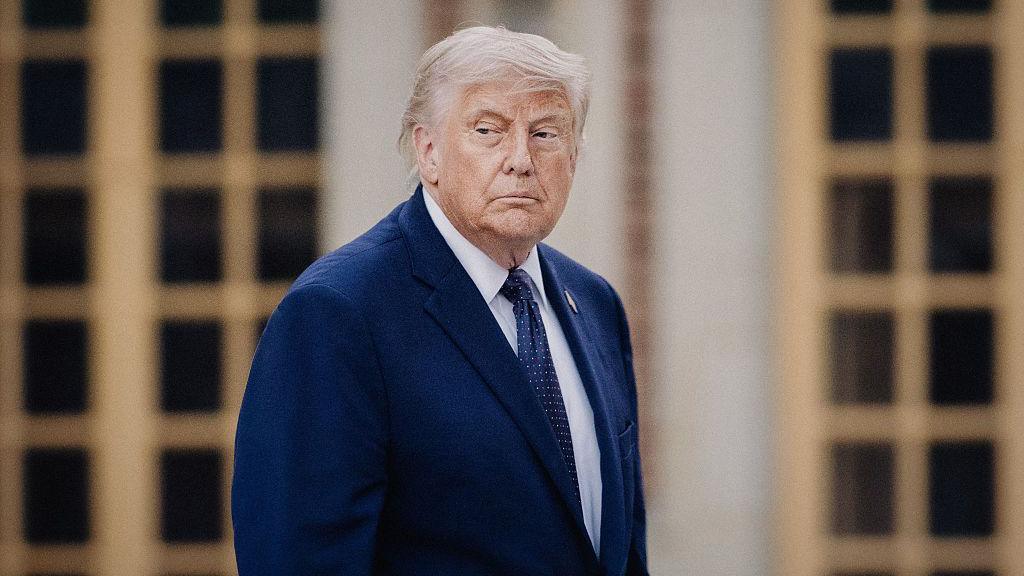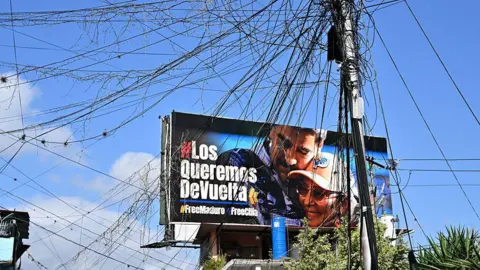
In recent developments surrounding the political chaos in Venezuela, many viewers of a news conference by US President Donald Trump were more intrigued by a surprising statement than by the announcement of Nicolás Maduro's capture. Trump revealed that following Maduro's detention, the US would 'run' Venezuela until a 'safe, proper and judicious transition' could be made.
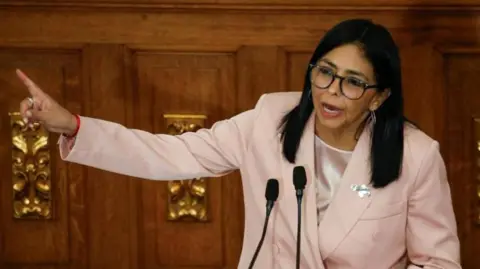
Equally unexpected was Trump’s mention of Delcy Rodríguez, Maduro's Vice President, as someone who was open to cooperating with US intentions to restore democracy in Venezuela. Yet, in her own subsequent press conference, Rodríguez rejected these overtures, denouncing Maduro's apprehension as a 'kidnapping' and asserting that Venezuela would not submit to becoming a colony of any foreign power.
This complex dynamic raises questions about the governance of Venezuela moving forward. Constitutionally, following the president's absence, the Vice President is expected to assume power. However, the US and numerous other nations had refused to acknowledge Maduro as the legitimate leader of Venezuela, claiming that the recent elections were fraudulent. Thus, with contradictory messages from both Rodríguez and the Trump administration, the situation leaves many wondering who truly holds authority in Venezuela.
The Supreme Court's declaration of Delcy Rodríguez as acting president seems logical on the surface but many analysts had anticipated a different response to a foreign intervention. The National Electoral Council (CNE) of Venezuela, which proclaimed Maduro's victory, has been criticized for lacking transparency and credibility. In contrast, Edmundo González, the opposition candidate widely believed to have won the last election, has gained recognition from the US and other nations as the president-elect.
The pressure mounts as Delcy Rodríguez finds herself supported by prominent figures from Maduro’s inner circle, but she simultaneously faces a considerable challenge to align the demands of the US with the expectations of her supporters loyal to Maduro. Trump proclaimed that Rodríguez purportedly stated, 'we’ll do whatever you want'- but the implications of such words remain to be seen as she navigates her role.
Rodríguez's posture in front of the media, where she asserted that there is still only one president in Venezuela - Nicolás Maduro - indicates the difficult balancing act she must maintain. The Trump administration’s stance on exerting pressure on Rodriguez's government could lead to a precarious political environment. Consequently, the trajectory of Venezuela amid this transitional phase is uncertain, with Delcy Rodríguez caught in a potentially untenable position between the demands of her government and international expectations.