The new leader of South Africa's second-largest party has to solve a problem that none of his three immediate predecessors were able to crack: how to extend the Democratic Alliance's popularity beyond its core support mostly made up of white people and other racial minorities.
Despite the advent of the multi-ethnic Rainbow Nation and the end of the racist apartheid system in 1994, South Africa remains fractured on racial lines.
For the DA to take charge of the country, Geordin Hill-Lewis, who took over the reins of the party from John Steenhuisen on Sunday, must find a way to bridge the divides and appeal to the country's black majority.
Since the 2014 general election its share of the vote has been stuck at 20% or thereabouts.
There was a lot of noise surrounding the 2024 election result, which saw the African National Congress support drop below 50% for the first time and forced it into a coalition with the DA and eight other parties. But the entry of the pro-business DA into power disguised the fact that it still only polled just shy of 22%.
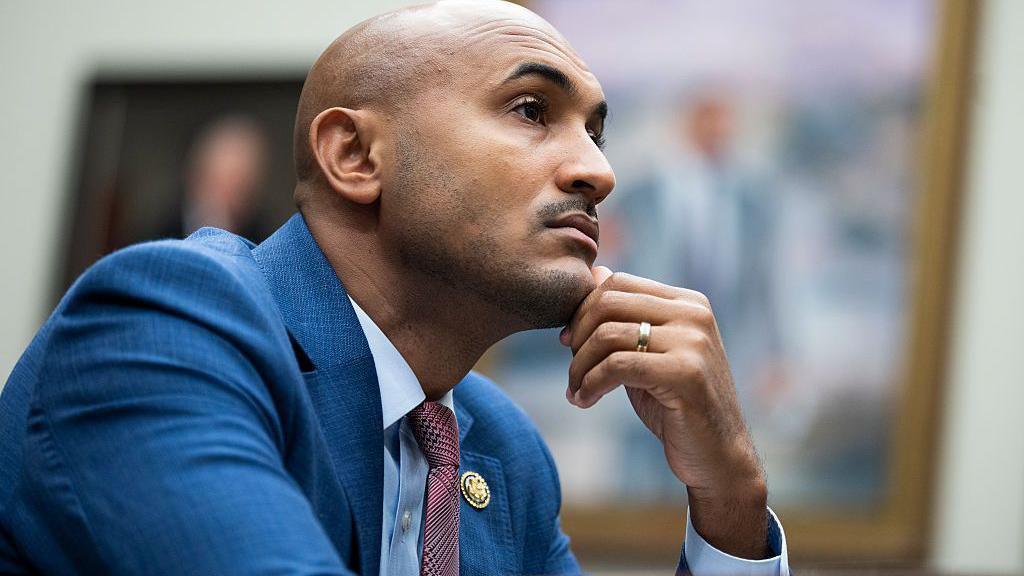
Hill-Lewis, who at 39 maintains a youthful appearance, has acknowledged this gap and speaking on the SABC, the national broadcaster, on Monday he said the party needed to close the trust deficit.
Briefing journalists later, he made it clear that winning the trust of more black people, who make up about 80% of the population, would be a main focus of mine.
For a long time the racial silos in South Africa have been firm and concrete but they are breaking and cracking and that's encouraging, he said.
The party's last attempt to appeal to more black voters backfired when its first black leader, Mmusi Maimane, quit in 2019 just four years into the role, saying that the DA was not the vehicle best suited to take forward the vision of building a united South Africa.
Things may be different this time as when Hill-Lewis was elected on Sunday, black politicians such as Solly Msimanga, the party's leader in Gauteng province, Siviwe Gwarube and Solly Malatsi were voted into senior party positions alongside him.
Hill-Lewis described the successful candidates as by far the most diverse and young group of leaders the DA has had in its history.
In his early statements as leader, Hill-Lewis did not outline any fresh policies which might broaden the party's appeal but he clearly believes that if he can continue hammering away at issues such as competence in government and the country's high crime levels, then people will come round.
Political analyst Dr Levy Ndou remarked that Hill-Lewis' election, alongside other young leaders in the party, ushers in a new era and could be a very good thing for the organisation. He noted that while race has always been a factor in the DA, the new leadership reflects a party that is moving towards being multiracial.
Unlike his predecessor Steenhuisen, who is a cabinet minister and member of parliament, Hill-Lewis has opted to remain as Cape Town's mayor while managing a complex relationship with the ANC government. This strategy might help him campaign effectively against the ANC, preparing for local elections in the coming months.
Hill-Lewis is committed to supporting his party's ministers in the coalition government. He plans to conduct a performance review of party roles, stating that positions must be earned through merit, indicating a potentially decisive approach to leadership within the DA.