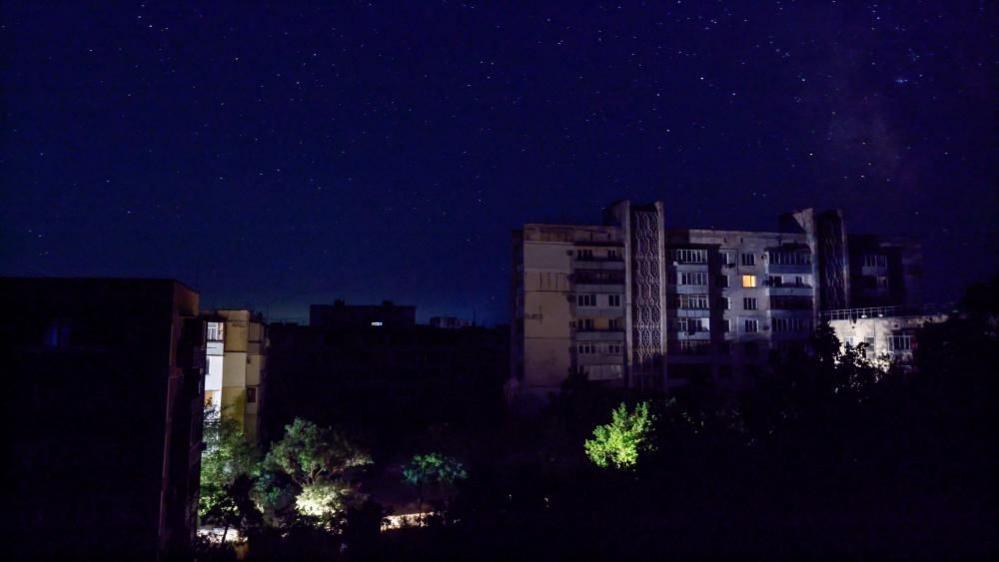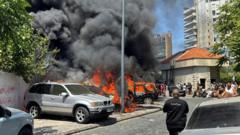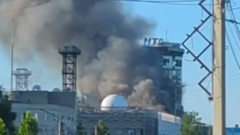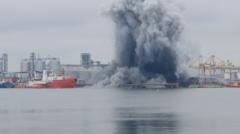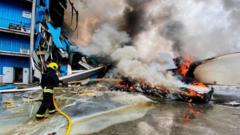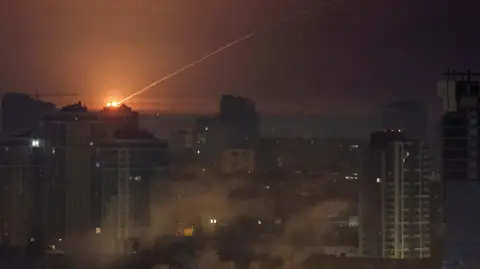
A large Russian aerial strike on Ukraine has left the Ukrainian parliament and half of Kyiv's residential buildings without heating or power as temperatures across the country continue to hover around -10C.
President Volodymyr Zelensky, in his evening address on Tuesday, said one million people in the capital remained without power.
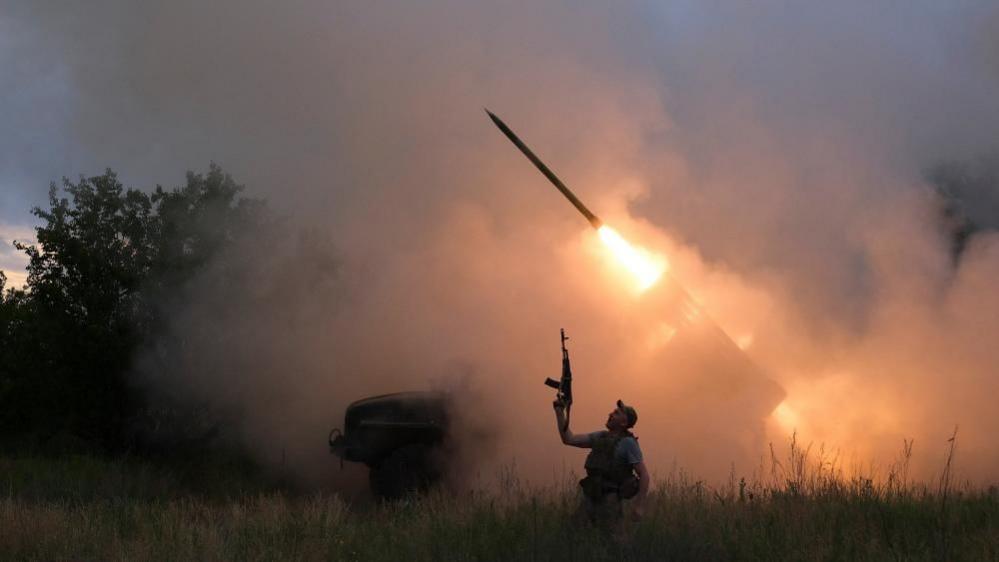
Drones, ballistic and cruise missiles targeted several locations in Ukraine overnight, including Kyiv, Dnipro in the centre, and Odesa in the south.
Zelensky said earlier a 'significant number' of targets had been intercepted. But he also noted that, in terms of air defense missile prices alone, repelling that attack had cost Ukraine about €80m (£69m).
Between Monday and Tuesday, at least four people died and 33 others were injured in strikes across Ukraine.
Air raid alerts in Kyiv lasted most of the night. Sirens rang out later as Russian drones and cruise missiles approached the capital.
On Tuesday morning, more than 5,600 residential buildings – each with dozens of flats – in Kyiv woke up to no heating. A large part of the capital also has no water.
Mayor Vitalii Klitschko stated that almost 80% of those buildings had just had their heating restored following a large-scale attack on January 9, which knocked out power for much of the city. Since then, technicians had managed to reinstate electricity and gas for thousands, only for that work to be undone overnight.
People reported dire situations, with one resident stating, 'I have no electricity and no water.' The outages led many to seek refuge in metro stations, with city officials reporting over 10,000 people, including nearly 800 children, took shelter there overnight.
President Zelensky had been scheduled to travel to the World Economic Forum in Davos, Switzerland, but opted to remain in Kyiv, emphasizing the urgent need for military support, including air defense systems, amid the continuing threat of aerial assaults.
As temperatures remain well below freezing, reports emerged of frozen pipes bursting, leading to flooding in buildings. Residents are resorting to innovative solutions, such as using portable stoves, to cope with frequent power cuts.
Despite the challenges, the resilience of the Ukrainian people is evident as they find ways to stay warm and safe, though many express that this winter is proving to be the hardest since the onset of the conflict.
Foreign Minister Andrii Sybiha called for an end to the ongoing conflict, stressing that the resilience of the citizens should not be an excuse for the war to continue.
As Zelensky pointed out, the unity of international partners is critical for Ukraine's defense, indicating that a significant portion of Ukraine's security now hinges on timely support from the United States and other allies.