In brief
The Nashville Public Library has digitized a collection of love letters exchanged between William Raymond Whittaker and Jane Dean during World War II. These letters, which display a mix of affection, doubt, and hopes for the future, give readers an intimate glimpse into the lives and struggles of the couple, enriching our understanding of love during a tumultuous time. Archivist Kelley Sirko emphasizes their significance, extending beyond love to address racial and gender dynamics of the era.
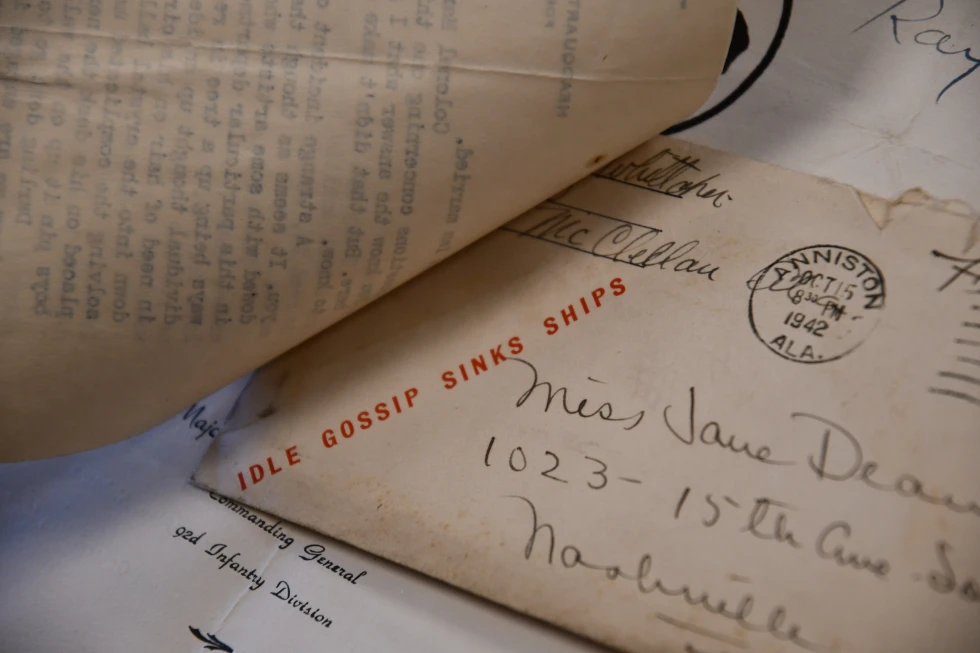
NASHVILLE, Tenn. (AP) — The Nashville Public Library showcases a digital collection of over 200 love letters that narrate the courtship and marriage of William Raymond Whittaker and Jane Dean during World War II, offering a personal perspective on romance amid wartime challenges.
Discovered in a Nashville home that belonged to Jane and her siblings, these letters, penned during the early 1940s, were donated to the Metro Nashville Archives in 2016. Ray, originally from New Rochelle, New York, attended Meharry Medical College in Nashville, where he met Jane, another student.
Their correspondence resumed after Ray was drafted into the Army in 1942. Stationed at Fort Huachuca in Arizona, he wrote to Jane, who was working as a medical lab technician at Vanderbilt University at the time.
A ‘pleasant and sad surprise’
The library possesses Jane's reply to Ray’s initial letter, which she opened formally, expressing mixed emotions about his enlistment. “It sure was a pleasant and sad surprise to hear from you,” she wrote. Her heartwarming and protective sentiments reflect the uncertainty of the wartime period.
According to Kelley Sirko, the library's metropolitan archivist, the couple's letters provide an intimate exploration into the complexities of love during global conflict. The letters also touch on racial and gender issues, giving a unique viewpoint on everyday life during the war.
Love and Doubts
Sparks began to fly between the couple through their correspondence, with Ray hinting at potential marriage as he faced a new assignment at Fort McClellan in Alabama. Jane, however, exhibited skepticism about Ray's feelings, questioning whether he truly loved her or was simply longing for companionship...
A ‘darling husband’
Ultimately, the couple married on November 7, with Jane expressing profound joy in her letters, while lamenting their separation post-wedding. She ended her letters with declarations of love, hoping for a future together, free from the constraints of war.
The letters not only capture the essence of their relationship but also reflect broader social dynamics of the time, illustrating the personal impacts of historical events.