During the war with Ukraine, the number of billionaires in Russia has reached an all-time high. However, in the 25 years Vladimir Putin has been in power, Russia's rich and powerful - known as oligarchs - have lost almost all their political influence.
All this is good news for the Russian president. Western sanctions have failed to turn the uber-rich into his opponents, and his carrot-and-stick policies have turned them into silent backers.
Former banking billionaire Oleg Tinkov knows exactly how the sticks work. The day after he criticized the war as 'crazy' in an Instagram post, his executives were contacted by the Kremlin. They were told his Tinkoff Bank, Russia's second-largest at the time, would be nationalized unless all ties to its founder were cut.
'I couldn't discuss the price,' Tinkov told the New York Times. 'It was like a hostage - you take what you are offered. I couldn't negotiate.'
Within a week, a company linked to Vladimir Potanin - Russia's fifth-richest businessman, who supplies nickel for fighter jet engines - announced that it was buying the bank. It was sold for only 3% of its true value, says Tinkov.
In the end, Tinkov lost almost $9bn (£6.5bn) of the fortune he once had and left Russia.
This is a far cry from the way things were before Putin became president. In the years following the breakup of the Soviet Union, some Russians became fabulously rich by taking ownership of massive enterprises formerly owned by the state, and by exploiting the opportunities of their country's nascent capitalism.
Their newly acquired wealth brought them influence and power during a period of political turmoil. Russia's most powerful oligarch, Boris Berezovsky, claimed to have orchestrated Putin's ascent to the presidency in 2000 and later expressed regret for doing so, stating, 'I didn't see the future greedy tyrant and usurper in him.'
However, by the time of Berezovsky's mysterious death in exile in the UK, Russia's oligarchs had lost their political standing.
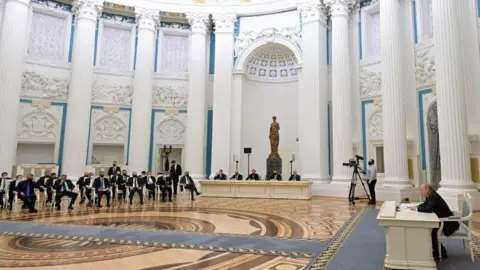
When Putin convened the country’s richest shortly after invading Ukraine on 24 February 2022, they appeared as pale, sleep-deprived figures knowing their fortunes would plummet. Despite losing $263bn collectively in the immediate war aftermath, the years that followed created new opportunities for those who aligned with the Kremlin's military objectives.
In 2024, it was reported that over half of Russia's billionaires either contributed directly to the military efforts or reaped benefits from the war. Their collective wealth approached pre-invasion heights once more.
While allowing loyalists to profit, Putin’s regime remains unforgiving towards dissidents, as seen in the case of oil tycoon Mikhail Khodorkovsky, sentenced to ten years in jail for pro-democracy actions.
Thus far, almost all of Russia's wealthiest have remained silent during the war, with public dissent leading many to flee the country.
In effect, Western attempts to fracture this alliance between oligarchs and the regime have failed, with the billionaires rallying around the Kremlin amidst heavy sanctions and shifting economic landscapes.