The South African government has dismissed accusations by the US that it harassed and intimidated American officials during a raid on a centre processing applications by white South Africans for refugee status in the US.
Tuesday's raid saw seven Kenyans expelled from South Africa for working in the country illegally.
The US accused South Africa of publishing the passport details of its officials, saying this was unacceptable and warning of severe consequences.
But South Africa has denied this, stating that it treats matters of data security with the utmost seriousness.
The US is offering asylum status to members of South Africa's Afrikaner community, asserting that the community is facing persecution. South Africa's government has rejected these claims.
President Donald Trump's administration has reduced its yearly intake of refugees from around the world from 125,000 to 7,500, but says it will prioritize Afrikaners, who are mostly descendants of Dutch and French settlers.
Tensions between the two countries have risen since Trump took office.
After the raid on the processing centre, South Africa expressed concern that foreign officials appeared to have coordinated with undocumented workers and said it had reached out to the US and Kenya to resolve the matter.
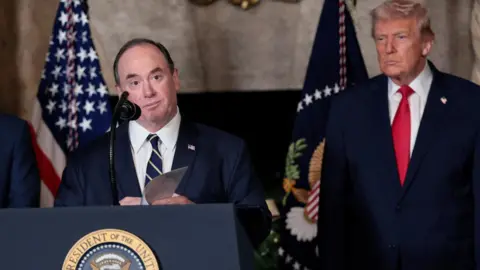
In a statement issued on Thursday, the US State Department condemned in the strongest terms the South African government's recent detention of US officials performing their duties to provide humanitarian support to Afrikaners.
The US has not provided any evidence to back up its accusation that South Africa had released the passport information of its officials.
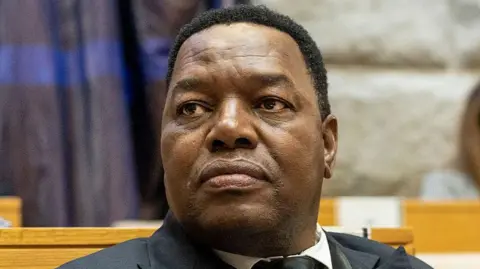
South Africa's home affairs department described these accusations as unsubstantiated.
South Africa treats all matters of data security with the utmost seriousness and operates under stringent legal and diplomatic protocols, it said in a statement.
It had previously stated that no US officials were arrested and the operation was not at a diplomatic site.
The government has explained that the Kenyans had applied for work permits, which had been denied.
The US has not addressed this directly but said it had worked to operate the refugee program within the confines of the law.
Trump has claimed that Afrikaners are being subjected to a genocide in South Africa, even though there is no evidence that white farmers are more likely to be killed than their black counterparts.
He offered Afrikaners refugee status earlier this year after South African President Cyril Ramaphosa signed a law allowing the government to seize land without compensation in rare instances.
A first group of about 50 people flew to the US on a chartered plane; it is unclear how many others have moved or are in the process of applying.
Because of the legacy of the apartheid system, most privately owned farmland in South Africa is owned by the white community, and the South African government is under pressure to provide more land to black farmers. However, it stresses that no land has yet been seized under the new law.
South Africa has repeatedly tried to mend fences with the Trump administration, most famously when Ramaphosa led a high-level delegation to the White House earlier this year.
However, this backfired when Trump confronted him with images and reports allegedly showing that the government was persecuting white people.
Last month, the US boycotted the G20 summit in South Africa and has stated it would not invite South African officials to its meetings since it took over the leadership of the grouping of the world's largest economies.