The U.S. Supreme Court on Monday is hearing a case that could have major implications for the independence of federal agencies long shielded from direct White House influence.
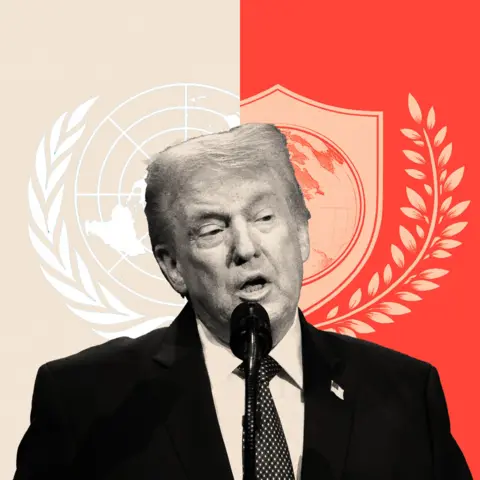
The case, called Trump v. Slaughter, arises from President Donald Trump's firing of Rebecca Kelly Slaughter, a Democratic appointee on the Federal Trade Commission (FTC), in March. The pivotal question before the court is whether Trump had the authority to remove a member of the FTC, given that federal law stipulates that commissioners can only be dismissed for 'inefficiency, neglect of duty, or malfeasance in office.'
Slaughter has challenged her dismissal, arguing that it was politically motivated and contrary to established rules governing her position. Following a lower court's ruling that her removal was unlawful, the Trump administration sought the Supreme Court's review. In September, the conservative-majority court ruled in a 6-3 decision to temporarily maintain her firing pending the case's resolution.
Trump's defense rests on the assertion that a president should exercise full control over all government agencies, even those designed by Congress to function independently. This is particularly relevant for the FTC, which was established in 1914 to protect public interests in trade practices. Its regulations require that a president can only remove commissioners for a specified cause.
Established regulations, which were reaffirmed by a Supreme Court ruling in 1935, uphold the independence of agencies such as the FTC. This was evident in the precedent known as Humphrey's Executor, which determined that while presidents may dismiss executive officers without cause, this authority does not extend to bodies like the FTC that operate in a quasi-judicial, quasi-legislative capacity.
Moreover, similar restrictions on presidential removal powers apply to other independent agencies, such as the National Labor Relations Board. The implications of the Court's upcoming decision could set a significant precedent for the balance of power between the presidency and federal regulatory bodies.
In connection to the case, the Supreme Court is also slated to review another argument concerning Trump's authority to remove Lisa Cook, a member of the Federal Reserve Board of Governors.