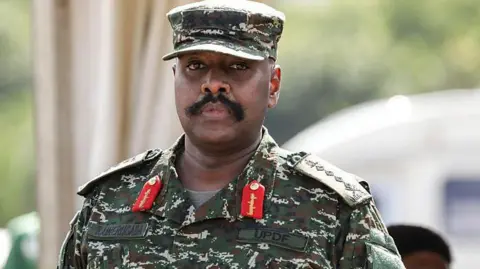
A fiery tweeter who is in charge of Uganda's military, Gen Muhoozi Kainerugaba is decried by his critics as being in the middle of an unholy trinity, or alliance, of three men who rule the East African nation with an iron fist.
Kainerugaba, the son of the country's long-time leader Yoweri Museveni, has posted on social media about the killing of opposition supporters during this month's fiercely contested presidential election.
In posts which were subsequently deleted, he threatened to have the testicles of defeated opposition candidate Bobi Wine removed. With the 81-year-old president winning a seventh term, analysts say this is likely to be his last term and he is grooming his 51-year-son to succeed him.
The so-called unholy alliance—a play on the Christian doctrine of the Holy Trinity—is made up of Museveni, Kainerugaba, and the president's powerful brother and special adviser, Salim Saleh.
Kenya-based analyst for the Institute for Security Studies think-tank, Nicodemus Minde, believes the description of this unholy alliance is apt and speaks volumes about the dynamics of power in Uganda.
Despite the grim backdrop, Kainerugaba's actions appear driven by loyalty or a desire to protect his father's administration. Critics cite that he has brooked little opposition in the country, acting decisively against anyone perceived as a threat.
The general's controversial online behavior raises questions about governance and freedom of expression under Museveni's prolonged leadership. In a recent tweet, he claimed, I fear no one on this planet because my bloodline is from Jesus Christ, further complicating the narrative surrounding his leadership aspirations.
Amidst threats and violence, opposition supporters accuse the ruling family of believing they have a divine right to govern Uganda. This perception, compounded by violent internet crackdowns and election-related repression, poses significant concerns regarding Uganda's political future.
While some view Kainerugaba's social media antics as mere provocations, his statements underscore escalating tensions, as evidenced by threats against opposition leaders and alleged military actions against dissenters.
As the narrative continues to evolve, Kainerugaba's role—both as a military leader and a potential political successor—is under scrutiny, with implications that extend beyond Uganda's borders.