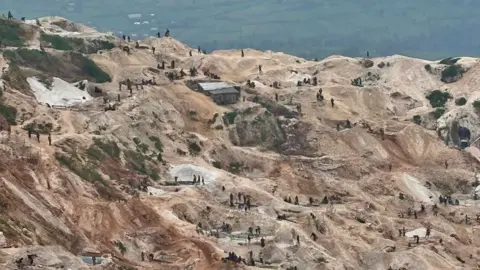
More than 200 people have been killed in a mine collapse in eastern Democratic Republic of Congo, coalition sources have confirmed.
The mine, in the town of Rubaya, collapsed on Wednesday as a result of heavy rains, according to Lumumba Kambere Muyisa, spokesperson for the North Kivu region’s rebel governor.
Among the deceased were many women and children engaged in the mining of coltan—crucial for the production of electronic devices like smartphones and computers.
A former supervisor of the site stated that poor maintenance and the delicate soil conditions had contributed to the eventual disaster. This lack of upkeep not only resulted in higher accident risks but also complicated rescue efforts.
Initial reports indicated that around 20 survivors are currently receiving treatment for injuries at local hospitals.
Shockwaves have rippled through the community, with one relative of a victim expressing disbelief at the loss of his cousin, who had aspirations of providing for his family.
Governor Erasto Bahati Musanga, recently appointed by the M23 rebels, visited survivors following the incident. Rubaya is among several towns in North Kivu governed by the M23, a group reportedly backed by Rwanda.
The mines in Rubaya contribute approximately 15% of the global coltan supply, with the metallic ore in high demand for its use in manufacturing high-performance capacitors found in a variety of electronic devices.
The UN has accused the M23 rebels of imposing taxes on the local mining sector for personal gain since taking control of the mines in 2024.
In light of this tragic event, the BBC has reached out to the Congolese government for comments regarding the mine conditions and the response to this disaster.
}