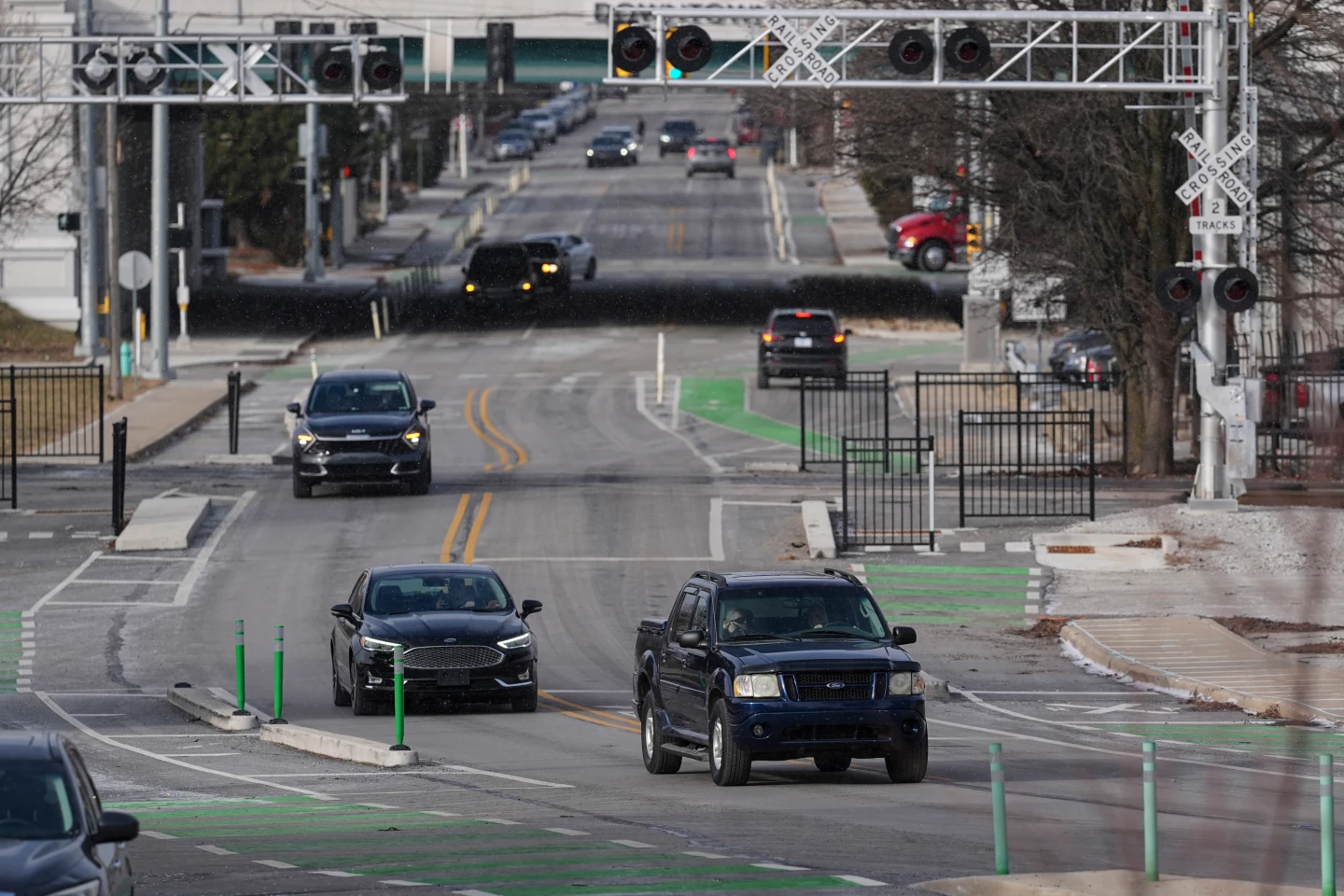
Excessive speeding was so common on parallel one-way streets passing a significant electronics plant that Indianapolis residents referred to the area as a “racetrack.” Initially two-way roads, Michigan and New York streets were transformed into one-way routes in the 1970s to facilitate efficient transport for RCA workers. However, after the plant's closure in 1995, these roads became increasingly appealing to speeding drivers—until last year, when city officials reinstated the two-way design.
“The reopening and conversion of those streets has been transformative for perceptions of that corridor,” said James Taylor, who manages a local community center.
Shifting back to two-way streets is a tactic being adopted by planners across the country, particularly in medium-sized cities, as they aim to foster safer environments and make downtown areas more attractive to the public, shoppers, and potential residents.
A street design U-turn
Dave Amos, an assistant professor at California Polytechnic State University, mentioned that historically, most major streets were constructed as two-way roads. One-way streets prioritize快速交通 over walkability, often leaving pedestrians and cyclists vulnerable.
Wade Walker, an engineer, highlighted a common misconception that one-way streets are safer for pedestrians because they only need to look in one direction. However, the increased complexity of traffic patterns at intersections involving both street types creates a daunting environment for pedestrians.
One way to divide a community
Located two hours south of Indianapolis, Louisville is undergoing a similar shift as it reconstructs its Main Street, a crucial artery that historically connected vibrant neighborhoods now hindered by previous one-way designs which cut off access and diminished local businesses.
Michael King, assistant director of transportation planning in Louisville, explained that the loss of connectivity due to one-way streets eroded the presence of local shops and community engagement.
Converting streets and skeptics
In Lynchburg, Virginia, the downtown Main Street is being reverted to two-way after community concerns regarding potential delivery restrictions subsided post-conversion. Business owners like Rodney Taylor admitted their initial fears were unfounded, and the redesign has been advantageous.
Similar confessions were echoed in Austin, Texas, as the city began reverting one-way streets, prompting a positive shift in public opinion toward these changes.
Opportunities in Indianapolis
With the redesigns of Michigan and New York streets complete, Indianapolis has an additional ten conversions planned, supported by federal funding. Locals anticipate new business opportunities arising in the newly revitalized areas.
“I’ve been navigating that neighborhood for 30 years,” Taylor remarked. “It’s familiar, yet it feels entirely different now.”