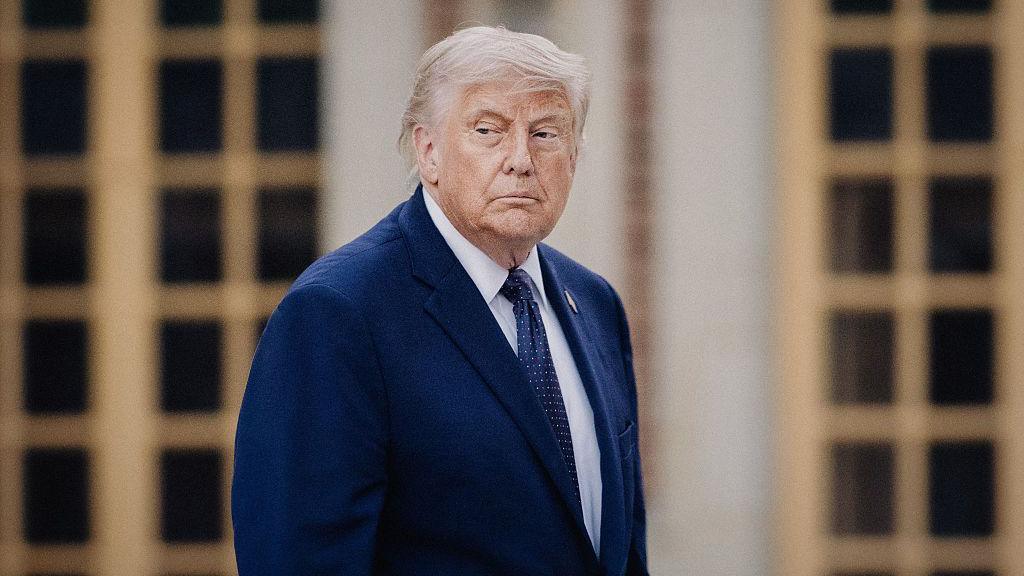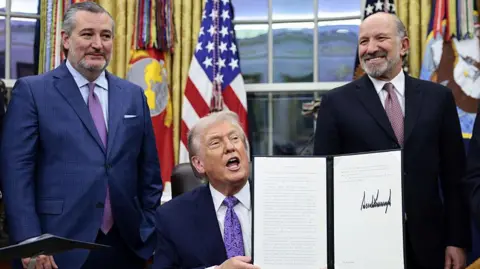
US President Donald Trump has signed an executive order aimed at blocking states from enforcing their own artificial intelligence (AI) regulations.
We want to have one central source of approval, Trump told reporters in the Oval Office on Thursday.
This executive order equips the Trump administration with the ability to counter what it describes as the most onerous state regulations, although White House AI adviser David Sacks clarified that the government would not oppose measures addressing children's safety.
The decision has been seen as a victory for technology companies that have long advocated for comprehensive US-wide AI legislation, potentially reinforcing the nation's competitive edge in this rapidly evolving industry.
Industry leaders warn that imposing state-level regulations could hinder innovation and slow down the US's efforts to outpace China in AI technology, which essential companies are heavily investing in.
However, the executive order has been met with significant backlash. California, home to major tech firms, is already enforcing AI regulations that Governor Gavin Newsom believes are crucial for protecting citizens from unregulated AI impacts.
In response to Trump's order, Newsom issued a statement accusing the President of corruption and seeking to benefit personally from weakening state protections against AI. He pointed out that the existing California regulations set an important standard that other states ought to follow.
Other states, such as Colorado and New York, have also implemented their own regulations governing AI development. Critics, including a representative from advocacy group Mothers Against Media Addiction, argue that removing states' rights to establish their own safeguards compromises the ability to protect residents adequately.