In brief
Following the dramatic capture of Nicolás Maduro, the article explores the meticulous intelligence operation that took place. It discusses the planning and execution of the mission, highlighting both the participation of CIA agents and technical support from cyber operations. While much has been clarified, key aspects, such as the identity of the informant and methods used to disable Caracas's infrastructures, remain uncertain, sparking further intrigue.
The continued mysteries surrounding the intelligence operation to capture Maduro
A week on from the dramatic raid that captured Venezuela's Nicolás Maduro, details of the intelligence surrounding the operation are becoming clearer, but some mysteries still remain.
The intelligence
The mission took months of planning and intelligence gathering. In August, the CIA is believed to have sent a team of undercover officers into Venezuela.
The US does not have a functioning embassy in the country, so the team could not use diplomatic cover and were working in what is known in the intelligence worlds as a denied area. They were on the ground to scout targets and recruit people who could help.
US officials have said they had one particular source who was able to provide detailed intelligence on Maduro's whereabouts which would have been critical to the operation. Identities of such sources are normally highly protected, but it quickly emerged it was a government source who must have been particularly close to Maduro and in his inner circle.
All of the human intelligence on the ground fed into a mosaic of intelligence to plan the operation in conjunction with technical intelligence like mapping and satellite imagery.
The mission
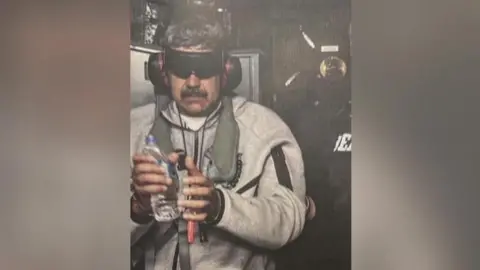
The scale, speed, and success of the operation were unprecedented. Around 150 aircraft were involved, with helicopters flying just above the terrain to get to Maduro's compound.
Still, some mysteries linger, such as how the US managed to turn off the lights in Caracas, facilitating a safer operation for special forces. Speculation suggests that US military hackers were involved in disabling Venezuelan networks to aid this mission.
The battle
Remarkably, everything went according to plan during the operation, with no US forces killed and only one helicopter reportedly hit. Although Cuba claimed that 32 of its nationals were killed defending Maduro, questions arose regarding whether certain elements of the regime gave assistance to the US forces.
The plan
The CIA conducted a thorough assessment ahead of the operation, examining potential outcomes if Maduro were removed. They believed that collaborating with elements of the existing regime would lead to more stability than trying to install an opposition in power.
Conclusion
The intelligence success in capturing Maduro invites further scrutiny of the operation's implications and the future relations between the US and Venezuela.