In brief
The 2026 Israeli election left no party with a majority as Netanyahu’s right‑wing bloc narrowed to 53 seats and the Arab bloc reached 19, a record high. The outcome, coupled with falling markets and a weakened shekel, deepened uncertainty over government formation. Analysts note that the balance of power will hinge on negotiations with Arab parties, while some blocs express reluctance to coalition with them.
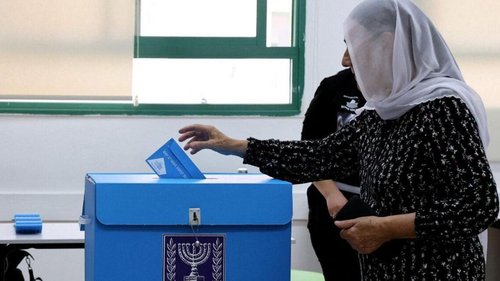
The 2026 Israeli parliamentary election finished on a tense note, with no single party or bloc holding a majority in the 120‑seat Knesset. The tally shows Netanyahu’s right‑wing coalition, anchored by Likud, projected to win 53 seats—down 15 from the previous term—while the Arab coalition, comprising Joint List and Ra’am, is expected to secure 19 seats, a record for Arab representation. Voter turnout reached 77.7%, the highest since 1999, and the final count of double‑envelope ballots is expected to conclude by Thursday, US-based United Press International reported on 31 October.
In the words of United Press International, Netanyahu’s Likud is projected to obtain 26 seats, the most any single party has secured. Meanwhile, his coalition is short of the 61 seats required for a governing majority, signalling a potentially prolonged negotiation period. The opposition bloc led by former military chief Gadi Eisenkot sits at 48 seats, also below the majority threshold. The UPI report noted that, if neither side can form a majority, they may need to partner with parties outside their own bloc, including the Arab parties that hold the balance of power.
“The preliminary poll results point to complete distrust in Netanyahu and the government of Oct. 7, of the Zionist majority and the majority of Israeli citizens,” Eisenkot said on social media, according to the UPI account. “If these are the final results, this is a victory for the statist‑Zionist majority in Israel.” Netanyahu replied, addressing supporters, that his coalition commanded a decisive majority among the Jewish and Zionist public, calling Likud “the largest party in Israel.” He urged the establishment of a strong, right‑wing, national government.
Economic Impact of Uncertainty
Meanwhile, the uncertainty has spilled into Israel’s financial markets. Xinhua, citing the Tel Aviv Stock Exchange, reported on 28 October that the benchmark TA‑35 index fell 1.81 percent and the TA‑125 dropped 2.46 percent, while the TA‑90 index plunged 4.47 percent and the TA‑Banks‑5 fell 4.85 percent. One‑stop trading rallied and then eased as investor sentiment reacted to the partial results, the agency said.
Gad Lior, a senior analyst at the Israeli daily Yedioth Ahronoth, explained the sell‑off in the coverage: “The sell‑off was driven by political uncertainty and concerns that another Netanyahu‑led government might again struggle to address economic challenges, particularly the high cost of living. Fears of a renewed war with Iran also weighed on investor sentiment.”
“The shekel weakened against major world currencies, falling 1.62 percent against the US dollar to 3.128 shekels per dollar,” the article added, followed by a note that the Bank of Israel had issued the rates.
Joseph Freiman, CEO of Israeli financial group Prico, told Xinhua that a shift in early counting results—from a projected lead for the opposition to a gradual lead for Netanyahu’s bloc—“reversed the shekel’s earlier gains.” He noted that most projections on election day had favored the Eisenkot bloc, but as vote counting progressed Netanyahu’s side gained momentum, altering market sentiment.
Coalition Negotiations and Arab Parties’ Role
Al Jazeera’s coverage on 27 and 28 October focused on the political implications of the seat distribution. The July 2026 article titled “Israel’s election: The battle between change and anti‑Palestinian sentiment” observed that both the ruling Likud bloc and the opposition coalition remained short of a majority, leaving the Arab‑dominated Ra’am and Joint List as the power brokers. With 19 seats expected, the Arab bloc could give either side the 61‑seat threshold.
“Turning the balance into a coalition will be difficult for parties such as Eisenkot’s, which promised not to form coalitions with Arab parties during the campaign,” Alon Pinkas, a former Israeli ambassador, told Al Jazeera. “There’s a price to pay because the Arabs can’t be kept outside and are only considered and co‑opted when you need their votes.”
In a separate Al Jazeera piece, Mansour Abbas, leader of the Ra’am party, said he hoped the final results would allow his anti‑Netanyahu bloc to secure the 61 seats required for a government. Abbas also noted that both major blocs had reached out to his party before and after the election.
The 2026 Al Jazeera report also highlighted that Palestinian citizens of Israel turned out in “record numbers,” with estimates near 80 percent, a figure that could contribute 17–19 seats for Arab parties. This surge, the outlet said, stemmed partly from opposition to the harsh treatment of the Israeli‑Palestinian minority since the 7 October 2023 attacks and the subsequent war in Gaza. Analyst commentary suggested that while the turnout was historic, it may also fuel calls for broader political inclusion.
Both Israeli media and foreign outlets emphasized that President Isaac Herzog will consult party leaders to decide who will be nominated as prime minister. The candidate then has 28 days, possibly extended by 14, to secure a coalition. If no coalition is formed, the mandate may transfer to another parliament member, or the Knesset could be dissolved for a new election.
In summary, Israel’s 2026 election produced a divided Knesset and a record for Arab representation, sparking economic downturns and political uncertainty. Analysts point to the necessity of cross‑party negotiations that include Arab parties as the key factor in shaping Israel’s next government. As the final count is expected by the end of the week, all eyes remain on how the balance of power will unfold.