In brief
The recent Oval Office meeting between Ukrainian President Volodymyr Zelensky and U.S. officials turned contentious over Zelensky's choice to wear a military-style sweatshirt instead of a suit. Critics argue this attire disrespects the dignity of the office, while supporters claim it symbolizes solidarity with Ukrainian soldiers. The exchange raised questions about respect in international diplomacy amid ongoing geopolitical tensions.
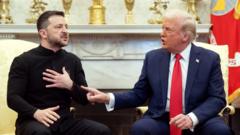
Ukrainian President Volodymyr Zelensky's recent visit to the White House became infamous not just for its diplomatic discussions but for the controversy sparked by his choice of attire. Wearing a black military-style sweatshirt featuring the Ukrainian trident emblem, Zelensky faced immediate commentary from former President Donald Trump, who remarked, “You’re all dressed up today.” This remark foreshadowed the tense exchanges that would soon unfold.Since the onset of the extensive Russian invasion in 2022, Zelensky has opted to forgo traditional formal wear, opting instead for casual clothing as a gesture of solidarity with Ukrainian soldiers fighting on the front lines. Critics, particularly from conservative circles in the U.S., have seized upon this to question his respectfulness towards American leadership. In previous encounters, such attire had become a recurring theme, and it finally reached a boiling point during his latest meeting with Trump and Vice President JD Vance.The tension reached its peak when Brian Glenn, a journalist known for his connections to conservative media, directly confronted Zelensky with a pointed question: “Why don’t you wear a suit?” He went on to contend that Zelensky’s attire underscored a lack of respect for the institution represented by the presidency. This question shifted the previously cordial atmosphere of the meeting, visibly tiring and irritating Zelensky, who responded, “I will wear costume after this war will finish.” His quip lightened the mood momentarily, eliciting laughter in the room, including from Trump.Following Glenn's line of questioning, discussions about aid and military support for Ukraine were overshadowed. Vance intensified the confrontation by repeatedly emphasizing the need for respect, referring to Zelensky formally while the latter casually called him "JD." The exchange soon deteriorated, escalating into what some observers described as a verbal clash. The opposition to Zelensky's dress was echoed online, with Glenn later tweeting that his attire indicated an “inner disrespect” for the U.S. Conversely, many took to social media to defend Zelensky, drawing parallels to past leaders like Winston Churchill, who often donned casual attire during warfare, underscoring the unique context of wartime diplomacy.Amid the heated dialogue, reports surfaced indicating that White House staff had expressed disappointment over Zelensky's fashion choice prior to the meeting, suggesting preparation protocols had not been followed. As discussions dwindled, Zelensky's lack of formal wear culminated in a tense standoff that ended with his ejection from the Oval Office, symbolizing a considerable low point in U.S.-Ukraine relations during a critical juncture of conflict.