Watch News on TV

Catch up on today's news


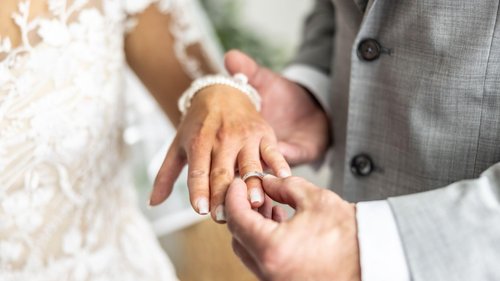
Same‑Sex Marriage Acceptance Flattens After Two Decades, Gallup Poll Shows","description":"A new Gallup poll reveals that support for same‑sex marriage and LGBTQ+ rights has begun to level off, with a sharp decline among Republican respondents.","summary":"Gallup’s most recent survey finds that 65 % of U.S. adults now deem same‑sex marriage legal, down from 71 % in 2022‑23. The drop is largely driven by Republicans, where only 37 % support legal recognition. The study also notes a decline in acceptance of gender transition and highlights ongoing political efforts to restrict LGBTQ+ rights.","image":"https://dims.apnews.com/dims4/default/f021dbd/2147483647/strip/true/crop/4512x3008+0+0/resize/599x399!/quality/90/?url=https%3A%2F%2Fassets.apnews.com%2F61%2F8d%2Fe731fea7e7aa22d9c1c9bd4ebac8%2Fcb40f45ed27b4fbe88e1e2ce9952995a","text":"<p>Acceptance of same‑sex marriage and LGBTQ+ relationships has hit a plateau after more than two decades of steady rise, according to a new Gallup poll. In May, the study found that 65 % of U.S. adults consider same‑sex marriage legal, a slight drop from 71 % in 2022 and 2023.</p>\n\n<p>The change is largely in Republican voters. Only 37 % of Democrats and 35 % of independents say same‑sex marriage should be legally valid, while a mere 37 % of Republicans believe it is acceptable. Likewise, just 35 % of Republicans view gay and lesbian relations as morally acceptable.</p>\n\n<p>Historically, support for same‑sex marriage surged over the years. In 1996 only 27 % of adults favored legal same‑sex marriage. The percentage climbed steadily until the 2015 Supreme Court ruling that made it legal nationwide, when over 70 % of people backed it. Gallup’s most recent data shows a small reversal of this trend, with the overall acceptance of gay and lesbian relationships declining to 62 % from 71 % in 2022.</p>\n\n<h2>Legal Status and Legislative Action</h2>\n\n<p>Same‑sex marriage remains recognized nationwide thanks to the 2015 Supreme Court decision, which ended a 12‑year period of differing state laws and court rulings. By last year, over 800,000 same‑sex couples were married in the United States, according to research by the Williams Institute at UCLA.</p>\n\n<p>Despite the legal status, some state legislatures have introduced bills aiming to restrict or ban same‑sex marriages. While most of these proposals have stalled, Tennessee’s House passed a measure denying private and public institutions recognition of same‑sex unions, and Idaho’s House called on the Supreme Court to reverse the 2015 ruling. In the same period, legislative efforts to secure protection for same‑sex marriage also surfaced but have seen limited success.</p>\n\n<p>Additionally, various state and federal policies have targeted transgender individuals. Republican‑led states have enacted restrictions on gender‑affirming medical care for minors, limited bathroom access for transgender people in schools, and barred transgender girls and women from certain sports competitions. President Trump’s administration released executive orders urging similar federal restrictions, though a recent court decision struck down a proposal to ban transgender troops from the army.</p>\n\n<h2>Broader Implications for LGBTQ+ Rights</h2>\n\n<p>Gallup’s data suggest a broader shift in attitudes toward LGBTQ+ issues. About 40 % of Americans now say that changing one's gender is morally acceptable, down from nearly 50 % in 2021. This trend mirrors tightening political and legal restrictions on transgender rights in many states.</p>\n\n<p>These findings, based on telephone interviews with 1,001 U.S. adults conducted from May 1 to 17, carry a margin of error of ± 4.0 percentage points. While not indicative of a universal reversal, the plateau signals that LGBTQ+ rights may face a new era of defined opposition and varied public opinion.</p>


George Santos Refers to DOJ After Betting Against State of the Union Attendance","description":"A prediction market flagged suspicious trades by former House member George Santos, prompting a referral to the Department of Justice.","summary":"Former U.S. Representative George Santos, who had reportedly bragged about attending President Donald Trump’s State of the Union address, was flagged by the prediction‑market platform Kalshi for suspicious trades indicating he would not attend. Kalshi reported the activity to the U.S. Department of Justice and the Commodity Futures Trading Commission, both of which are tightening enforcement of insider trading in prediction markets. Santos, who has faced multiple criminal charges and a federal prison sentence, declined to discuss his Kalshi account and has been unresponsive to inquiries. The incident follows broader scrutiny of betting platforms like Kalshi and Polymarket, amid calls from lawmakers to curb insider trading in these markets.","image":"","text":"<p>NEW YORK (AP) — A prediction market reported U.S. Rep. George Santos to federal prosecutors after he boasted he’d be going to President Donald Trump’s State of the Union address, then bet against his own attendance, according to a person familiar with the investigation.</p>\n<p>Kalshi, the online prediction marketplace, referred Santos to the Department of Justice after detecting suspicious trades made by the former congressman ahead of Trump’s February 24 speech, the insider said. The source spoke to The Associated Press on the condition of anonymity because they were not authorized to discuss the matter publicly.</p>\n<p>Kalshi also reported the trades to the Commodity Futures Trading Commission, a federal regulatory body that has vowed to crack down on insider trading in prediction marketplaces.</p>\n<p>The Justice Department and the CFTC did not immediately respond Tuesday to inquiries from the AP.</p>\n<p>Santos also did not respond to text messages or phone calls.</p>\n<p>The referral was first reported by NPR. Santos told NPR that he wasn’t aware of the investigation. He declined to say whether he had a Kalshi account.</p>\n<p>“I’m not saying yes, I’m not saying no,” Santos told NPR.</p>\n<p>The convicted ex‑congressman had repeatedly discussed his intention to attend the State of the Union, which came just four months after he was granted clemency by Trump in a fraud case that led to his expulsion from the U.S. House.</p>\n<p>On the eve of Trump’s speech, Kalshi put the odds of Santos attending at close to 75%. Then, minutes into the speech, Santos posted on X that he had been waylaid at the airport. Immediately, several social media users accused him of running another scheme.</p>\n<p>In March, Santos addressed the complaints on his podcast.</p>\n<p>“I guess people lost money,” he said. “Some people made unexpected money. That’s to show you how fragile these markets are.”</p>\n<p>Santos, who won office as a Republican after inventing a bogus persona as a Wall Street dealmaker, was sentenced to seven years in prison after pleading guilty to fraud and identity theft in 2024.</p>\n<p>After serving just 84 days, he was ordered released by Trump, who called Santos a “rogue” but said he didn’t deserve a harsh sentence and should get credit for voting Republican.</p>\n<p>Prediction markets, including Kalshi and its chief rival Polymarket, have drawn scrutiny as their businesses have expanded— with some lawmakers urging the platforms to do more to guard against insider trading.</p>\n<p>Both companies have said they are reporting suspicious trades to federal regulators. Some investigations have led to criminal charges. In April a soldier involved in the military operation to capture Venezuelan President Nicolás Maduro was charged with using classified information to win more than $400,000 predicting the date of his capture on Polymarket.</p>\n<p>In April, the Senate approved a bipartisan resolution to prevent its own members from using prediction markets.</p>


President Trump Takes Center Stage in America\u2019s 250th Anniversary Celebrations","description":"Former and current president Donald Trump has positioned himself as the headline performer and key figure in the 250th birthday festivities for the United States, turning national holidays into personal and political showcases.","summary":"In a sweeping move that has drawn both praise and criticism, President Donald Trump has turned America’s 250th anniversary into a personal brand showcase. With most scheduled musical acts withdrawing over concerns of the event being too linked to his persona, Trump announced he would headline the Great American State Fair. He has added UFC bouts, a new $250 banknote featuring his likeness, and gold commemorative coins to the picture. The president’s historic penchant for public displays—building a White House patio, redecorating Washington, and even hosting state dinners—runs parallel to his modern engagement with the anniversary’s “America 250” and “Freedom 250” initiatives that blend national heritage with promotional merchandising. Critics see the move as a blend of propaganda and self‑promotion. Amid the celebration, Trump’s attention to the upcoming FIFA World Cup shows how the president leverages global events as platforms for political messaging.","image":"https://dims.apnews.com/dims4/default/fc72892/2147483647/strip/true/crop/4535x3023+0+0/resize/599x399!/quality/90/?url=https%3A%2F%2Fassets.apnews.com%2F69%2F19%2F180862c0fcd10a7899071cf8bb32%2F5237373024674d20888ae9afa79553a0","text":"<p><strong>When almost all scheduled performers pulled out of the proposed “Great American State Fair” for America’s 250th birthday, the event quickly fell in danger of becoming just another Trump spectacle. The president’s response was simple: he announced he would be the headlining act for the fair.</strong></p>\n\n<p>Trump’s willingness to seize the spotlight is not new. In former campaign videos he has always shown hospitality, from first‑term dinners for business leaders to elaborate fundraisers at his Mar‑a‑Lago estate. This year, he has moved beyond the usual hosting rituals to make the 250th anniversary a personal brand showcase. The president’s suite of gestures includes a UFC bout at the White House, a new $250 bill bearing his picture, and a 24‑karat gold commemorative coin that echoes past presidential coinage from the 1920s.</p>\n\n<h2>Where Others Traditions End, Trump Finds New Stage</h2>\n\n<p>Historically, presidents have used centennial and bicentennial celebrations to highlight national unity. Andrew Jackson’s 1829 inauguration party was raucous enough to require police intervention; Franklin D. Roosevelt’s “Children’s Hours” rekindled pre‑Dinner parties at the White House. In the early 1970s, President Gerald Ford used Saturday night events and speeches at Valley Forge to promote his re‑election campaign, but he did not let the celebration veer on his own personality. Trump, in contrast, showcases a “generally contempt for norms” that makes the 250th bulletin a personal branding exercise.</p>\n\n<p>The president’s enthusiasm extends to the historic White House renovation project. White House spokesperson Davis Ingle emphasized that the “historic beautification” of Washington will underscore the city’s grandeur during the national celebrations. Even the newly minted $250 bill, designed by the State Department, bears Trump’s portrait, reflecting a monumental and personal fusion of memory and merchandise.</p>\n\n<h2>Historical Foundations and a New Era</h2>\n\n<p>Former presidents have set precedents that Trump is rearranging for personal gain. Ulysses S. Grant opened the Philadelphia Centennial Exposition, and Nixon thrust a “Bicentennial ERA” into the public eye, though he stepped out before the year’s end. Ford’s widespread appearances—from Valley Forge to Washington Harbour—pushed the bicentennial as a platform for public policy. In contrast to their focus on national symbolism and less on self‑branding, Trump has explicitly chosen festival game shows, UFC fights, and even an honorary World Cup task force to be at the year's center.</p>\n\n<h2>Trump’s Quest to Redefine History</h2>\n\n<p>Congressional groups such as America 250 and the Trump‑led Freedom 250 have drafted plans that suggest the president is eager to rewrite historic narratives to align with his vision. Trump’s “Restoring Truth and Sanity to American History” executive order aims to counter a revisionist movement.</p>\n\n<p>Historian Marc Stein, president of the Organization of American Historians, warns that the president’s approach is “closer to propaganda” and “cheerleading.” While his past administrations used celebrations to reinforce national heritage, Trump appears to pepper it with personal brand elements, thereby reshaping collective memory.</p>\n\n<h2>World Cup, a Global Stage for Trump</h2>\n\n<p>President Trump’s “exceeding‑normal‑limits” approach manifests through the 2026 FIFA World Cup hosted by the United States, Mexico, and Canada. He created a federal task force, a UNICEF peace prize for the event, and claimed a role in awarding the gold trophy—an act designed to place the president front‑and‑center.</p>\n\n<p>Trump even filmed the tournament draw at the Kennedy Center, which he sought to rename in his own honor, sparking legal challenges and public backlash. In December, Trump hosted the Kennedy Center Honors, a first for a sitting president, and joked on social media about exiting the presidency to focus on hosting full time.</p>\n\n<p>The blend of historic commemorations and Trump’s unprecedented personal promotion poses debate: is this a necessary evolution of presidential visibility or an attempt at self‑aggrandizement that eclipses the 250th anniversary’s core purpose?</p>


Trump Administration Reverses Federal Support for Racial Equity Programs in Schools, Announces Investigation into Diversity Initiatives","description":"For a decade, federal agencies enforced civil‑rights laws to combat school segregation. The Trump administration now reverses that approach, labeling diversity, equity and inclusion programs ‘illegal’ and threatening funding to schools that do not comply.","summary":"• Prior federal enforcement of civil‑rights laws promoted desegregation and racial equity in education.\n• Trump‑era policies, citing the 2023 Supreme Court ruling on affirmative action, frame DEI programs as illegal.\n• The Department of Education and Justice have launched investigations, withheld over $20 million in Chicago and targeted Los Angeles programs.\n• Critics argue the shift harms students of color; supporters claim it upholds anti‑discrimination law.\n• Los Angeles Unified School District’s Black Student Achievement Plan faces renewed scrutiny after a conservative filing.\n• The Justice Department claims longstanding desegregation plans are unconstitutional, while civil‑rights advocates dispute this claim.","image":"https://dims.apnews.com/dims4/default/d0c9f2f/2147483647/strip/true/crop/5658x3772+0+0/resize/599x399!/quality/90/?url=https%3A%2F%2Fassets.apnews.com%2F09%2F55%2Ffbf231d8c1dee9be1d7a88786c77%2Fdac6ee67612244598aa142223e07c899","text":"<div style=\"font-family:Arial,Helvetica,sans-serif; line-height:1.6; color:#333; max-width:800px; margin:auto; padding:20px;\">\n<h1 style=\"font-size:28px; margin-bottom:10px;\">Trump Administration Reverses Federal Support for Racial Equity Programs in Schools, Announces Investigation into Diversity Initiatives</h1>\n<p style=\"margin-bottom:15px;\">For decades the U.S. federal government mandated that schools comply with civil‑rights laws designed to redress historic discrimination against Black students and other people of color. The Justice Department had a long‑standing role in pressuring districts to desegregate, while the Department of Education promoted equal opportunity and held schools accountable for racial bias.</p>\n<p style=\"margin-bottom:15px;\">During the Trump administration, that stance began to shift. Agencies began branding longstanding equity programs as “illegal DEI” (diversity, equity and inclusion) initiatives and threatened to reduce or withdraw funding from schools that failed to comply. School districts have faced this pressure through investigations and lawsuits, and in some cases have lost federal grants that help train teachers or recruit mental‑health workers.</p>\n<h2 style=\"font-size:20px; margin-top:25px; margin-bottom:10px;\">Legal and Policy Context</h2>\n<p style=\"margin-bottom:15px;\">Civil‑rights attorneys argue the administration’s actions invert longstanding legal history. Michael Pillera, director of educational equity issues at the Lawyers’ Committee for Civil Rights Under Law, said:</p>\n<p style=\"margin-left:20px; font-style:italic; margin-bottom:15px;\">\"It’s literally flipping the purpose of civil rights law on its head, not just harming Black students and students of color, but entire school communities,\" said Pillera.</p>\n<p style=\"margin-bottom:15px;\">The Department of Education has responded that “programs receiving federal funding must follow the law that prohibits discrimination based on race.” A spokesperson, Amelia Joy, emphasized that “serving student needs and following the law are not irreconcilable mandates.”</p>\n<h2 style=\"font-size:20px; margin-top:25px; margin-bottom:10px;\">Impact on Specific School Districts</h2>\n<p style=\"margin-bottom:15px;\">In Chicago, the department withheld more than $20 million when the district refused to eliminate its Black Student Success Program, which aims to increase access to advanced coursework for Black students and reduce harsh discipline practices.</p>\n<p style=\"margin-bottom:15px;\">Los Angeles Unified School District (LAUSD) operates the Black Student Achievement Plan, providing extra teachers, counselors and a Black‑history curriculum. The program was originally designed, at least in part, on the basis of Black enrollment. In 2023, Defending Education – a Virginia‑based conservative group – filed a complaint alleging discrimination against non‑Black students. In response, LAUSD adjusted its criteria, focusing on metrics such as absenteeism and test scores, claiming that all students could now participate.</p>\n<p style=\"margin-bottom:15px;\">When Defending Education refiled its complaint in 2024, the Office for Civil Rights launched an investigation. Senior legal fellow Sarah Parshall Perry said the district had not meaningfully changed the program:</p>\n<p style=\"margin-left:20px; font-style:italic; margin-bottom:15px;\">\"Our goal is not to make LA Unified a target, but rather to make sure that when people say that they are eliminating racially discriminatory aspects of programs, that they’re actually making good on their word,\" said Perry.</p>\n<p style=\"margin-bottom:15px;\">LAUSD maintains that all programs are compliant with state and federal law and are open to everyone. Students such as junior Dorsey High School student Makeda Walker‑Deen attest to the program’s benefits, reporting increased college‑prep support and access to mental‑health resources.</p>\n<h2 style=\"font-size:20px; margin-top:25px; margin-bottom:10px;\">Justice Department’s Expanded Role</h2>\n<p style=\"margin-bottom:15px;\">The Justice Department has also released districts from long‑now‑established court‑ordered desegregation plans, deeming them “outdated and burdensome.” It has also targeted magnet schools that were designed to increase diversity, arguing that any race‑based consideration violates the Supreme Court’s ruling that Taylor v. University of Chicago (2023).</p>\n<p style=\"margin-bottom:15px;\">In LA, the Justice Department joined a lawsuit challenging the district’s PHBAO (Predominantly Hispanic, Black, Asian or Other Non‑Anglo) designation, which offers smaller classes and additional conferences when 70% of the school’s students are of color. The department’s assistant U.S. attorney stated the program was unconstitutional.</p>\n<p style=\"margin-bottom:15px;\">Defenders of the program, such as former civil‑rights attorney Mark Rosenbaum, counter that desegregation remains necessary to address systemic inequities and that the district still has not realized the promised department-funded support.</p>\n<p style=\"margin-bottom:15px;\">The federal government’s shift is part of a broader reversal of policies originating from civil‑rights‑era legislation. The altered approach reflects a change in how the federal response to racial inequality is framed – from proactive remedial action to a stricter anti‑affirmative‑action stance. Washington policy analysts predict that the new direction will deepen tensions between advocates who view equity programs as essential and policymakers who argue they represent unconstitutional discrimination.</p>\n<p style=\"margin-top:20px; font-style:italic;\"\">The Associated Press’ education coverage receives financial support from multiple private foundations. AP is solely responsible for all content. Find AP’s standards for working with philanthropies, a list of supporters and funded coverage areas at AP.org.</p>\n</div>


Muhammad Ali’s 10‑Year Anniversary: Lonnie Ali Calls for Compassionate Action","description":"On the decade‑anniversary of the boxing legend’s death, his wife Lonnie Ali urges the nation to honour his legacy with service and social justice","summary":"In Louisville, Kentucky, Lonnie Ali, the former spouse and lifelong companion of Muhammad Ali, highlighted his humanitarian legacy during the 10th anniversary of his death. Ahead of the \"Day of Compassion\" organized by the Muhammad Ali Center, she emphasized Ali’s mantra of service to others, urging Americans to unite, promote voting rights, and act with empathy in an increasingly polarised society. Ali, known as the “Louisville Lip,” was a prominent civil‑rights advocate and three‑time heavyweight champion. The anniversary day, set to become an annual event, reflects on one of Ali’s core values amidst a fractured nation and calls for political leaders to lead with compassion. The ceremony’s focus included the week‑long city celebrations of Ali’s life in 2016, featuring a historic funeral procession, speeches by national figures, and a public display of his influence, including the release of a USPS postage stamp bearing his likeness.","image":"","text":"<p>LOUISVILLE, Ky. – Muhammad Ali’s legacy extends beyond his stinging right jab, world titles and Olympic gold medal, to the heart and compassion he showed long after he left the ring, his wife Lonnie Ali said.</p>\n<p>“He transcended boxing into every space you can imagine,” she told The Associated Press this week ahead of the 10‑year anniversary of Ali’s death on June 3, 2016, after a long battle with Parkinson’s disease.</p>\n<p>“Muhammad lived by this mantra: service to others is the rent we pay for our room here on earth,” Lonnie Ali said during an interview at The Muhammad Ali Center in Louisville, Kentucky. “He showed up every day with kindness and empathy in his heart for people who are in need.”</p>\n<p>Ali, known as the “Louisville Lip” in his hometown, rose to prominence as a trash‑talking world champion boxer in the 1960s and began speaking about civil rights issues as his star was rising. He is widely regarded as the most famous and influential boxer of all time, winning the heavyweight title three times.</p>\n<p>The Ali Center is sponsoring a “Day of Compassion” on Wednesday, the 10th anniversary of his death, to promote acts of service and caring. Lonnie Ali, who serves as the center’s lifetime director, said the hope is an expanding annual event to highlight works of service and volunteering.</p>\n<p>The day will focus on one of “the core values that made up Muhammad Ali” in an increasingly divided country, she said.</p>\n<p>“Today, we are in a place where we are losing touch with our humanity and with each other,” she said. “It’s causing rifts, not just in families and communities, but in this nation. We’re becoming increasingly polarized and separated, and sort of retreating to people who think like us, look like us, and not really reaching out.”</p>\n<p>She also challenged political leaders to lead with compassion, noting the recent weakening of the 1965 Voting Rights Act by the Supreme Court.</p>\n<p>“We should always be thinking about how we can uplift a community, not how we can make it harder for them,” Lonnie Ali said. “We want equal representation in this country. You can’t have equal representation when you’re denying people voting rights, you can’t do that.”</p>\n<p>But there is hope, she said, and she saw that when the city of Louisville came together for a week‑long celebration of Ali’s life in 2016. The week was capped by a funeral procession through the city and past her late husband’s modest childhood home near downtown Louisville. Former President Bill Clinton and actor Billy Crystal spoke at his funeral, and Will Smith, who portrayed Ali in a 2001 movie, was a pallbearer.</p>\n<p>The outpouring of love for Ali at his hometown funeral service was livestreamed to millions around the world. A decade later, Ali’s face graced a U.S. Postal Service stamp for the first time, showing his enduring influence.</p>\n<p>“We’re talking about people who traveled thousands of miles to come here, who had never met the man, never laid eyes on him personally, but wanted to … give their last respects to him: kings, princes, presidents, heads of state, celebrities, sports figures,” Lonnie Ali said.</p>


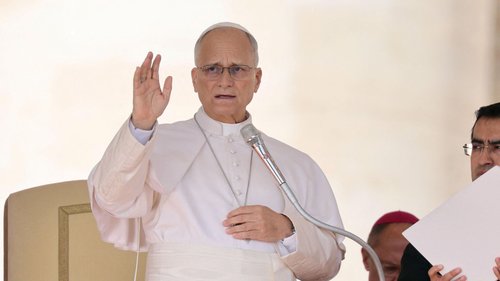
Pope Leo XIV Calls for AI Regulation in Encyclical, Sparks Global Conversation","description":"After releasing an encyclical on artificial intelligence, Pope Leo XIV’s stance on regulation has sparked viral online debates and highlighted the Vatican’s engagement with contemporary culture.","summary":"Pope Leo XIV’s first encyclical, \"Magnifica Humanitas,\" urges comprehensive regulation of AI and broadens the church’s dialogue with modern society. The document’s release triggered mixed reactions online—from memes to serious critique—and underscored the Vatican’s cultural outreach, including its recent pop‑culture engagement. Experts suggest the pope’s approach reflects a continued effort to address societal challenges while bridging church teachings with global issues.","image":"https://dims.apnews.com/dims4/default/c9fe054/2147483647/strip/true/crop/2922x1948+0+0/resize/599x399!/quality/90/?url=https%3A%2F%2Fassets.apnews.com%2F6b%2Fc2%2F25b9cdb43530b18dd1ac054cd557%2Fa45f8e3ebdc6447ca5bacbb963f5dd7d","text":"<p style=\"font-family:Arial,Helvetica,sans-serif;font-size:14px;line-height:1.6;\"><strong>Los Angeles (AP)</strong> — Pope Leo XIV released his first encyclical, <em>Magnifica Humanitas</em>, calling for robust regulation of artificial intelligence. The document has already sparked viral social‑media discussion, as Instagram users and X‑followers turned the text into memes and in‑depth analyses.</p>\n\n<p style=\"font-family:Arial,Helvetica,sans-serif;font-size:14px;line-height:1.6;\">After a brief interval from the Vatican’s announcement, the <a href=\"https://apnews.com/hub/pope-leo-xiv\" style=\"color:#0066cc;text-decoration:none;\">Saint Hoax<\/a> Instagram page amassed more than 3 million views in a video promoting the pope’s call to “disarm” AI. One commentator on <a href=\"https://twitter.com\" style=\"color:#0066cc;text-decoration:none;\">X (formerly Twitter) <\/a> responded that the papal message was “an affront to God” and compared it to “the new Tower of Babel.”</p>\n\n<p style=\"font-family:Arial,Helvetica,sans-serif;font-size:14px;line-height:1.6;\">Such reactions reveal a younger generation’s belief that political leaders are often unaware of AI’s societal impacts. Critics say governments lean toward economic growth at the expense of responsible oversight, while supporters of the encyclical view it as a timely intervention.</p>\n\n<p style=\"font-family:Arial,Helvetica,sans-serif;font-size:14px;line-height:1.6;\"><strong>Vatican Context</strong> — The pope is the first U.S.‑born pontiff, and his novelty partly stems from a playful, culturally resonant style. In addition to wearing Nike sneakers under his clerical garb, Leo quoted Gandalf from J.R.R. Tolkien’s <em>Lord of the Rings<\/em> in the encyclical, a nod that has fueled both amusement and admiration on the internet.</p>\n\n<p style=\"font-family:Arial,Helvetica,sans-serif;font-size:14px;line-height:1.6;\">Professor of religious studies <a href=\"https://www.northwestern.edu\" style=\"color:#0066cc;text-decoration:none;\">Robert Orsi<\/a> of Northwestern University notes the encyclical’s emphasis on “individual freedom, human happiness, and dignity,” echoing the tone of the <a href=\"https://www.ohio.gov\" style=\"color:#0066cc;text-decoration:none;\">Declaration of Independence<\/a> in a comparative historical sense.\n</p>\n\n<h2 style=\"font-family:Arial,Helvetica,sans-serif;font-size:18px;\">Cultural Outreach and Memes</h2>\n\n<p style=\"font-family:Arial,Helvetica,sans-serif;font-size:14px;line-height:1.6;\">During the week preceding the release, a group of Vatican‑visiting youths encouraged Pope Leo to participate in the “6‑7” meme—a “brain rot” trend—resulting in two viral videos. The pope’s willingness to engage with youth culture demonstrates the church’s intent to remain relevant to contemporary communication modes.</p>\n\n<p style=\"font-family:Arial,Helvetica,sans-serif;font-size:14px;line-height:1.6;\">The viral ice‑breaker approach extended to other domains. A Bostonestablished comedian, <a href=\"https://www.instagram.com\" style=\"color:#0066cc;text-decoration:none;\">Isabel Thurston<\/a> shared a 3‑million‑view Instagram video that juxtaposed margarita drinking with page‑by‑page study of the encyclical, indicating that many viewers saw the document as a new voice for Catholics and even non‑Catholics.</p>\n\n<h2 style=\"font-family:Arial,Helvetica,sans-serif;font-size:18px;\">The Encyclical and AI</h2>\n\n<p style=\"font-family:Arial,Helvetica,sans-serif;font-size:14px;line-height:1.6;\">The 42,300‑word encyclical condemns AI’s uncontrolled development while endorsing comprehensive governance, echoing concerns that AI can duplicate and augment “the irredeemable.” It mentions Anthropic’s co‑founder Christopher Olah as a collaborator, signaling a move to engage Silicon Valley directly. Critics argue that the Vatican’s partnership may dilute doctrinal clarity.</p>\n\n<p style=\"font-family:Arial,Helvetica,sans-serif;font-size:14px;line-height:1.6;\">Beyond AI, Leo closed the document by reevaluating the <a href=\"https://www.biblegateway.com\" style=\"color:#0066cc;text-decoration:none;\">justice‑war doctrine</a>, labeling it “outdated” and urging a preference for dialogue, diplomacy, and forgiveness—an approach that has triggered debate in doctrinal circles.</p>\n\n<h2 style=\"font-family:Arial,Helvetica,sans-serif;font-size:18px;\">Hollywood, Sports, and Modernity</h2>\n\n<p style=\"font-family:Arial,Helvetica,sans-serif;font-size:14px;line-height:1.6;\">Pope Leo also celebrated American culture in a Vatican event featuring actors such as Cate Blanchett and Spike Lee, who presented him with a custom New York Knicks jersey. He has also been photographed with Chicago White Sox memorabilia, indicating a broader strategy to connect faith with popular media.</p>\n\n<p style=\"font-family:Arial,Helvetica,sans-serif;font-size:14px;line-height:1.6;\">Orsi stresses that Leo’s engagement reflects a continuity with Pope Francis’ emphasis on Vatican‑II reforms, positioning the church as a participant in societal progression rather than a detached observer.</p>\n\n<p style=\"font-family:Arial,Helvetica,sans-serif;font-size:13px;line-height:1.4;\">___<br>Associated Press religion coverage is sponsored by the AP, The Conversation US and funded by Lilly Endowment Inc. The AP is the sole publisher of this content.<\/p>

Featured Sections

OPINION

President Trump Takes Center Stage in America\u2019s 250th Anniversary Celebrations","description":"Former and current president Donald Trump has positioned himself as the headline performer and key figure in the 250th birthday festivities for the United States, turning national holidays into personal and political showcases.","summary":"In a sweeping move that has drawn both praise and criticism, President Donald Trump has turned America’s 250th anniversary into a personal brand showcase. With most scheduled musical acts withdrawing over concerns of the event being too linked to his persona, Trump announced he would headline the Great American State Fair. He has added UFC bouts, a new $250 banknote featuring his likeness, and gold commemorative coins to the picture. The president’s historic penchant for public displays—building a White House patio, redecorating Washington, and even hosting state dinners—runs parallel to his modern engagement with the anniversary’s “America 250” and “Freedom 250” initiatives that blend national heritage with promotional merchandising. Critics see the move as a blend of propaganda and self‑promotion. Amid the celebration, Trump’s attention to the upcoming FIFA World Cup shows how the president leverages global events as platforms for political messaging.","image":"https://dims.apnews.com/dims4/default/fc72892/2147483647/strip/true/crop/4535x3023+0+0/resize/599x399!/quality/90/?url=https%3A%2F%2Fassets.apnews.com%2F69%2F19%2F180862c0fcd10a7899071cf8bb32%2F5237373024674d20888ae9afa79553a0","text":"<p><strong>When almost all scheduled performers pulled out of the proposed “Great American State Fair” for America’s 250th birthday, the event quickly fell in danger of becoming just another Trump spectacle. The president’s response was simple: he announced he would be the headlining act for the fair.</strong></p>\n\n<p>Trump’s willingness to seize the spotlight is not new. In former campaign videos he has always shown hospitality, from first‑term dinners for business leaders to elaborate fundraisers at his Mar‑a‑Lago estate. This year, he has moved beyond the usual hosting rituals to make the 250th anniversary a personal brand showcase. The president’s suite of gestures includes a UFC bout at the White House, a new $250 bill bearing his picture, and a 24‑karat gold commemorative coin that echoes past presidential coinage from the 1920s.</p>\n\n<h2>Where Others Traditions End, Trump Finds New Stage</h2>\n\n<p>Historically, presidents have used centennial and bicentennial celebrations to highlight national unity. Andrew Jackson’s 1829 inauguration party was raucous enough to require police intervention; Franklin D. Roosevelt’s “Children’s Hours” rekindled pre‑Dinner parties at the White House. In the early 1970s, President Gerald Ford used Saturday night events and speeches at Valley Forge to promote his re‑election campaign, but he did not let the celebration veer on his own personality. Trump, in contrast, showcases a “generally contempt for norms” that makes the 250th bulletin a personal branding exercise.</p>\n\n<p>The president’s enthusiasm extends to the historic White House renovation project. White House spokesperson Davis Ingle emphasized that the “historic beautification” of Washington will underscore the city’s grandeur during the national celebrations. Even the newly minted $250 bill, designed by the State Department, bears Trump’s portrait, reflecting a monumental and personal fusion of memory and merchandise.</p>\n\n<h2>Historical Foundations and a New Era</h2>\n\n<p>Former presidents have set precedents that Trump is rearranging for personal gain. Ulysses S. Grant opened the Philadelphia Centennial Exposition, and Nixon thrust a “Bicentennial ERA” into the public eye, though he stepped out before the year’s end. Ford’s widespread appearances—from Valley Forge to Washington Harbour—pushed the bicentennial as a platform for public policy. In contrast to their focus on national symbolism and less on self‑branding, Trump has explicitly chosen festival game shows, UFC fights, and even an honorary World Cup task force to be at the year's center.</p>\n\n<h2>Trump’s Quest to Redefine History</h2>\n\n<p>Congressional groups such as America 250 and the Trump‑led Freedom 250 have drafted plans that suggest the president is eager to rewrite historic narratives to align with his vision. Trump’s “Restoring Truth and Sanity to American History” executive order aims to counter a revisionist movement.</p>\n\n<p>Historian Marc Stein, president of the Organization of American Historians, warns that the president’s approach is “closer to propaganda” and “cheerleading.” While his past administrations used celebrations to reinforce national heritage, Trump appears to pepper it with personal brand elements, thereby reshaping collective memory.</p>\n\n<h2>World Cup, a Global Stage for Trump</h2>\n\n<p>President Trump’s “exceeding‑normal‑limits” approach manifests through the 2026 FIFA World Cup hosted by the United States, Mexico, and Canada. He created a federal task force, a UNICEF peace prize for the event, and claimed a role in awarding the gold trophy—an act designed to place the president front‑and‑center.</p>\n\n<p>Trump even filmed the tournament draw at the Kennedy Center, which he sought to rename in his own honor, sparking legal challenges and public backlash. In December, Trump hosted the Kennedy Center Honors, a first for a sitting president, and joked on social media about exiting the presidency to focus on hosting full time.</p>\n\n<p>The blend of historic commemorations and Trump’s unprecedented personal promotion poses debate: is this a necessary evolution of presidential visibility or an attempt at self‑aggrandizement that eclipses the 250th anniversary’s core purpose?</p>
AP

President Trump Takes Center Stage in America\u2019s 250th Anniversary Celebrations","description":"Former and current president Donald Trump has positioned himself as the headline performer and key figure in the 250th birthday festivities for the United States, turning national holidays into personal and political showcases.","summary":"In a sweeping move that has drawn both praise and criticism, President Donald Trump has turned America’s 250th anniversary into a personal brand showcase. With most scheduled musical acts withdrawing over concerns of the event being too linked to his persona, Trump announced he would headline the Great American State Fair. He has added UFC bouts, a new $250 banknote featuring his likeness, and gold commemorative coins to the picture. The president’s historic penchant for public displays—building a White House patio, redecorating Washington, and even hosting state dinners—runs parallel to his modern engagement with the anniversary’s “America 250” and “Freedom 250” initiatives that blend national heritage with promotional merchandising. Critics see the move as a blend of propaganda and self‑promotion. Amid the celebration, Trump’s attention to the upcoming FIFA World Cup shows how the president leverages global events as platforms for political messaging.","image":"https://dims.apnews.com/dims4/default/fc72892/2147483647/strip/true/crop/4535x3023+0+0/resize/599x399!/quality/90/?url=https%3A%2F%2Fassets.apnews.com%2F69%2F19%2F180862c0fcd10a7899071cf8bb32%2F5237373024674d20888ae9afa79553a0","text":"<p><strong>When almost all scheduled performers pulled out of the proposed “Great American State Fair” for America’s 250th birthday, the event quickly fell in danger of becoming just another Trump spectacle. The president’s response was simple: he announced he would be the headlining act for the fair.</strong></p>\n\n<p>Trump’s willingness to seize the spotlight is not new. In former campaign videos he has always shown hospitality, from first‑term dinners for business leaders to elaborate fundraisers at his Mar‑a‑Lago estate. This year, he has moved beyond the usual hosting rituals to make the 250th anniversary a personal brand showcase. The president’s suite of gestures includes a UFC bout at the White House, a new $250 bill bearing his picture, and a 24‑karat gold commemorative coin that echoes past presidential coinage from the 1920s.</p>\n\n<h2>Where Others Traditions End, Trump Finds New Stage</h2>\n\n<p>Historically, presidents have used centennial and bicentennial celebrations to highlight national unity. Andrew Jackson’s 1829 inauguration party was raucous enough to require police intervention; Franklin D. Roosevelt’s “Children’s Hours” rekindled pre‑Dinner parties at the White House. In the early 1970s, President Gerald Ford used Saturday night events and speeches at Valley Forge to promote his re‑election campaign, but he did not let the celebration veer on his own personality. Trump, in contrast, showcases a “generally contempt for norms” that makes the 250th bulletin a personal branding exercise.</p>\n\n<p>The president’s enthusiasm extends to the historic White House renovation project. White House spokesperson Davis Ingle emphasized that the “historic beautification” of Washington will underscore the city’s grandeur during the national celebrations. Even the newly minted $250 bill, designed by the State Department, bears Trump’s portrait, reflecting a monumental and personal fusion of memory and merchandise.</p>\n\n<h2>Historical Foundations and a New Era</h2>\n\n<p>Former presidents have set precedents that Trump is rearranging for personal gain. Ulysses S. Grant opened the Philadelphia Centennial Exposition, and Nixon thrust a “Bicentennial ERA” into the public eye, though he stepped out before the year’s end. Ford’s widespread appearances—from Valley Forge to Washington Harbour—pushed the bicentennial as a platform for public policy. In contrast to their focus on national symbolism and less on self‑branding, Trump has explicitly chosen festival game shows, UFC fights, and even an honorary World Cup task force to be at the year's center.</p>\n\n<h2>Trump’s Quest to Redefine History</h2>\n\n<p>Congressional groups such as America 250 and the Trump‑led Freedom 250 have drafted plans that suggest the president is eager to rewrite historic narratives to align with his vision. Trump’s “Restoring Truth and Sanity to American History” executive order aims to counter a revisionist movement.</p>\n\n<p>Historian Marc Stein, president of the Organization of American Historians, warns that the president’s approach is “closer to propaganda” and “cheerleading.” While his past administrations used celebrations to reinforce national heritage, Trump appears to pepper it with personal brand elements, thereby reshaping collective memory.</p>\n\n<h2>World Cup, a Global Stage for Trump</h2>\n\n<p>President Trump’s “exceeding‑normal‑limits” approach manifests through the 2026 FIFA World Cup hosted by the United States, Mexico, and Canada. He created a federal task force, a UNICEF peace prize for the event, and claimed a role in awarding the gold trophy—an act designed to place the president front‑and‑center.</p>\n\n<p>Trump even filmed the tournament draw at the Kennedy Center, which he sought to rename in his own honor, sparking legal challenges and public backlash. In December, Trump hosted the Kennedy Center Honors, a first for a sitting president, and joked on social media about exiting the presidency to focus on hosting full time.</p>\n\n<p>The blend of historic commemorations and Trump’s unprecedented personal promotion poses debate: is this a necessary evolution of presidential visibility or an attempt at self‑aggrandizement that eclipses the 250th anniversary’s core purpose?</p>


Advertisement image

Advertisement


Follow us

© 2024 SwissX REDD UK ltd. All Rights Reserved.