Aftershocks Reverberate: Philippines Faces Rising Casualties as Disaster Response Yields Crucial Insights
At 04:27 to 04:28 a.m. local time, a powerful 7.8‑magnitude quake hit the southern island of Mindanao, leaving 37 confirmed dead and 487 injured. The event unfolded on the Cotabato Trench, an area that has produced severe tremors throughout the last century, including a 7.9‑magnitude quake in 1976 that triggered a tsunami and claimed around 5,000 lives.
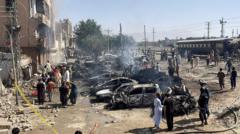
Since the main shock, hundreds of aftershocks—some exceeding 5.0 on the Richter scale—have rippled through the region, shaking homes, schools, and streets. Many buildings collapsed, roads were cracked or buried by landslides, and power and telephone services were severed in widespread areas.
The cascading damage has rendered traditional rescue routes difficult. Officials in Davao Occidental reported that the only highway into the town of Jose Abad Santos had been fifty‑percent blocked by landslides, forcing relief supplies to be flown into isolated barangays. “Relief goods have to be flown in to far‑flung villages,” said Mayor Jason John Joyce.
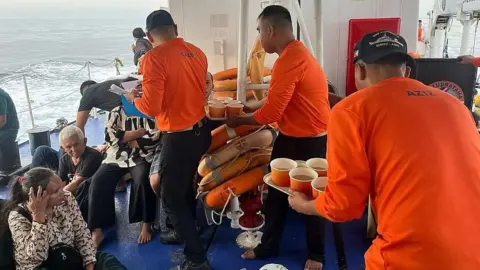
Government mobilization has been swift. President Ferdinand Marcos Jr. deployed the entire civil‑aerospace apparatus to Mindanao, with transportation and health secretaries flying in from Manila. Health Secretary Teodoro Herbosa noted that even as doctors treated injuries, they were struck by ongoing aftershocks.
Response experts point to lessons from previous quakes. National Seismology Minister and veteran seismologist Renato Solidum emphasized the importance of timing in school assemblies. He explained that many students survived because they were outside during a Monday‑morning assembly when the quake struck. “They were lucky to be outside,” he said. “They could stay put and sit down.”
While scientists weigh the potential for a rising death toll, local officials are focusing on search and rescue. Assistant Secretary Bernardo Alejandro of the disaster response agency stated on DZMM radio: “We hope the death toll does not increase further, but we are expecting it to move. Our priority today is search and rescue.”
The aftershocks also sparked tsunami warnings in Indonesia and coastal Japan, displacing thousands of residents in those regions. Residents along the Philippine coast experienced not only immediate seismic shocks but also the indirect effects of regional tsunami alerts.
They are not alone in facing volatile terrain. The Pacific Ring of Fire, defined by tectonic plates that generate frequent earthquakes and volcanoes, means that Mindanao is consistently on high seismic alert. Historically, the 1976 quake was the only other major event of comparable magnitude to cause a tsunami and widespread casualties in the same area.
In the midst of chaos, stories of resilience emerged. A construction worker, Ramel Pato, remembered the frantic scramble as he was about to leave an eight‑year‑old’s school. His recollection: “When I was about to leave there, I felt powerful shaking. Children started running and crying.”
Journalist accounts recount how students, mostly 13‑year‑olds in local schools, were commanded to stay calm, with teachers ensuring that they were safe in open spaces. The collective effort of the community—along with government and scientific guidance—has hopefully saved many lives amid the uncertain aftershock environment.
In addition to the structural damage, the earthquake’s aftermath has reshaped the response narrative for the Philippines. It has highlighted the indispensable role of early evacuation drills, robust civil‑engineering infrastructure, and real‑time seismological monitoring. As the nation recuperates, this event will inform new policies and preparedness strategies designed to reduce future casualties and maintain swift emergency response.