Australia and EU Forge Comprehensive Trade Agreement Amid Global Changes
What's in the Deal?
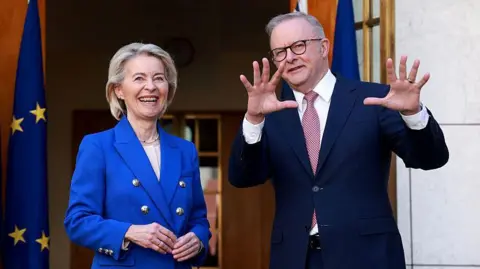
Australia and the European Union have agreed to a significant free trade deal following eight years of negotiations. The agreement is valued at approximately A$10 billion ($7 billion; £5.2 billion) and was termed a mutual win-win by both Australian Prime Minister Anthony Albanese and European Commission President Ursula von der Leyen during the signing ceremony in Canberra.
Von der Leyen emphasized that this trade arrangement is focused on collective resilience amidst a rapidly changing global environment. The deal aims to eliminate almost all tariffs on trade, strengthen cooperation in defence sectors, and enhance joint initiatives in critical minerals like lithium and tungsten.
Notably, while European car manufacturers have welcomed the agreement, Australian farmers expressed dissatisfaction over set export quotas for beef and lamb. The deal allows for a significant increase in the amount of Australian beef permitted into the EU—more than tenfold over the next decade—but farmers had hoped for greater allowances.
This agreement is part of the EU’s broader effort to establish diverse trading relationships globally, particularly in light of uncertainties stemming from American trade policies and geopolitical shifts.
In addition to tariffs, the accord permits Australians to continue using regional names for certain foods, like prosecco and parmesan, although a phased-out plan for exports is in place. Australian wines will see reduced tariffs, potentially benefiting local producers by about A$37 million.
Conversely, European agriculture groups have criticized the deal, claiming it adds to pressures faced by the farming sector amid multiple existing trade agreements.
As the geopolitical landscape continues to evolve, this trade deal may serve as a strategic move, fostering deeper ties between Australia and the EU while facilitating economic resilience against increasing global uncertainties.