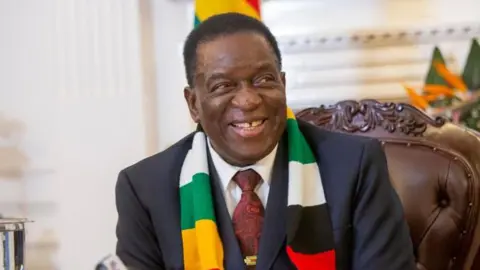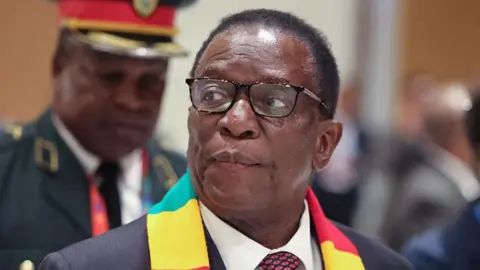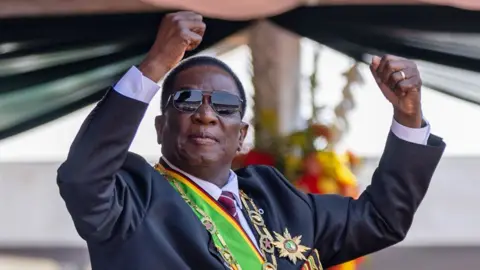
Zimbabwe's cabinet has approved draft legislation that could extend the term of President Emmerson Mnangagwa, allowing him to potentially remain in office until 2030. This proposal changes the current presidential election process from direct votes to appointments made by Members of Parliament (MPs) and increases the term limit from five to seven years.
Justice Minister Ziyambi Ziyambi emphasized that public consultations would precede the bill's presentation to parliament, which is currently dominated by the ruling Zanu-PF party. Critics, however, indicate that legal challenges are likely due to concerns that altering term limits would require a referendum and emphasize the unconstitutionality of amendments that benefit a sitting president.
Mnangagwa first assumed power in 2017 after a military coup ousted Robert Mugabe. He has since won two terms, the latest under disputed circumstances in 2023. His final term is set to end in 2028.
Public hints of his desire to continue his presidency arose two years ago, captured by chants at Zanu-PF rallies asserting he should remain to complete his 'Agenda 2030' development program, although he has publicly rejected such aspirations.
The recent death of his prominent critic within Zanu-PF has left a void in opposition to Mnangagwa's ambitions, leading to increased scrutiny of the government's push for the draft law. The ruling party claims the intent of the legislation is to promote stability and governance in Zimbabwe.
Assessments of the proposal will involve significant public discussions, but skepticism remains around the legitimacy of such changes in light of historical voter sentiments against extended presidential terms.