The European Union has added Iran's Islamic Revolutionary Guard Corps (IRGC) to its terrorist list in response to Tehran's deadly crackdown on protesters in recent weeks.
The bloc's top diplomat Kaja Kallas stated that EU foreign ministers took the decisive step because repression cannot go unanswered. She articulated that the addition of the IRGC - a major military, economic, and political force in Iran - to the terrorist list aligns it with recognized terrorist entities like al-Qaeda and the Islamic State.
Human rights organizations have reported thousands of protesters were killed by security forces, including those from the IRGC, during unrest in December and January. French Foreign Minister Jean-Noel Barrot condemned the incidents as the most violent repression in Iran's modern history and emphasized the need for accountability.
Previously hesitant to classify the IRGC as a terrorist organization due to concerns over potential diplomatic fallout, France has now shifted its position, pushing strongly for its inclusion on the list.
Kallas asserted, Any regime that kills thousands of its own people is working toward its own demise. She anticipated that despite the move, diplomatic relations with Iran would persist.
Sanctions target not only the IRGC but also additional Iranian entities, including six organizations and 15 individuals directly implicated in the violent suppression of protests and the arbitrary arrests of political activists.
While Australia, Canada, and the US already recognize the IRGC as a terrorist group, the UK has opted not to designate it as such. In light of the escalated repression, there are increasing calls within Western democracies to join the collective effort to hold Iran accountable.
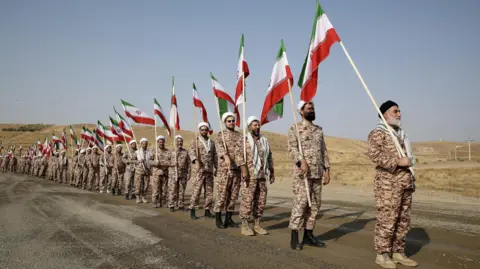
The IRGC, established post-1979 revolution, boasts around 190,000 personnel and has been central to Iran's military strategies and regional influence, providing support to allied groups and repressing dissent within Iran.