In brief
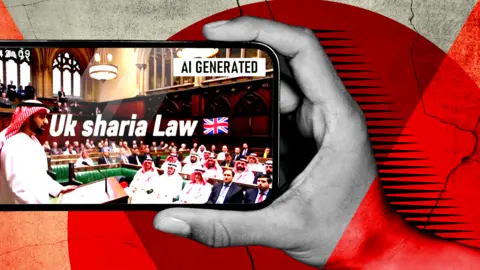
An investigation by BBC Panorama has unveiled that numerous anti-immigration videos on social media, which invoke feelings of nostalgia for 'traditional' Britain, are not created by local citizens but orchestrated by operators from countries like Sri Lanka and Iran. This effort appears to be a coordinated campaign geared towards generating misinformation and influencing public opinion through the use of AI-produced narratives. Experts highlight the difficulty the public faces in discerning genuine content from AI-generated fakes, while critical voices, including London Mayor Sadiq Khan, warn of the real-world impacts of such misleading portrayals on the perception of Britain.
The Great British People Facebook page, which claims to be from Yorkshire, has attracted significant attention with its latest video showcasing an elderly white British man expressing distress over his pension. Other videos feature reporters discussing the overwhelming scale of mass immigration and provoking viewers with nostalgia for the Britain we used to know.
However, it appears that the creators of these videos may not have any actual ties to the UK, as the account is operated by individuals based in Sri Lanka.
This page is among many interconnected accounts highlighted by BBC Panorama and the Top Comment podcast, which have been generating and disseminating anti-immigration, AI-based posts about the UK to extensive audiences, clearly from creators located far from British borders.
Notably, while some of these accounts are traced back to countries such as Sri Lanka and the United States, others originate from Vietnam and the Maldives or even have links to Iran and the UAE, as revealed through Facebook's transparency tools and other investigatory insights.
Experts suggest that the proliferation of AI content contributed to public difficulties in distinguishing fakes from reality, engendering a general distrust of authentic material. In response, London Mayor Sir Sadiq Khan noted that these misleading portrayals not only harm the image of the city but also discourage overseas students and investors.
He acknowledged that while some behind these operations are motivated by profit, there may be vested interests from unfriendly foreign states, such as Russia and Iran. Some of the accounts examined do align with narratives favorable to these governments echoing sentiments of social division.
Several accounts have strategized content shifts that once revolved around themes like Make America Great Again to now invoking AI in anti-immigration dialogues while occasionally presenting a kinder touch towards migrants, indicative of an opportunistic approach towards audience engagement.
Despite many accounts being disconnected from their proclaimed origins, it's relatively straightforward for foreign entities to present themselves as British citizens online, especially through purchasing pre-existing UK social media accounts. As the trend of AI-generated misinformation escalates, social psychologists like Prof. Sander van der Linden from the University of Cambridge warn this represents a new mutation of influence operations.
Research from London's City Hall corroborates a surge in social media activity centered on anti-immigration narratives in recent years, identifying motivations ranging from state-sponsored manipulation to individual profit-making endeavors. The mayor echoed concerns that these AI-generated narratives might be imbued with real-world consequences, shaping perceptions of London as a declining metropolis.
Calls for enhanced actions from social media companies to combat misinformation through clearer labeling and improved algorithmic controls become increasingly urgent, highlighted by stakeholders like Sadiq Khan. Meta, responsible for Facebook, claims to take such issues seriously, pledging to act against violations of community standards.
Ultimately, as public susceptibility to AI fakes becomes more pronounced, both accountability and awareness become paramount in preserving the integrity of discourse amidst rapidly evolving digital landscapes.