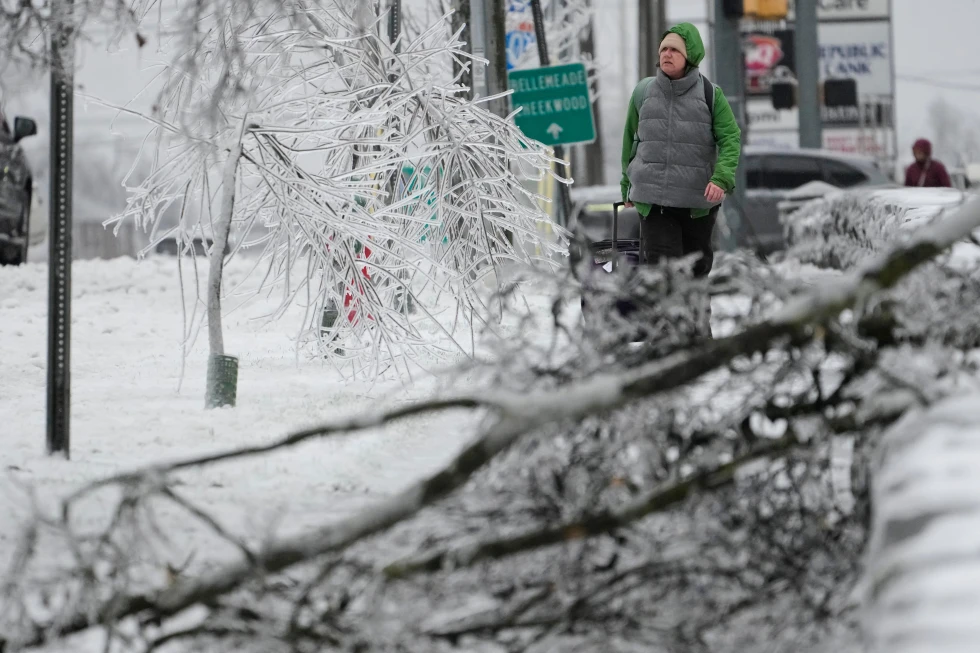
The Federal Emergency Management Agency (FEMA) would have enough financial resources to handle emergency responses to the massive winter storm currently impacting large regions of the U.S., even in the event of a partial government shutdown, according to several experts and former FEMA officials.
According to anonymous sources, FEMA's Disaster Relief Fund is projected to possess between $7 billion and $8 billion. This reserve should sufficiently cover the agency's response to the ongoing storm, even if the funding allocated by Congress lapses at midnight Friday.
Experts believe that this funding is adequate for at least the short term. Sarah Labowitz from the Carnegie Endowment for International Peace emphasized that FEMA can manage winter storm recovery and any immediate emergencies that may arise in the upcoming weeks.
FEMA operates under the Department of Homeland Security (DHS), which requires Senate approval for its fiscal package for 2026, following early House passage. Political tensions have intensified following recent immigration enforcement measures, with Senate Democrats insisting on stipulations that could complicate DHS funding and increase the likelihood of a shutdown.
As President Trump’s administration references the storm as a reason to avert a shutdown, press secretary Karoline Leavitt underscored the importance of continuous funding to support affected citizens.
While DHS currently has the funding to address immediate emergencies, the potential consequences of a government shutdown remain ambiguous. Some FEMA functions, specifically those not linked to the Disaster Relief Fund, could see interruptions similar to prior shutdowns. Experts warn that prolonged shutdowns may generate disruptions and delays in disaster reimbursements.
The proposed budget in the Senate includes robust support for FEMA, securing the Disaster Relief Fund over $26 billion in addition to emergency preparedness and security grants. Nevertheless, the looming tension and mixed messages from the Trump administration concerning FEMA’s operational efficacy instill concerns about funding sustainability moving forward.
In light of these complexities, experts call for more coherence between governmental messaging and actions regarding FEMA’s critical role amid disaster responses as the political landscape continues to evolve.