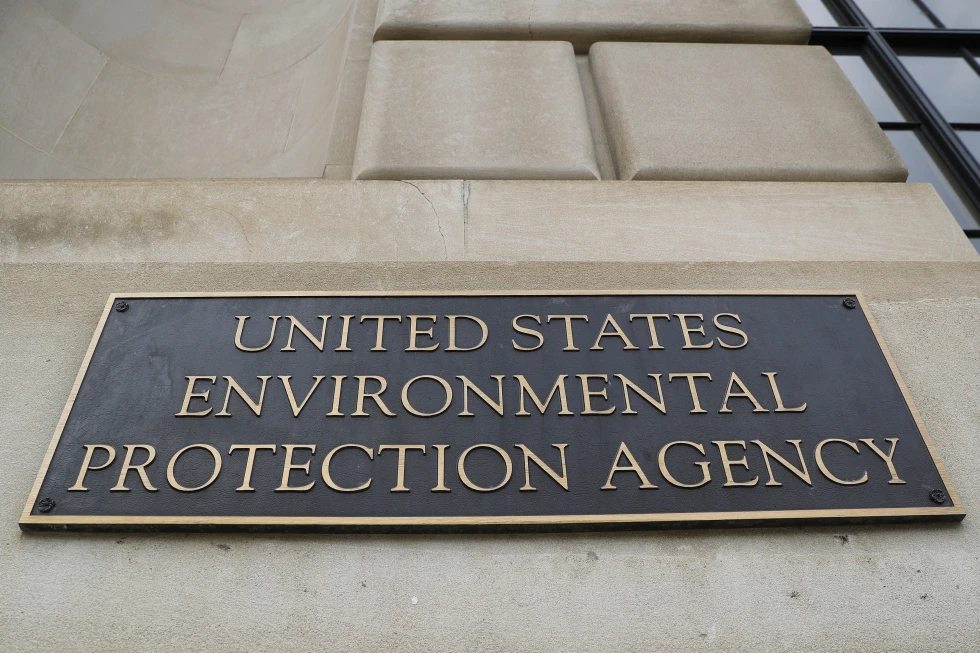
WASHINGTON (AP) — The Trump administration on Thursday revoked a scientific finding that has long served as the foundation for U.S. actions to regulate greenhouse gas emissions, marking the administration's most pronounced effort to rollback climate regulations.
The rule finalized by the Environmental Protection Agency (EPA) rescinds a critical 2009 government declaration, known as the endangerment finding, which established that carbon dioxide and other greenhouse gases pose a threat to public health and welfare.
The endangerment finding, instituted by the Obama administration, is the legal backbone of most climate regulations under the Clean Air Act, affecting motor vehicles, power plants, and other significant pollution sources contributing to global warming.
Experts anticipate legal challenges stemming from the repeal of greenhouse gas emissions standards for cars and trucks, with warnings that this could lead to broader withdrawals of climate regulations impacting stationary sources like power plants and fossil fuel facilities. Ann Carlson, an environmental law professor at UCLA, remarked that overturning this finding will likely lead to “more havoc” than previous rollbacks executed by the Trump administration.
EPA Administrator Lee Zeldin emphasized that this repeal signifies “the largest deregulatory action in the history of America,” shifting the agency's focus to a business-friendly approach across its regulations.
Environmental organizations are condemning the decision, calling it the most significant attack on federal authority to combat climate change to date. Zeldin announced the rule's completion in collaboration with President Donald Trump, stating the EPA will additionally propose a two-year delay for a Biden-era rule aimed at restricting greenhouse gas emissions from cars and light trucks.
Myron Ebell, a conservative activist who questions climate science, praised the withdrawal of the endangerment finding as a necessary step towards economic recovery, asserting it enables auto manufacturers to produce vehicles aligned with consumer desires.
The Supreme Court's Prior Rulings
The 2007 Supreme Court ruling in Massachusetts v. EPA affirmed the definition of greenhouse gases as air pollutants under the Clean Air Act. Since that landmark decision, the court system has consistently rejected legal challenges to the endangerment finding, reinforcing its legal status. Critics warn that the current administration's actions threaten to invalidate crucial climate policies designed to combat severe weather events induced by climate change.
Gina McCarthy, who served as EPA administrator and later as Biden’s climate advisor, labeled the Trump administration's actions as reckless, criticizing the agency for prioritizing the fossil fuel industry over the prioritization of public health and protection against pollution.
David Doniger, a climate expert, asserted that the Trump administration's intent to repeal the finding could dismantle existing pollution regulations and inhibit future regulations targeting climate change, presenting a significant barrier to addressing greenhouse gas emissions effectively.
The EPA’s latest actions come as part of an executive directive from President Trump to evaluate the legality of the endangerment finding, aligning with long-standing aspirations from conservatives to undo perceived over-regulatory measures that hinder economic activity.
Implications for Future Regulatory Standards
Environmental groups are alarmed over the implications of these changes, warning they could extend the lifespan of pollution-heavy vehicles and exacerbate health risks for communities, especially children and the elderly. Advocates stress that maintaining robust standards for clean vehicles and emissions plays a critical role in mitigating climate change and protecting vulnerable populations. The recurrent challenges at the intersection of environmental sustainability and economic interests will be pivotal as the U.S. navigates future climate policies.