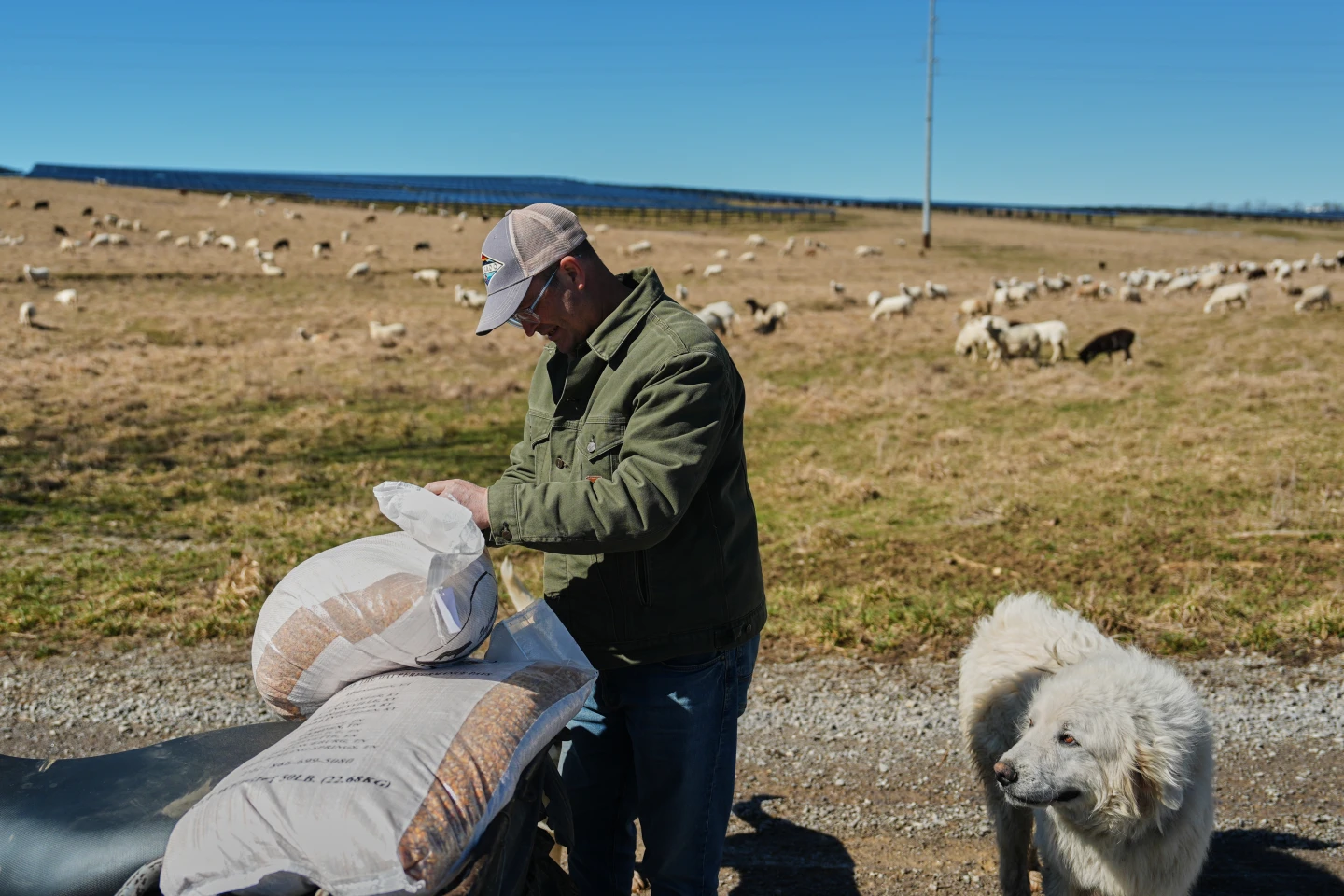
Over the past few years, Kentucky sheep farmer Daniel Bell has been expanding his flock, necessitating a new barn. Yet the location of his land limits access to power lines, pushing him to consider rooftop solar as a sustainable solution. However, when he sought financial assistance through the Department of Agriculture's Rural Energy for America Program (REAP), he found the program effectively halted due to policy changes implemented by the Trump administration.
“For me, it's just been about freedom. Freedom to lower bills, freedom to control my own assets,” he stated about the missed opportunity for grant funding.
Many farmers in the U.S. operate on razor-thin profit margins and often rely on federal support for investments in renewable energy. The absence of these essential grants not only impacts individual farmers like Bell but extends to the broader community that relies on renewable projects for energy efficiency and alternative income streams.
The USDA has not released any new grants through REAP this fiscal year, signaling the impact of shifting political sentiments and priorities. In a recent analysis by Grist and the Associated Press, it was found that a significant number of renewable projects are now stalled, or have been abandoned altogether, as developers adapt to the new landscape.
Elisa Lane, a flower and fruit farmer in Maryland, recalls her anxiety when the Trump administration froze her awarded grant. Such cases reflect a wider trend where farmers feel the weight of changing policies that directly affect their operations.
While the landscape becomes increasingly challenging for small farms, larger developers appear to benefit from lingering demand for renewable energy solutions, indicating that the industry is evolving but leaving behind many smaller players. As the future unfolds, farmers like Bell are left to navigate these tumultuous changes while striving for profitability in an uncertain economic climate.