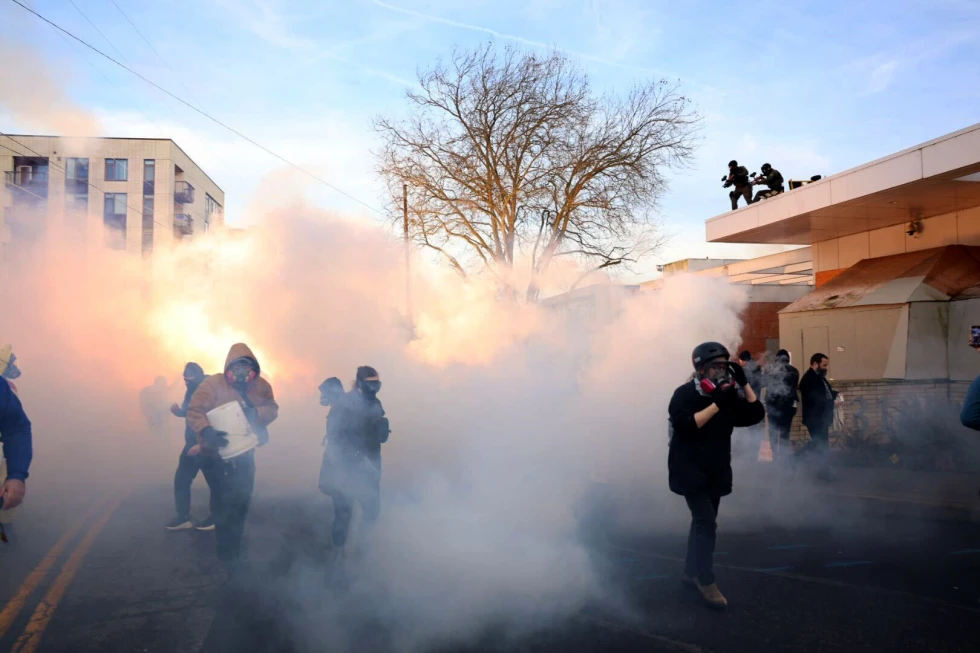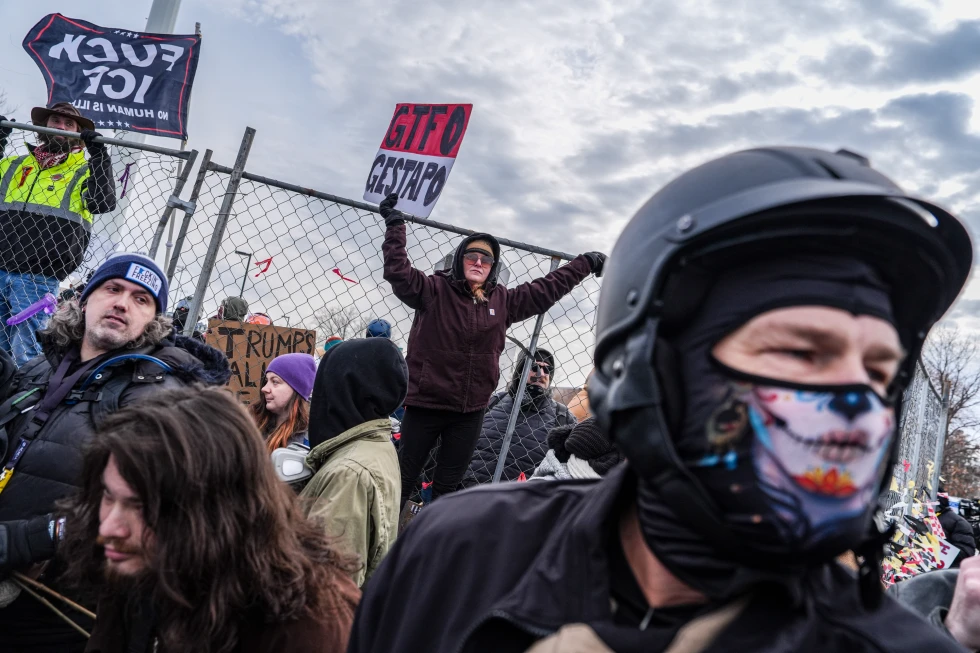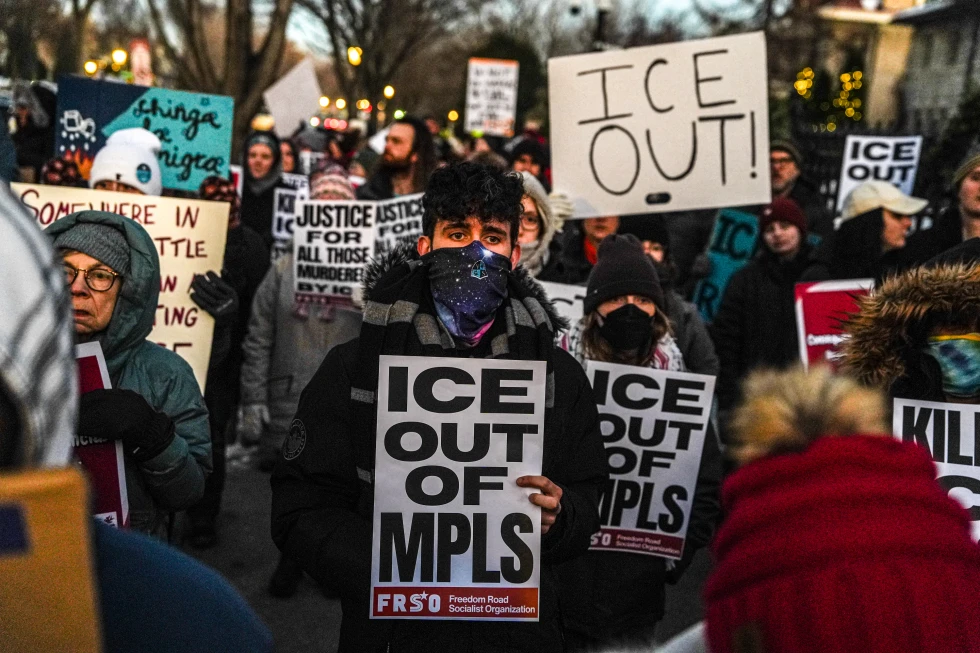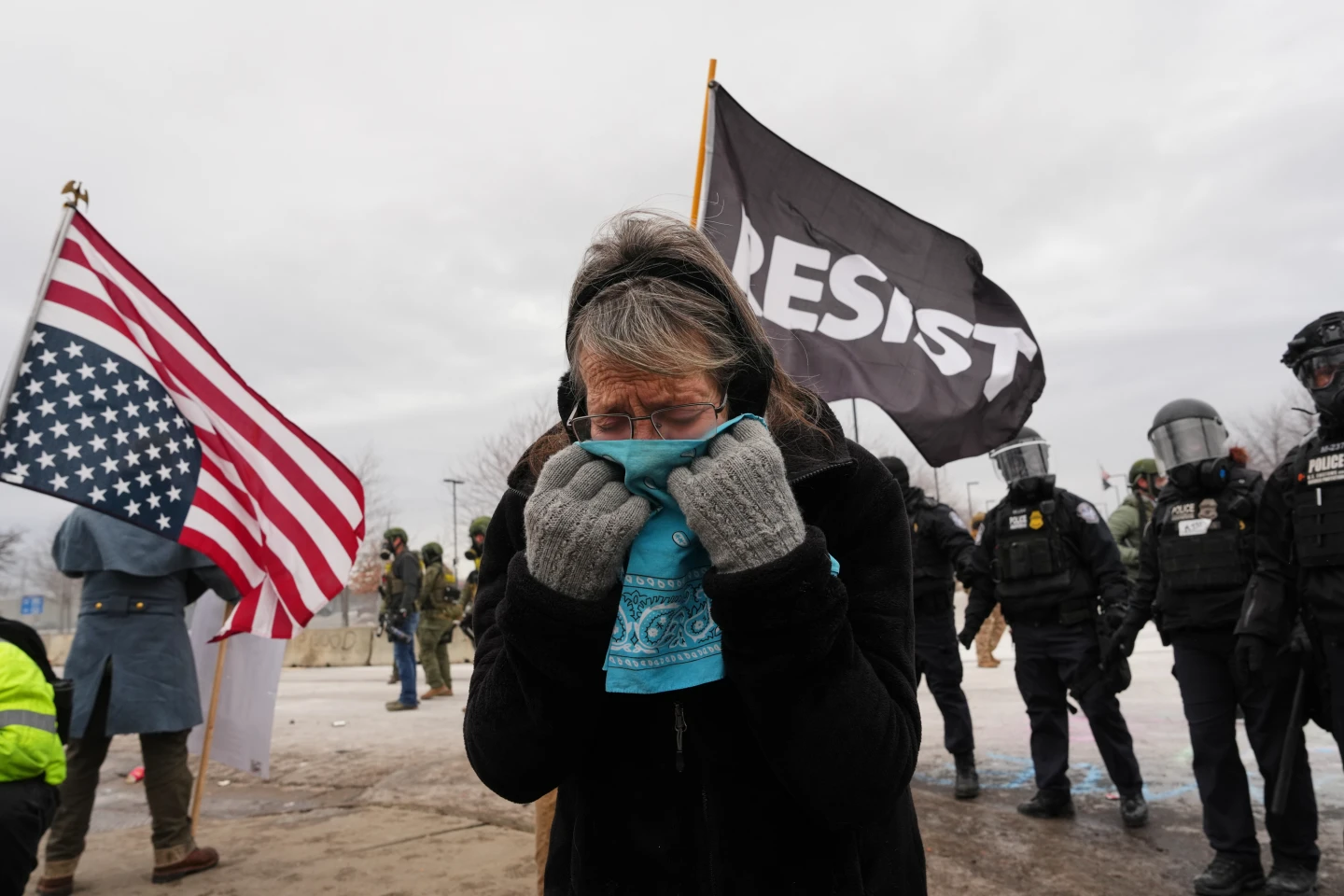
Federal immigration agents deployed to Minneapolis have utilized aggressive crowd-control tactics, including aiming rifles at demonstrators and using chemical irritants such as tear gas and pepper spray during initial confrontations. While the government defends these measures as vital for protecting officers from potential violence, law enforcement experts caution that these practices not only escalate risks but are also executed by agents not adequately trained for crowd management.
Footage and accounts indicate that agents have been breaking car windows and forcibly removing individuals from vehicles during tense standoffs with protestors. Experts suggest that while such force may be justified in certain scenarios, the threat increases significantly when it involves large groups.
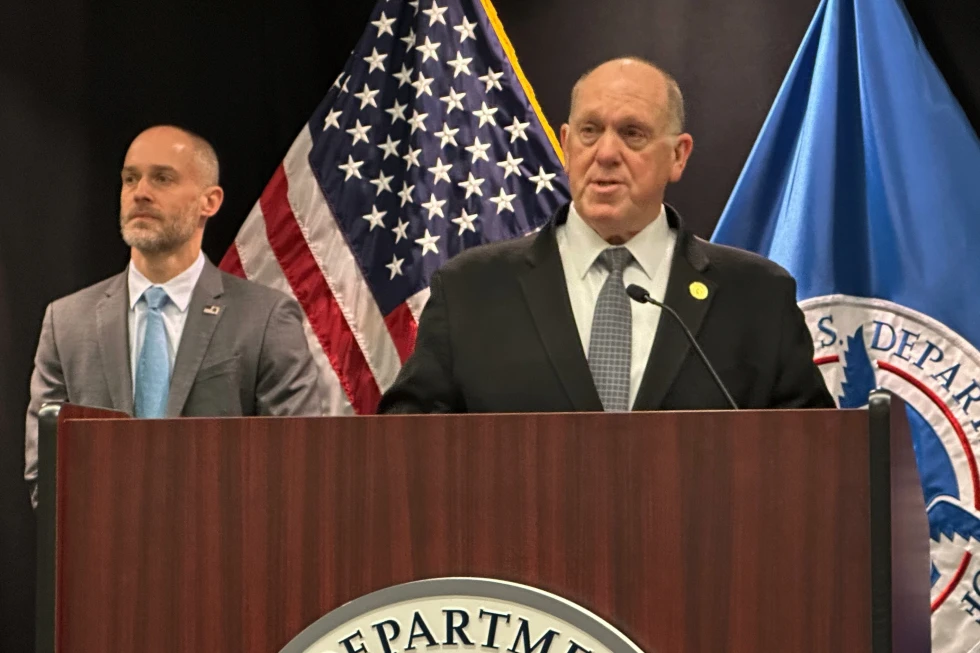
This situation arises following a surge in immigration enforcement mandated by the Trump administration, which has dispatched over 2,000 Department of Homeland Security officers to the Minneapolis-St. Paul area. Many of these officers are usually focused on arrests and deportations, rather than managing public protests.
The unfolding events in Minneapolis reflect a broader trend regarding federal authority during protests, where immigration agents are taking on roles historically filled by local police. Experts warn that this method contradicts established de-escalation standards, risking serious confrontations.
Heightened tensions have erupted particularly after the shooting death of 37-year-old Renee Good by an immigration agent, an incident branded as self-defense by federal authorities but viewed skeptically by the public and activists. This has led to increased protests and scrutiny of federal actions.
In response, the American Civil Liberties Union (ACLU) of Minnesota has filed a lawsuit seeking emergency injunctions to restrict federal agents' operations during protests, specifically targeting the use of force, aiming firearms at non-threatening individuals, and interfering with lawful recordings of events.
Former ICE Director Sarah Saldaña noted that federal officers’ training for crowd control is typically minimal, with an emphasis on solitary arrests rather than public demonstrations. Officers often lack experience in engaging with crowds, which Saldaña believes is critical given the evolving nature of their work during protests.
Criminology experts, including Ed Maguire, have criticized the current federal tactics in Minneapolis as substandard compared to local policing practices, which have developed to embrace communication and avoid unnecessary escalation during protests. Lessons from the past highlight the dangers of responding to civil unrest solely with force.
The debate continues regarding the appropriateness of federal agents acting in crowd-control capacities, with many suggesting that such actions undermine the relationship and trust built by local police with their communities. As tension grows between the agencies and protesters, calls for reevaluation and improved training protocols for federal officers intensify.