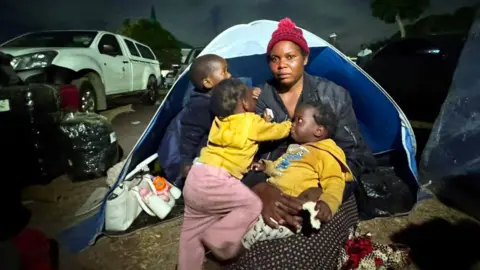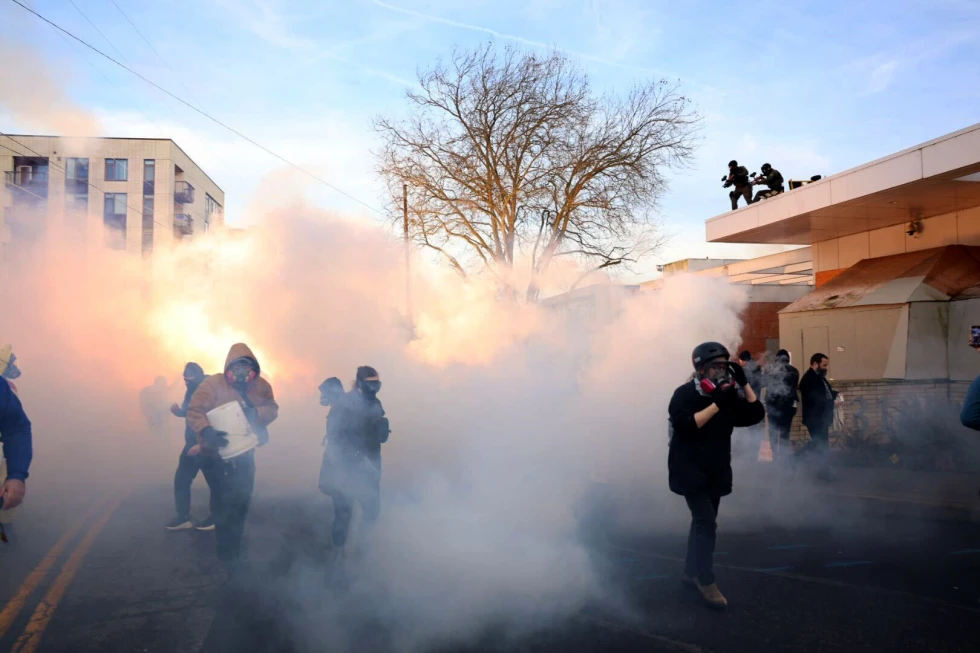
PORTLAND, Ore. — Residents of an affordable housing complex in Portland are resorting to protective measures like wearing gas masks in their own homes to shield themselves from tear gas deployed by federal agents outside the immigration building nearby. With tensions escalating during months of protests, many families have taken to taping up their windows or placing wet towels under doors. Children are even sleeping in closets, seeking security amid the chaos.
On Friday, several residents will share their distressing experiences in court as part of a lawsuit aiming to restrict the federal enforcement agencies' use of tear gas during protests. This legal action is spearheaded by the property manager and tenants of the Gray’s Landing apartment complex, arguing that federal forces' usage of chemical munitions infringes upon their rights to life, liberty, and property due to the adverse health effects they have suffered as a result.
The ongoing protests at the U.S. Immigration and Customs Enforcement (ICE) building have led to the deployment of crowd-control measures in response to what has been described as violent demonstrations. The lawsuit contends that the use of tear gas has resulted in respiratory issues and psychological distress among residents, confining them to their homes.
Defendants in the case, including ICE and the Department of Homeland Security, assert that these measures are necessary to maintain order during tumultuous crowd situations. However, the residents argue that their safety and well-being are compromised. With approximately one-third of the complex’s 237 residents being seniors and a significant number of tenants identifying as disabled, the arguments about the necessity of tear gas use have raised substantial ethical and legal questions.
The mounting distress of the tenants includes accounts of breathing difficulties and emergency medical visits after exposure to the chemical agents. One plaintiff, a 72-year-old veteran, experienced significant health issues, and others have resorted to creative tactics to lessen the intrusion of gas into their apartments.
A recent update to the lawsuit requests a preliminary injunction to further limit the use of tear gas, particularly following incidents where federal agents allegedly deployed it against peaceful demonstrators, including children. As illustrated in court documents, residents express urgency: “This needs to end.”
The context of these legal proceedings sheds light on a broader pattern of concerns regarding the aggressive tactics utilized by federal law enforcement during public demonstrations across the country, raising questions about civil rights and community safety in the face of police enforcement policies.