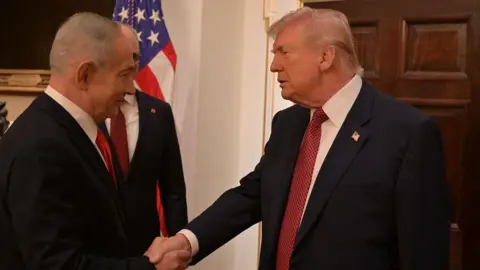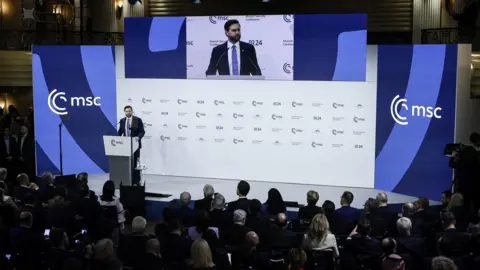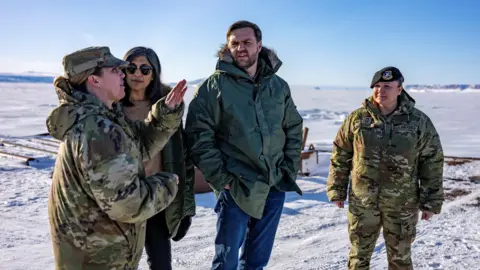
It's crunch time. The US Vice President, JD Vance, is hosting the Danish and Greenlandic foreign ministers, as well as their US counterpart, Marco Rubio, in the White House on Wednesday.
The focus of the talks: the future of the world's biggest island, Greenland.
There is a large digital news ticker tape running above the snow-covered shopping mall in Nuuk, the capital of Greenland. The words Trump, Greenland, and sovereignty appear repeatedly, drawing heavy attention.
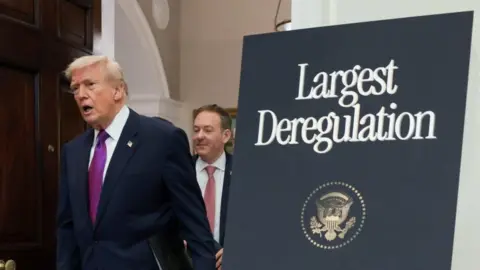
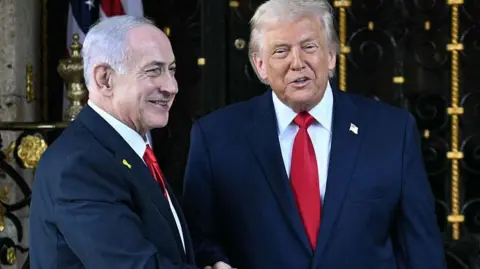
Donald Trump claims he wants this territory, emphasizing he will acquire it the easy way or the hard way. His recent military actions in Venezuela amplify concerns among Greenlanders.
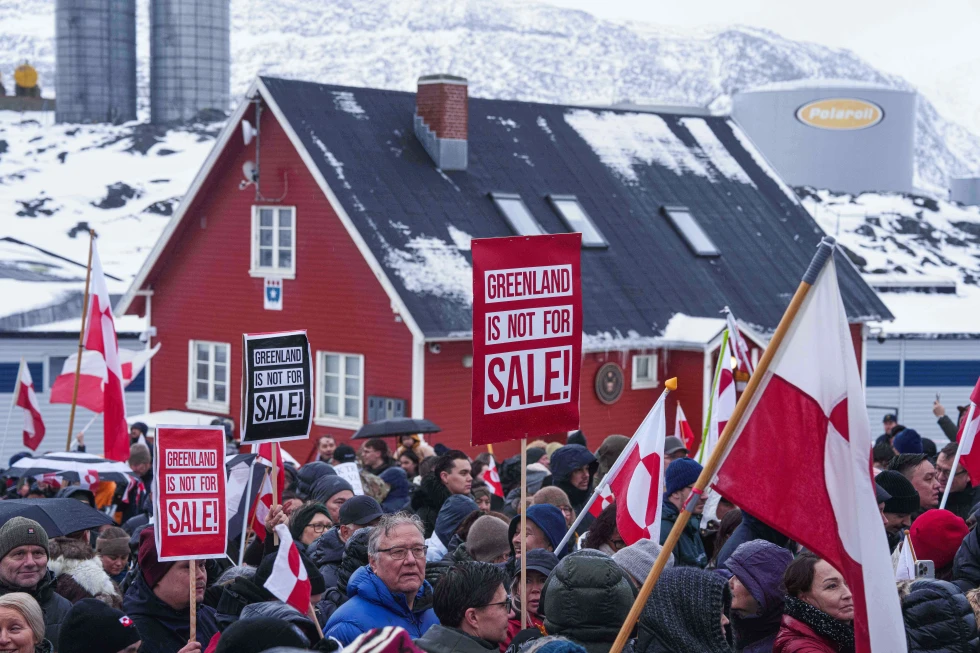
The countdown to the Washington meeting has been a source of anxiety. Local sentiments reflect a strong desire to assert their independence. Amelie Zeeb, a local resident, passionately stated, I would like to encourage (Donald Trump) to listen more and to speak less. We are not for sale. Our country is not for sale.
Inuit writer and musician Sivnîssoq Rask shared, My hope is for our country to be independent and well-managed and not be bought. Another resident expressed her fears for her family, saying, We don't want all this attention here!
Nevertheless, international scrutiny on Greenland remains unyielding, as the implications of these talks extend beyond the island itself.
The tensions surrounding Greenland's sovereignty are intensified with the US and Denmark at odds, where the Danish Prime Minister, Mette Frederiksen, cautioned against any forced acquisition that could unravel decades of security alliances.
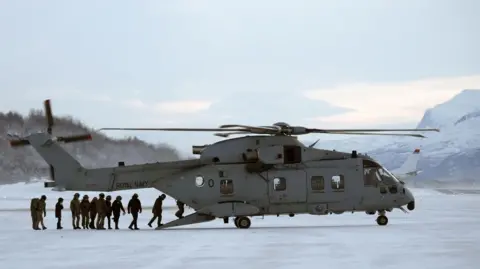
President Trump argues that Greenland's strategic value is paramount for national security, stating that if the US doesn't secure Greenland, rivals like China or Russia will. European nations are now rallying to strengthen NATO's presence in the Arctic region in response to perceived threats.
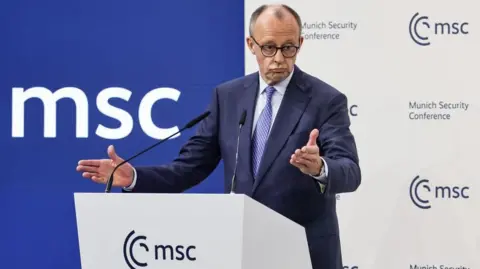
In a recent statement, German Chancellor Friedrich Merz remarked, We simply want to improve Greenland's security situation together. Similarly, proposals to bolster NATO's Arctic strategy are taking shape, aimed at countering the increasing influence of rival nations.
The summit will be a testing ground for negotiation tactics as Greenlandic representatives advocate for their sovereignty while navigating the complex dynamics of international relations.
However, the specter of territorial ambitions looms large, with Greenlanders themselves emphasizing that most oppose American ownership, reaffirming their desire for autonomy. Greenland’s Prime Minister, Jens-Frederik Nielsen, unequivocally stated, If we have to choose between the US and Denmark here and now, then we choose Denmark. Amid heightened political stakes, all eyes will be on the outcome of Wednesday's meeting, as the ramifications of the discussions extend far beyond Greenland.