Rescuers in Indonesia are searching for at least 400 people who have been reported missing, many believed to be buried under landslides, after cyclonic rains caused disastrous flooding nearly a week ago.
The death toll on the island of Sumatra has risen to more than 440, the government says.
Aid has been sent into affected areas by air and by sea, but some villages have yet to receive anything, and there are reports of people stealing food and water to survive.
Torrential rain and storms have devastated parts of Thailand, Malaysia, the Philippines, and Sri Lanka, affecting millions of people and leaving more than 900 dead across the region this month.
An exceptionally rare tropical storm, named Cyclone Senyar, caused catastrophic landslides and flooding in Indonesia, with homes swept away and thousands of buildings submerged.
People are missing in Aceh, North Sumatra, and West Sumatra, the National Disaster Management Agency said.
There are two cities that require full attention due to being isolated, namely Central Tapanuli and Sibolga, agency head Suharyanto was quoted as saying by AFP news agency. Ships were expected in Sibolga on Monday, he added.
Some foreign aid has arrived, with Malaysia sending medical supplies to Aceh, one of the worst-hit provinces.
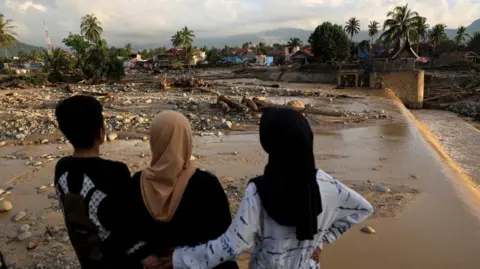
In Sungai Nyalo village, about 100km (62 miles) from West Sumatra's capital Padang, floodwaters had mostly receded on Sunday, leaving homes, vehicles, and crops coated in thick grey mud.
The authorities had not yet begun clearing roads, residents said, and no outside assistance had arrived.
Most villagers chose to stay; they didn't want to leave their houses behind, Idris, 55, told the news agency.
In another development, tech billionaire Elon Musk said he would provide free Starlink services to support communications during the emergency.
However, Indonesia is not the only country facing severe weather-related crises this month. Flooding in Thailand has resulted in the deaths of at least 170 individuals, while Malaysia has reported several fatalities. In Sri Lanka, more than 330 people died from floods and mudslides, and the Philippines has experienced similar catastrophes that have provoked public demonstrations against government handling of flood management.
Public anger over corruption in disaster management has emerged as a critical issue, especially regarding funding for flood control measures that were allegedly misappropriated, leading to increased calls for accountability and transparency from government officials.