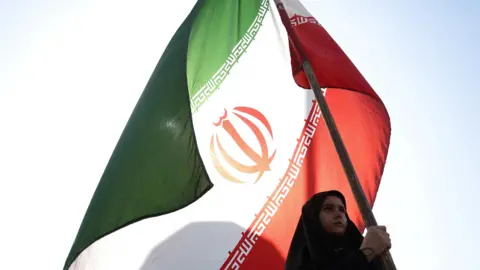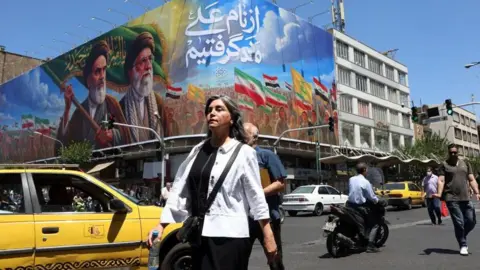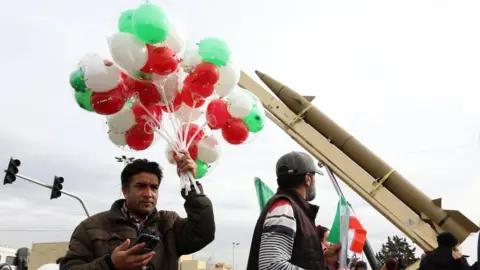
As night fell over Tehran, the city vibrated with celebrations marking the 47th anniversary of the Iranian revolution. From rooftops, chants of 'God is great' rang out, accompanied by a spectacular display of fireworks. Yet, within the vibrant atmosphere, a counter-narrative simmered; whispers of 'death to the dictator' pierced through the celebratory chants, reflecting deep-seated discontent.
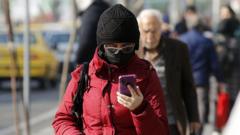
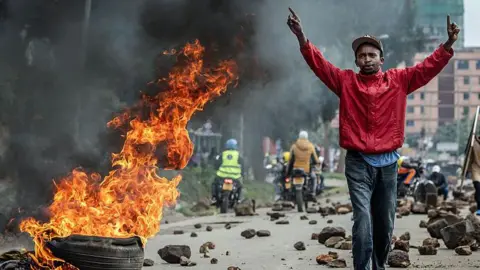
These protests echo the widespread unrest that swept across Iran last month, where a government retaliation led to significant loss of life, raising alarms about citizens' freedoms and the government’s grip on power. The tumult was revisited as crowds filled the avenues of Tehran, many donning long veils and waving flags, while others held their silence, recalling the horrors of past protests.
Conversations on the street revealed a stark division: while some expressed their belief in the ideals of the revolution that ousted the monarchy in 1979, many others reflected on the economic woes plaguing the nation, from soaring inflation to increasing poverty. Voices of resignation mixed with those of resolution, emphasizing a yearning for governmental accountability and reform.
In a recent address, Iran's President Masoud Pezeshkian acknowledged the unrest and blamed it largely on external influences, asserting that the government aims to hear the people's voices while also condemning rioters. This duality exemplifies the tension within the ruling framework: maintaining power while addressing legitimate grievances.
The situation poses a unique challenge as Iran finds itself at a crossroads; it stands fortified by a historical narrative yet increasingly challenged by contemporary realities. The city’s annual celebrations, this year marked by both fervent patriotism and palpable dissent, hint at a complex and unfolding story within Iran.