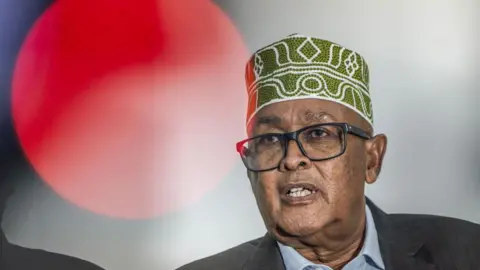
Israel has become the first country to formally recognise Somalia's breakaway region of Somaliland as an independent nation.
Prime Minister Benjamin Netanyahu stated Israel intended to immediately expand cooperation in agriculture, health, and technology. Somaliland's president, Abdirahman Mohamed Abdullahi, described the development as a historic moment. Surrounding this recognition is the potential for Somaliland to gain greater diplomatic presence and access to international markets.
Conversely, Somalia's government has categorically rejected this declaration, labelling it an attack on its sovereignty. Abdullahi has expressed Somaliland's intent to align with the Abraham Accords, aiming for enhanced regional peace and partnerships.
This recognition has triggered condemnation from Somalia, Egypt, Turkey, and Djibouti, with their foreign ministers stating a unified rejection of Israel's announcement, asserting that recognizing the independence of any part of a sovereign nation sets a dangerous precedent in international law.
Furthermore, with the establishment of full diplomatic ties, including the appointment of ambassadors, Israel and Somaliland are committed to enhancing cooperation across various sectors.
As the situation unfolds, Egypt's foreign minister has engaged in talks with counterparts from Somalia and other nations to address the implications of Israel's actions, reaffirming a commitment to Somalia's sovereignty and territorial integrity.
Somaliland's strategic positioning on the Gulf of Aden, along with its established governmental structures, including a currency and police force since declaring independence in 1991, underscores its desire for recognition and stability amidst ongoing regional tensions.