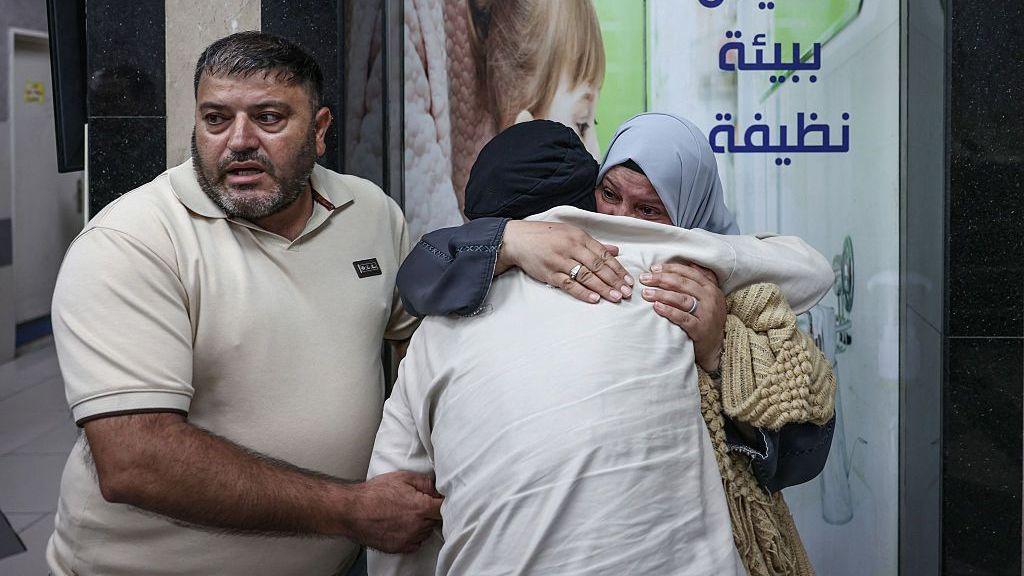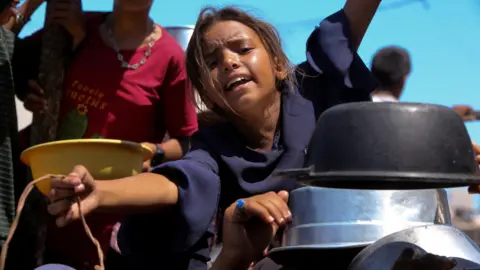
UN-backed experts say there have been improvements in nutrition and food supplies in Gaza since the ceasefire, but 100,000 people still experienced catastrophic conditions last month.
In August, the Integrated Food Security Phase Classification (IPC), which monitors and classifies global hunger crises, reported that half a million people — about a quarter of Gaza's population — lived in areas suffering from famine.
The UN and other humanitarian agencies have been able to increase food reaching Gaza since the ceasefire in October between Israel and Hamas.
Israel's foreign ministry criticized the IPC report as deliberately distorted and claimed it does not reflect the actual conditions in the Gaza Strip.
The latest IPC analysis indicates that half a million Gazans still face emergency conditions, with over 100,000 categorized under IPC Phase 5, indicative of extreme food insecurity and catastrophe. The report suggests these numbers may decline but emphasizes that the situation remains precarious.
IPC Phase 5 indicates extreme food insecurity or famine conditions affecting individuals or households. The report noted that there are no areas currently classified as being in famine in Gaza.
Israel has rejected earlier claims of famine by the IPC and continues to criticize its methodologies. Cogat, the Israeli military body overseeing Gaza's crossings, stated that the food aid entering Gaza exceeds the amount determined necessary by the UN.
IPC responded to Cogat's criticisms by asserting that they utilized publicly available data from both UN sources and Cogat for their analysis.
The IPC also reported that acute malnutrition remains at critical levels in Gaza City and is serious in Deir al-Balah and Khan Younis.
Although projections suggest a reduction in severe conditions to 1,900 by April, the report warned that renewed hostilities could jeopardize the entire Strip's food security.
Key drivers of food insecurity include restricted humanitarian access, widespread displacement of over 730,000 individuals, and the destruction of livelihoods, notably with over 96% of Gaza's farmland rendered inaccessible.
Unwra, the UN agency for Palestinian refugees, stated that while Gaza is no longer classified under famine conditions, the overall living situation remains critical, emphasizing the need for consistent humanitarian assistance.