Rebels Turn the Tide with New Conscripts
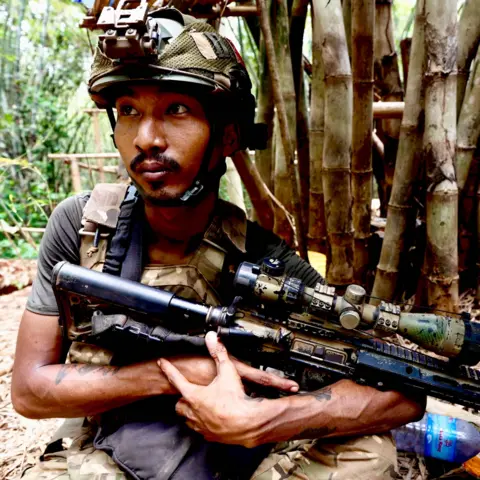
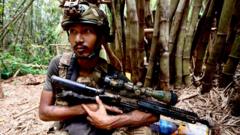
The Myanmar civil war is shifting as the army’s 2024 conscription law has become a surprisingly useful asset for rebel factions. Four men, captured by soldiers and forced to sign up, left hostile camps and found refuge with the People’s Defence Force (PDF) in Karen state. Their stories, filmed by the BBC’s correspondent in Bago, paint a picture of coercive militarisation and resilient defiance.
One, a chef, was seized on a city street because he lacked proper ID. Another was taken after a late‑night karaoke outing; a third was arrested while working for the forestry department. A fourth fell victim to a drug‑slip operation at the border and was coerced into enlistment. All were between 19 and 25, with no desire to fight.
“Before we even understood what was happening, we were sent straight to the front lines,” one recounts. They endured brutal daily duties, a stark contrast to regular soldiers who had little work. These forced conscripts now provide manpower for the army’s offensives, arguing that the elite forces have become stronger because of the influx of newly recruited, unquestioning soldiers.
During a brief escape, the four crossed into a PDF patrol area, where they were detained but treated “like brothers, not strangers.” They now intend to move north to the Thai border after the military might still pursue them if they return. Their solidarity signals a turning point: the rebels are no longer solely dependent on external aid but are gaining territorial footing.
The Army’s new advantage, however, is not only numerical. Recent advances in drone technology—supported by a Russian‑linked air pact—mean that the junta can conduct more frequent, high‑altitude strikes. Rebel reports describe “pairs of aircraft” on the battlefield, a shift from the earlier single fixed‑wing presence. While squads draw on stolen weapons and improvised tactics, conscripts are quick to obey orders, making them adaptable and dangerous in the field.
An on‑site field hospital, run by Dr Saung—an ex‑army medic—remains a beacon in the campaigns, treating wounded fighters like Kyar Soe, who stepped on a landmine and had his right leg rebuilt. Healings are scarce, and resources are limited, but the hospital’s existence underscores the humanitarian strain of the war.
Families of fighters cannot reunite with relatives in junta‑controlled areas, but stories like that of May Kyut Mon and Yine Chit bring heart to the scenes. They hope that once the revolution ends, their daughter could grow in a free Myanmar, free from the mining, airstrikes, and political persecution that haunted the rebels.
In short, the junta’s forced conscription has inadvertently empowered the resistance, creating a new balance of power that could shift the outcome of Myanmar’s year‑long civil war.