A Nigerian court has ordered the British government to pay £420 million to the families of 21 coal miners killed in a notorious incident in 1949. The ruling, announced by Justice Anthony Onovo, stated that each family of the slain miners will receive £20 million in compensation.
The tragic events unfolded when colonial police, comprising both Nigerians and Europeans, opened fire on striking miners in Enugu, who were protesting against poor working conditions and seeking better wages. The attack, described by the state-run News Agency of Nigeria (NAN) as one of the most egregious acts of colonial repression, led to the deaths of the miners and injuries to many others.
The killings galvanized the burgeoning anti-colonial movement in Nigeria, contributing to the country's eventual independence in 1960. Historians view the massacre as a critical turning point in the struggle against colonialism.
Despite the ruling, the UK government has stated that it had not been formally notified of the case, thus could not comment on the judgment. Reports indicate that the UK was not represented during the trial.
This landmark decision follows decades of advocacy by families of the victims and human rights organizations, demanding recognition and reparations for the injustice faced by the miners. The court's ruling underscores the importance of historical accountability in addressing colonial-era violations, emphasizing that the right to life knows no bounds of time or sovereignty.
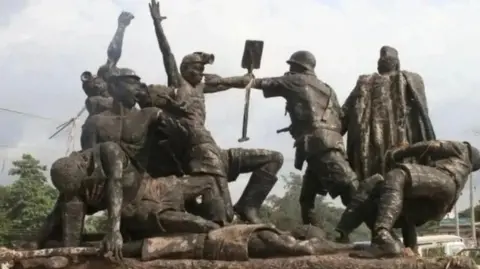
The tragic events, which took place on November 18, 1949, have left a lasting legacy in Enugu, where the slain miners are now celebrated as heroes. This case, pushed forward by human rights activist Mazi Greg Onoh, has been hailed as a significant step towards justice for colonial atrocities, reflecting growing demands for reparations across various post-colonial contexts.