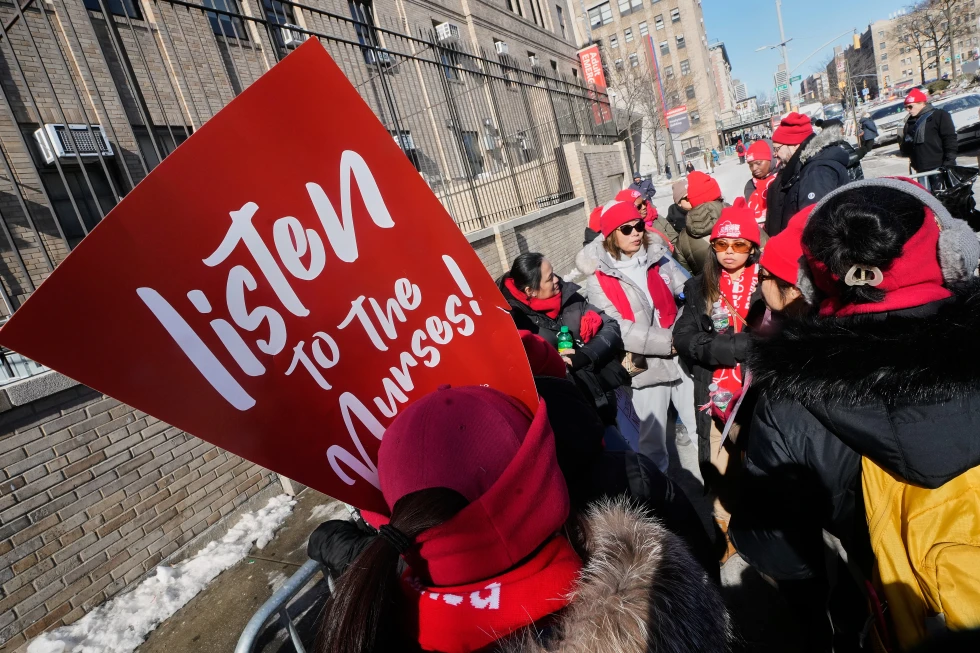
NEW YORK (AP) - In a significant development for healthcare workers, nurses and two major hospital systems in New York City have successfully negotiated a tentative agreement to end a nearly month-long strike aimed at addressing critical concerns such as staffing levels, workplace safety, and health insurance.
The tentative agreement was announced Monday by the New York State Nurses Association (NYSNA) and affects nurses from the Montefiore and Mount Sinai hospital systems. A separate strike continues at NewYork Presbyterian, which has seen nurses advocating for similar improvements.
Since the strike began on January 12, hospital administrators faced logistical challenges, including hiring temporary nurses amidst a demanding flu season, to maintain patient care.
Under the tentative contract, which will be voted on by union members this week, nurses can expect a 12% pay raise over the three-year contract period. Moreover, nurses' health benefits will be preserved without imposing additional out-of-pocket costs.
Nancy Hagans, president of the NYSNA, expressed gratitude for the impressive unity displayed by the nurses, stating, For four weeks, nearly 15,000 NYSNA members held the line in the cold and in the snow for safe patient care. Now, nurses at Montefiore and Mount Sinai systems are heading back to the bedside with our heads held high.
In addition to financial compensation, the proposed agreement includes new protections against workplace violence, catering specifically to vulnerable groups like transgender and immigrant nurses and patients. It also addresses the integration and implications of artificial intelligence within hospital operations.
Voting on the new contracts will take place starting Monday through Wednesday, with potential return to work anticipated by Saturday if ratified. Mount Sinai has indicated a willingness to comment later, while Montefiore confirmed the voting schedule but chose not to elaborate further.
While the NYP system has purportedly reached a deal that includes raises, pension preservation, and staffing improvements, their facility remains impacted by the ongoing strike, demonstrating the varying priorities and agreements across different hospitals.
Striking nurses have cited mounting frustrations over being overworked and under-resourced, with hospital staffing levels being a central concern. Despite claims that operations have continued smoothly, hospital management acknowledged that many elective procedures were postponed as they prepared for the strike.
The nurses, along with supporters including New York City Mayor Zohran Mamdani and Senator Bernie Sanders, emphasized the financial disparities between hospital workers and top executives, highlighting the need for fairly equitable compensation and working conditions.
This recent strike follows a previous three-day strike in 2023, which concluded with contracts guaranteeing raises and enforceable staffing improvements.