Trade tensions and a reversal in the artificial intelligence (AI) boom are among the main risks to global economic growth, the International Monetary Fund (IMF) has warned.
Its comments came in its latest world economic outlook, where it described the global economy as 'steady', with growth expected to remain 'resilient' this year.
The IMF's forecast was produced ahead of Donald Trump's threat at the weekend to impose tariffs on eight European countries opposed to his proposed takeover of Greenland.
The fund also stated that the independence of central banks is 'paramount' for global economic stability and growth. Global growth is projected to reach 3.3% this year - an increase from its previous forecast of 3.1% - before slowing slightly to 3.2% in 2027.
IMF chief economist Pierre Olivier Gourinchas noted, 'We have a picture of a global economy that is quite resilient, quite robust.' He mentioned that while Trump's tariffs have slowed global activity, they have been offset by other positive factors.
The report highlights that the global economy has benefitted from a surge in technology investments, particularly in AI. However, the IMF cautioned that risks remain, emphasizing that overly optimistic expectations for AI growth might lead to abrupt market corrections.
Gourinchas elaborated that even a minor market correction could significantly affect consumer wealth and spending, potentially leading businesses to alter their investment strategies.
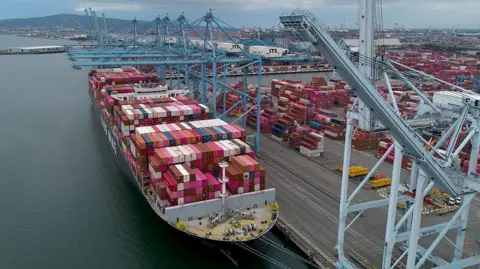
Concerning trade tensions, the IMF warned these could escalate, prolonging uncertainty and adversely affecting economic activity. He mentioned that domestic or geopolitical political tensions could disrupt the global economy through impacts on financial markets, supply chains, and commodity prices.
The IMF also estimated the UK’s growth rate for 2025 was upgraded to 1.4% and projected 1.3% for the current year, making it one of the fastest-growing economies in the G7. However, political leaders expressed contrasting assessments about the economic climate following the report.
Concluding the report, the IMF stressed the importance of maintaining central bank independence to ensure macroeconomic stability and long-term growth, especially against a backdrop of rising political influences.