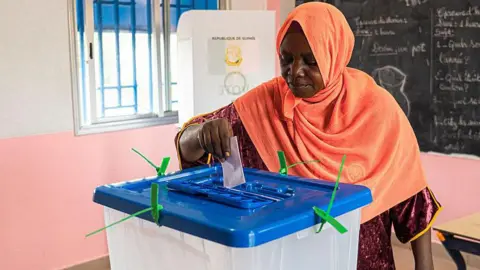
As Guinea and the Central African Republic (CAR) gear up for presidential elections, the stark differences between the candidates illustrate contrasting political landscapes in Africa. On December 10, voters in both countries will head to the polls to select their presidents for a seven-year term.
In the CAR, incumbent President Faustin-Archange Touadéra, a mathematician and former university vice-chancellor, is vying for a third term. His administration, which began with a focus on post-conflict recovery, has become increasingly political, especially after he pushed through constitutional reforms to eliminate term limits, leading to an opposition boycott. Despite this, Anicet-Georges Dologuélé, a key rival, is allowed to participate, suggesting some level of political engagement.
Conversely, in Guinea, General Mamadi Doumbouya, who led a coup in September 2021, is solidifying his transition to a civilian presidency. Despite facing eight challengers, Doumbouya has dominated the political narrative, promoting himself throughout Conakry while sidelining prominent opposition figures like Cellou Dalein Diallo. This exclusion raises concerns about the fairness of the electoral process.
While both leaders underscore the complexities of governance in their respective nations, the CAR continues to struggle with instability, yet is cautiously optimistic about its evolving political identity. Multi-party politics in CAR, along with a mixture of international support and ongoing peace efforts, contrast sharply with Guinea's return to authoritarian rule under military guise.
As West Africa grapples with military takeovers and the challenges of governance, the upcoming elections in these two countries will be pivotal, not only for their political futures but also for the stability and democratic evolution of the region.