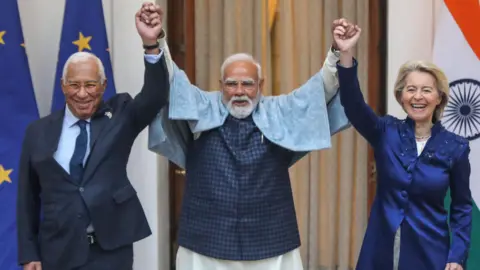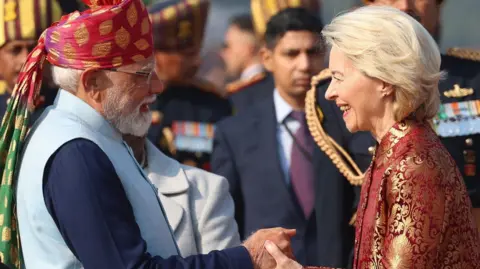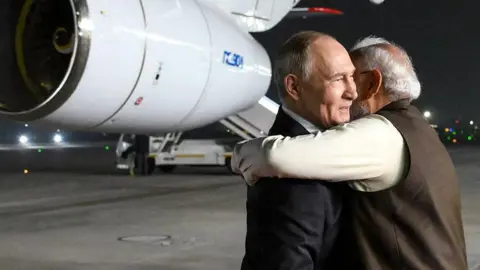
Russian President Vladimir Putin has arrived for a two-day visit to India, where he was welcomed warmly by Prime Minister Narendra Modi ahead of an annual summit between the two nations.
The visit comes at a critical time when both Delhi and Moscow are expected to seal several trade deals. This meeting occurs amid increased U.S. pressure on India regarding its purchase of Russian oil, especially following the Russian invasion of Ukraine.
The relationship between India and Russia is historically strong, with deep ties dating back to the Soviet era. As India's economy is growing rapidly, it represents a lucrative market for Russian products, particularly oil. Last year, India significantly increased its imports of Russian crude, seizing the opportunity to purchase oil at discounted rates following Western sanctions on Moscow.
Interestingly, U.S. President Donald Trump's administration has expressed discontent over India’s reliance on Russian energy, imposing tariffs on Indian goods as a penalty for purchasing oil from Russia. This adds a layer of complexity as Modi seeks to balance his relationship with the West while maintaining crucial ties with Moscow.
During this visit, Putin is expected to emphasize the need for continued arms sales to India, a longstanding pillar of the bilateral relationship. Reports suggest India may seek to purchase advanced Russian defense systems, including combat aircraft and air defense technologies.
For Modi, navigating this diplomatic landscape will test India's strategic autonomy. He has had to withstand pressures from Western allies while asserting his nation's independent foreign policy interests. The underlying goal of broadening bilateral trade and ensuring security cooperation will be paramount on both leaders' agendas.
In light of ongoing geopolitical tensions, Putin's visit signifies not just a reaffirmation of Indo-Russian ties but also a demonstration of Russia's efforts to cultivate strong relationships beyond Western influences.