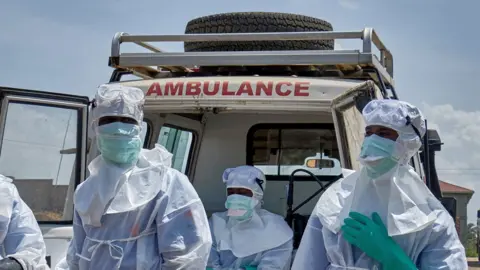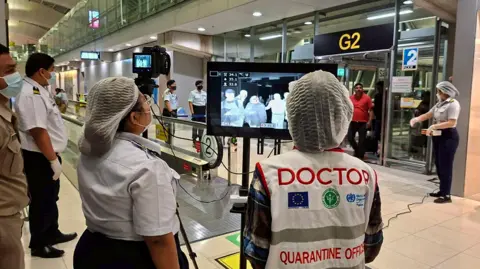
The Nipah virus outbreak in India's West Bengal state has sparked concern throughout Asia, leading to increased airport screening measures aimed at preventing its spread.
Thailand has begun screening passengers at three major airports receiving flights from West Bengal, while Nepal has also intensified screenings at Kathmandu airport and land borders with India.
The outbreak has thus far resulted in the infection of five healthcare workers in West Bengal, with one individual in critical condition and 110 others placed in quarantine due to contact with them.
Characterized by a high mortality rate between 40% to 75%, the Nipah virus transmits from animals to humans and currently lacks any known vaccine or treatment.
What is the Nipah Virus and What Are Its Symptoms?
The Nipah virus can be spread by animals such as pigs and fruit bats to humans, and person-to-person transmission can occur through contaminated food. The World Health Organization has listed Nipah as a top priority disease due to its potential for rapidly causing epidemics.
Infection symptoms vary widely, with some individuals exhibiting none at all. Early signs include fever, headaches, muscle pain, vomiting, and sore throat, which could escalate to more severe conditions like encephalitis and pneumonia.
Where Have Past Outbreaks Occurred?
The Nipah virus was first identified in 1998 in Malaysia among pig farmers and has led to significant losses in life and the economy in affected regions, including Bangladesh, which has experienced alarming death rates in recent years.
India has reported Nipah outbreaks in West Bengal in 2001 and 2007 and is currently facing renewed concerns in Kerala with multiple deaths linked to the virus.
Current Developments
As of last week, five confirmed cases are associated with a private hospital in Barasat, West Bengal. Health authorities remain on high alert as Thailand and Nepal strengthen their preventive measures. Taiwan is also proposing to classify Nipah as a Category 5 disease under its health regulations, enhancing surveillance and control measures.
Despite the absence of cases outside India at present, the response from other nations emphasizes the seriousness with which these authorities regard the potential for international spread.