In brief
The recent press conference held by Afghan Taliban foreign minister Amir Khan Muttaqi in Delhi marked a significant moment as female journalists occupied front-row seats—an unintentional gesture following their exclusion from a prior event. This shift comes amidst international concerns over gender discrimination in Afghanistan, where women’s rights have faced severe restrictions despite the Taliban's claims of cultural respect. The Indian government’s involvement and the implications for diplomatic relations between India and Afghanistan are under scrutiny as journalists grapple with the Taliban's narrative surrounding women's education and rights.
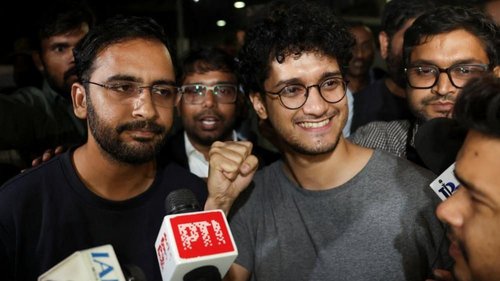
It's often said that a picture can speak a thousand words. The image in Indian newspapers depicting female journalists occupying front-row seats at the Afghan Taliban foreign minister's press conference in Delhi is certainly one of those.
The conference— the second presser by Amir Khan Muttaqi at the Afghan embassy in under 48 hours— was held after criticisms arose following the exclusion of women from his first meeting. In response to this uproar, Muttaqi clarified that the lack of female participation was unintentional, attributing it to logistical issues relating to the short notice and the specific list of journalists invited.
The United Nations has referred to the current state of women in Afghanistan as gender apartheid, with restrictions on education, employment, and movement resulting in significant curtailment of women's rights. The Taliban insists it respects women’s rights within the scope of its interpretation of Afghan culture and Islamic law, although Western diplomats maintain that these claims are undermined by the real-life restrictions imposed on women. As amarga as it may seem, the Taliban's narrative and diplomatic engagement with nations like India continues to be a delicate balancing act.
Muttaqi's visit to India, marked by his meetings with Indian officials, seeks to strengthen ties while the Taliban pursues international recognition and attempts to reframe its image amidst mounting criticism of its treatment of women. This includes discussions on reopening diplomatic relations and the possibility of diplomatic engagement with India, which maintains humanitarian efforts in Afghanistan despite not recognizing the Taliban government officially.
The press event ultimately succeeded in convening female journalists who were previously excluded, received intense questioning regarding the Taliban's stance on gender equality, particularly in education. While some questions about the Taliban’s restrictions on education for women and girls remain unanswered, the mere fact that the minister addressed these issues publicly is viewed as a potential step towards progress.
Meanwhile, India's position and engagement amid these developments have sparked criticism domestically, as opposition leaders brought into question the government's role in allowing perceived gender discrimination under its diplomatic watch. As the conversation around gender rights continues, both the Taliban's narrative and India's diplomatic approach remain under close examination.