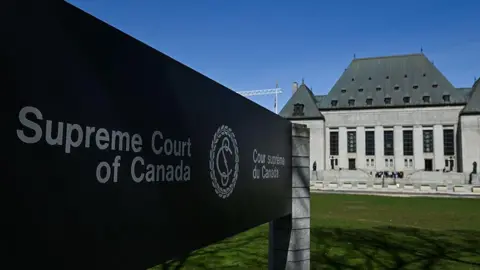
WASHINGTON (AP) — The Supreme Court is deliberating whether the Trump administration can reinstate an immigration policy known as metering, which was utilized to limit the inflow of migrants seeking asylum at the U.S.-Mexico border.
Conservative justices have shown some receptiveness to the Justice Department's request to overturn a lower court ruling against metering, which restricted asylum applications to manage the rising numbers at the border. Advocates for migrants argue that this policy resulted in a humanitarian crisis, as many individuals were turned away and left to wait in precarious conditions in Mexico.
As it stands, the metering policy is not currently in effect, and it was expanded under Trump after being initially introduced during the Obama administration. The administration contends that metering is a vital measure employed by both parties to maintain order at the border, emphasizing the potential necessity of the policy in future situations.
However, the justices raised concerns about the legality of allowing some migrants who enter illegally to file for asylum while simultaneously limiting access to those seeking legal entry. Justice Brett Kavanaugh questioned why illegal entrants would be privileged in such processes.
Assistant to the Solicitor General Vivek Suri defended the policy, claiming it merely indicates that the port of entry is at capacity, and individuals can try to enter at a later date. The legal dispute also hinges on the interpretation of “arrive in,” with the Justice Department asserting it only applies to individuals already within U.S. territory.
As a historical background, the metering policy was initially implemented during the Obama administration and expanded by the Trump administration in response to increased migration at key border points.
Presently, the ongoing discussion reflects broader implications for U.S. immigration policy and the balance between national security and humanitarian obligations toward asylum seekers.